

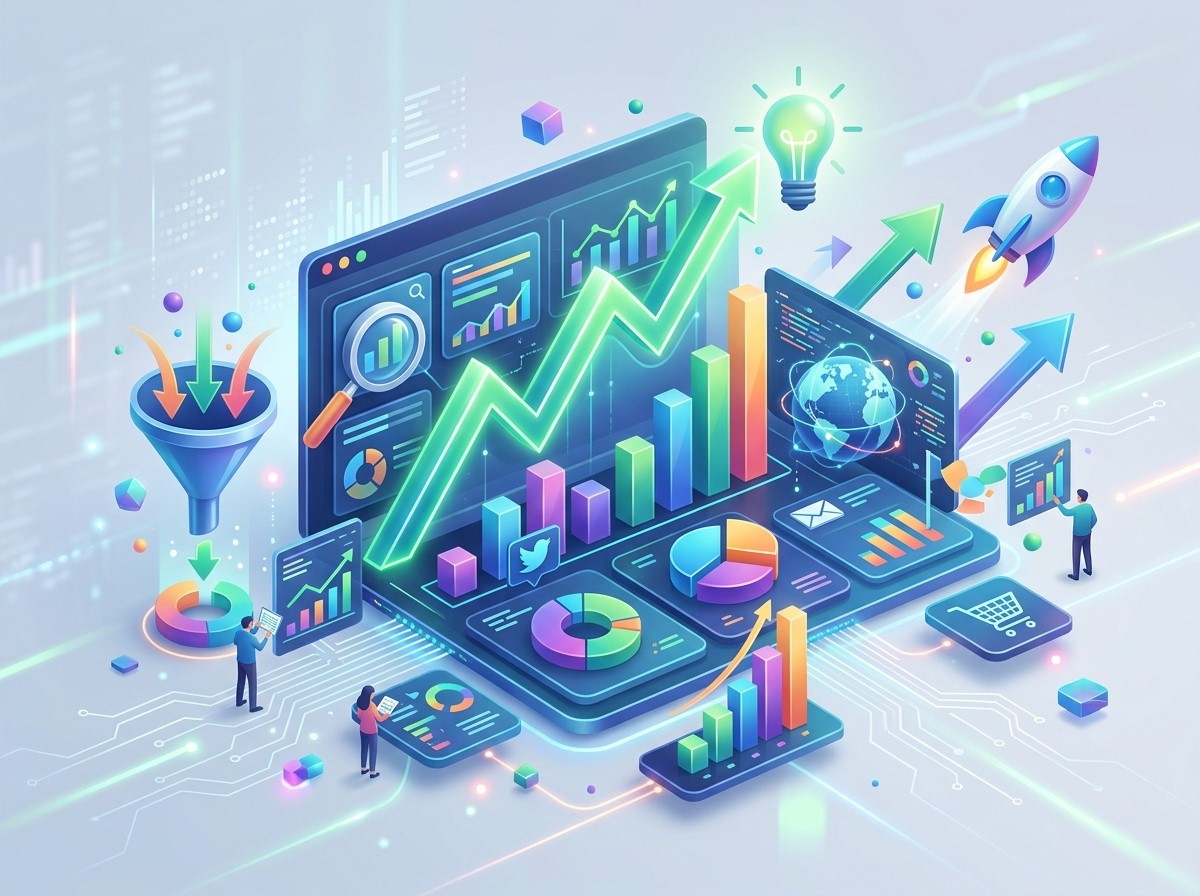
In today’s competitive digital environment, businesses need more than creative campaigns to achieve sustainable growth. They need accurate data, meaningful insights, and a clear understanding of customer behavior. Marketing Analytics helps businesses collect, analyze, and interpret marketing data to make smarter decisions, improve campaign performance, and identify new growth opportunities.
By examining customer interactions, website performance, conversion rates, and campaign results, companies can understand what works and what needs improvement. When combined with Customer Data Analysis, SEO and Inbound Marketing, and emerging approaches such as Metaverse Marketing Strategies, Marketing Analytics can create a stronger foundation for data-driven business growth.
What Is Marketing Analytics?
Marketing Analytics is the process of collecting and analyzing data from different marketing activities to evaluate performance and support better decision-making. It transforms raw information into actionable insights that marketers can use to improve campaigns and customer experiences. Businesses generate large amounts of data through websites, social media platforms, search engines, email campaigns, paid advertising, and customer interactions. Without proper analysis, this information can be difficult to use effectively.
Marketing Analytics connects these data points and helps marketers answer important questions. Which campaigns generate the most leads? Which channels produce the highest return? What type of content attracts customers? Where do prospects leave the buying journey? By answering these questions, businesses can reduce wasted resources and focus on strategies that generate measurable results.
Why Marketing Analytics Matters for Business Growth
 Data-driven marketing allows businesses to make decisions based on evidence rather than assumptions. Instead of investing heavily in a campaign simply because it appears creative, marketers can evaluate actual performance and customer responses. Marketing Analytics provides several important benefits for growing businesses.
Better Marketing Decisions
Analytics gives marketers access to measurable information about campaign performance. This makes it easier to identify successful strategies and adjust campaigns that are underperforming. For example, if one advertising channel generates significantly more qualified leads than another, a company can adjust its budget accordingly. This creates a more efficient marketing process.
Improved Customer Understanding
Understanding customers is essential for building effective marketing campaigns. Analytics can reveal customer interests, browsing patterns, purchase behavior, and engagement preferences. These insights help marketers create more relevant messages and experiences. When customers receive content that matches their needs, they are more likely to engage with a brand.
Higher Marketing ROI
One of the biggest advantages of analytics is the ability to measure return on investment. Businesses can compare marketing expenses with leads, sales, conversions, and revenue. This allows marketing teams to identify high-performing campaigns and reduce spending on activities that produce limited results.
The Role of Customer Data Analysis
Customer Data Analysis is an important part of modern marketing strategy. It involves examining information collected from customer interactions to understand behaviors, preferences, and purchasing patterns. Businesses can collect customer information from website visits, email interactions, social media engagement, purchase histories, surveys, and other digital touchpoints.
When this information is analyzed properly, marketers can develop more personalized strategies. For example, an online retailer may discover that customers who purchase one product frequently show interest in another related product. The company can use this insight to create personalized recommendations or targeted campaigns.
Customer Data Analysis also supports audience segmentation. Instead of treating every customer the same way, businesses can divide audiences according to demographics, interests, behavior, purchase history, or engagement level. This creates opportunities for more targeted marketing campaigns and better customer experiences.
Marketing Analytics and SEO and Inbound Marketing
Search engine optimization and inbound marketing generate valuable data that can be analyzed to improve digital performance. SEO and Inbound Marketing focus on attracting potential customers through valuable content, search visibility, social engagement, and other organic channels. Marketing Analytics helps businesses understand how these activities contribute to overall growth.
Marketers can monitor organic traffic, keyword performance, landing page engagement, conversion rates, content performance, and user behavior. These insights make it easier to identify which content attracts qualified visitors. For example, a company may discover that an educational blog post generates more organic traffic and leads than several promotional pages. This information can influence future content planning. Analytics can also identify pages with high traffic but low conversion rates. Marketers can then improve calls to action, page design, messaging, or content relevance to increase conversions.
Using Data to Improve Customer Journeys
Modern customers rarely follow a simple path from discovering a brand to making a purchase. They may see a social media post, visit a website, read a blog, compare products, subscribe to an email list, and return several times before converting. Marketing Analytics helps businesses understand this customer journey.
By tracking interactions across different channels, marketers can identify where customers engage most and where they lose interest. This makes it possible to improve each stage of the buying journey. For example, if many visitors read a product page but leave without purchasing, the business can investigate possible issues such as unclear product information, weak calls to action, slow page speed, or a complicated checkout process. Improving these touchpoints can increase conversions without necessarily increasing advertising spending.
Key Metrics Businesses Should Track
Effective analytics requires businesses to focus on meaningful metrics rather than collecting data without a clear purpose.
Traffic and Engagement Metrics
Website traffic, page views, session duration, bounce rates, and engagement levels can provide insights into audience behavior. These metrics help marketers understand whether their content attracts the right audience and keeps visitors engaged.
Conversion Metrics
Conversion rate is one of the most important marketing performance indicators. It shows how effectively a campaign or website turns visitors into leads or customers. Businesses can track form submissions, purchases, registrations, downloads, subscriptions, and other desired actions.
Customer Acquisition Cost
Customer Acquisition Cost, or CAC, measures how much a business spends to acquire a new customer. Monitoring this metric helps companies understand whether their marketing investments are financially sustainable.
Customer Lifetime Value
Customer Lifetime Value estimates the total value a customer may generate throughout their relationship with a business. When CAC and customer lifetime value are analyzed together, companies can make better decisions about acquisition and retention strategies.
Return on Marketing Investment
Return on Marketing Investment helps businesses evaluate the financial impact of their marketing activities. It can reveal which campaigns contribute most effectively to revenue growth.
Marketing Analytics for Content Strategy
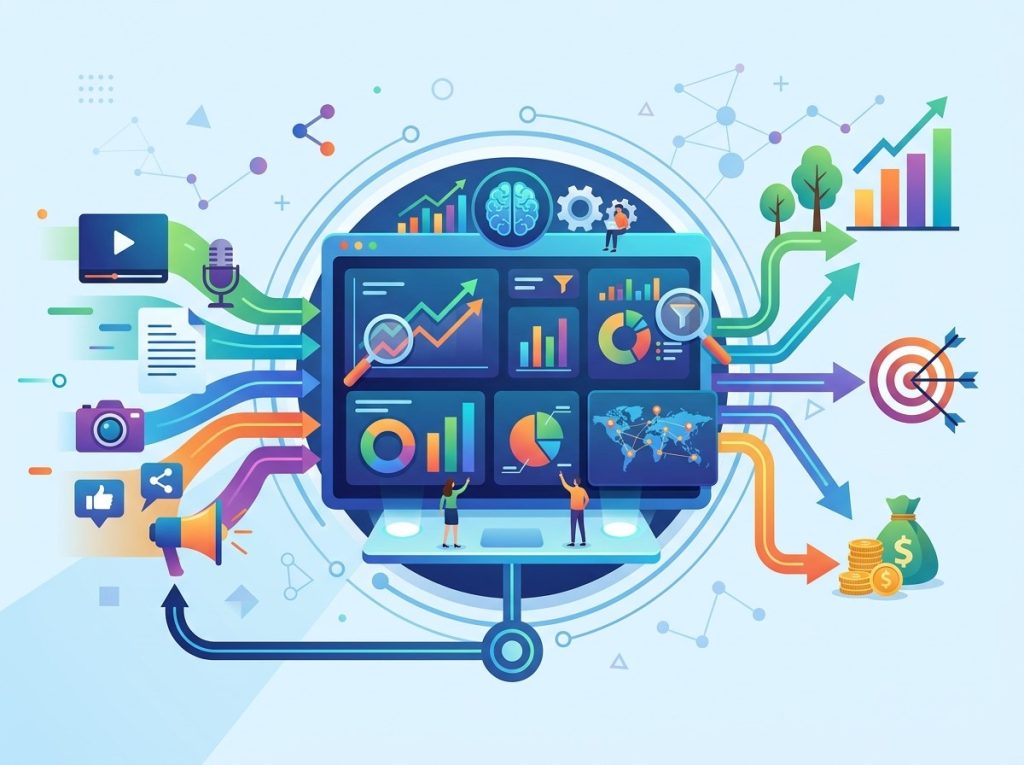 Content marketing produces a significant amount of performance data. Marketing Analytics helps businesses identify which content topics, formats, and distribution channels generate the strongest results. A company may discover that long-form educational articles generate search traffic while short videos produce higher social engagement. Instead of choosing one format for everything, marketers can use these insights to develop a balanced content strategy.
Analytics can also identify content gaps. If customers frequently search for topics that a business has not covered, those topics can become opportunities for future content creation. This approach makes content planning more strategic and reduces the risk of producing content without understanding audience demand.
Exploring Metaverse Marketing Strategies Through Data
As digital experiences continue to evolve, businesses are exploring new ways to interact with audiences. Metaverse Marketing Strategies represent one emerging area where analytics can become increasingly important. Virtual environments can generate new forms of customer interaction, including virtual events, digital experiences, interactive product demonstrations, and branded environments.
Businesses experimenting with these strategies need to understand whether their investments are producing meaningful engagement. Analytics can help measure participation, interaction rates, session duration, conversions, and audience behavior within virtual experiences. Although the metaverse remains an evolving marketing environment, data-driven measurement can help businesses evaluate opportunities more carefully instead of investing based solely on trends.
How to Build a Data-Driven Marketing Strategy
Creating a successful analytics-based marketing strategy requires more than installing tracking tools. Businesses need a structured process for collecting, analyzing, and applying data. First, companies should define clear marketing objectives. Goals may include increasing website traffic, generating leads, improving conversion rates, increasing sales, or strengthening customer retention.
Next, businesses should identify the metrics that directly support those objectives. Tracking too many unrelated metrics can make reports complicated and reduce strategic focus. The next step is collecting reliable data from relevant channels. Website analytics, CRM platforms, advertising platforms, email marketing systems, and social media tools can all contribute valuable information.
After collecting data, marketers should look for patterns and trends. The goal is not simply to create reports but to discover insights that can influence decisions. Finally, businesses should continuously test and improve their strategies. Marketing Analytics becomes most valuable when insights are turned into action.
Common Challenges in Marketing Analytics
Although analytics provides significant advantages, businesses may face several challenges. One common problem is poor data quality. Inaccurate, incomplete, or inconsistent information can lead to incorrect conclusions. Another challenge is data fragmentation. Customer information may exist across multiple platforms, making it difficult to create a complete picture of the customer journey.
Businesses may also collect too much data without knowing which information matters most. This can create reporting complexity and make decision-making slower. Privacy and data protection are additional considerations. Companies should handle customer information responsibly and follow applicable privacy requirements. The solution is to establish clear data processes, select meaningful metrics, maintain accurate tracking, and regularly review analytics systems.
The Future of Marketing Analytics
 Marketing Analytics will continue to evolve as businesses adopt artificial intelligence, automation, predictive technologies, and new digital channels. Predictive analytics can help companies identify potential customer behaviors before they occur. Artificial intelligence can analyze large datasets more quickly and identify patterns that may be difficult to detect manually.
Real-time analytics can also allow marketers to respond faster to changes in customer behavior. Instead of waiting for monthly reports, marketing teams can monitor campaigns and make adjustments while they are still active. As customer journeys become more complex, businesses will increasingly need integrated analytics systems that connect data from multiple marketing channels.
Conclusion
Marketing Analytics gives businesses the ability to transform marketing data into actionable business insights. By understanding campaign performance, customer behavior, conversion patterns, and marketing ROI, companies can make smarter decisions and use their resources more effectively.
When combined with Customer Data Analysis, SEO and Inbound Marketing, and emerging approaches such as Metaverse Marketing Strategies, analytics can support a more flexible and customer-focused growth strategy. The goal is not simply to collect more data. The real value comes from understanding that data and using it to improve marketing decisions. Businesses that consistently measure performance, identify opportunities, and adapt their strategies can build stronger customer relationships and achieve sustainable data-driven growth.
Frequently Asked Questions
1. What is Marketing Analytics?
Marketing Analytics is the process of collecting, measuring, and analyzing marketing data to understand performance and improve business decisions. It helps businesses identify successful campaigns, customer trends, and growth opportunities.
2. Why is Marketing Analytics important?
Marketing Analytics helps businesses make decisions based on real performance data instead of assumptions. It can improve marketing efficiency, customer understanding, campaign performance, and return on investment.
3. What is Customer Data Analysis?
Customer Data Analysis involves examining information about customer behavior, preferences, interactions, and purchases. Businesses use these insights to create targeted campaigns and improve customer experiences.
4. How does Marketing Analytics improve ROI?
It helps businesses identify which marketing channels and campaigns generate the strongest results. Companies can then increase investment in high-performing activities and reduce spending on ineffective campaigns.
5. How does Marketing Analytics support SEO?
Analytics can show which keywords, pages, and content generate organic traffic and conversions. Marketers can use these insights to improve SEO strategies and create content that better matches audience interests.
6. What metrics should businesses track?
Important metrics may include website traffic, engagement, conversion rate, customer acquisition cost, customer lifetime value, lead generation, sales, and return on marketing investment.
7. Can small businesses use Marketing Analytics?
Yes. Small businesses can start with basic website, social media, email, and advertising analytics. As the business grows, more advanced analytics tools and systems can be introduced.
8. How does analytics improve customer experience?
Analytics reveals how customers interact with a brand across different touchpoints. Businesses can use these insights to identify problems, personalize experiences, and create more relevant marketing messages.
9. What role does AI play in Marketing Analytics?
AI can process large amounts of data, identify patterns, support predictive analysis, and automate certain reporting tasks. This can help marketing teams make faster and more informed decisions.
10. What is the future of Marketing Analytics?
The future will involve greater use of AI, predictive analytics, automation, real-time reporting, and integrated customer data. Businesses will increasingly use analytics to anticipate customer needs and optimize marketing activities.



Leave a Reply