

Customer Insights help businesses understand why people buy certain products, what influences their decisions, and which factors encourage them to choose one brand over another. By analyzing customer preferences, shopping habits, feedback, and purchasing patterns, businesses can develop more effective marketing strategies and deliver experiences that match customer expectations.
Understanding buying behavior is essential for improving customer satisfaction, increasing conversions, and building long-term loyalty. Businesses can use Customer Data Analysis to identify meaningful patterns, while Audience Segmentation helps them group customers according to shared characteristics and preferences. Predictive Analytics can then reveal potential future behaviors, allowing marketers to anticipate customer needs and make informed decisions.
What Are Customer Insights and Buying Behavior?
Customer Insights are meaningful conclusions drawn from customer information, including purchasing history, preferences, browsing activity, feedback, and interactions with a brand. They help businesses move beyond basic statistics to understand the motivations and needs behind customer decisions. These insights can guide marketing, product development, customer service, and sales strategies.
Buying behavior refers to the way customers recognize needs, research available options, compare alternatives, make purchases, and evaluate their experiences afterward. Understanding this process allows businesses to identify what encourages a purchase, what creates hesitation, and what motivates customers to return.
Why Buying Behavior Matters
Buying behavior reveals how customers respond to pricing, product quality, convenience, brand reputation, recommendations, and promotional messages. Two customers may purchase the same product for completely different reasons, making it important to understand their individual motivations rather than relying on assumptions.
Businesses that understand these differences can develop more relevant offers, improve product positioning, and address common purchasing barriers. This knowledge also helps organizations recognize changes in customer expectations and adjust their strategies before those changes negatively affect performance.
Collect the Right Customer Data
 Reliable Customer Insights begin with collecting relevant, accurate, and appropriately obtained information. Businesses should focus on data that helps explain customer needs, purchasing decisions, and interactions with their products or services. Collecting large amounts of information without a clear purpose can create unnecessary complexity and make it harder to identify useful patterns.
Common sources include transaction records, website analytics, customer surveys, support conversations, product reviews, email engagement, and customer relationship management systems. Combining these sources can provide a more complete understanding of customer behavior, provided that the information is handled securely and according to applicable privacy requirements.
Analyze Purchase History
Purchase history can reveal which products customers buy, how frequently they return, how much they typically spend, and whether their purchases follow seasonal patterns. These details help businesses identify popular products, recurring customer needs, and opportunities to improve cross-selling or repeat-purchase campaigns.
For example, a retailer may discover that customers who purchase a particular product often return within a few weeks to buy a related item. This pattern can inform product recommendations and follow-up messages. Businesses should validate these patterns before turning them into marketing assumptions.
Understand Customer Feedback
Customer feedback explains the experiences and opinions behind purchasing decisions. Reviews, surveys, support requests, and direct comments can reveal why customers prefer certain products, what concerns prevent purchases, and which improvements matter most.
Businesses should examine recurring themes instead of reacting to isolated comments alone. When customers repeatedly mention delivery delays, confusing product information, or limited payment options, those patterns may indicate barriers affecting conversions. Addressing these issues can improve customer confidence and support stronger business performance.
Use Customer Data Analysis to Identify Patterns
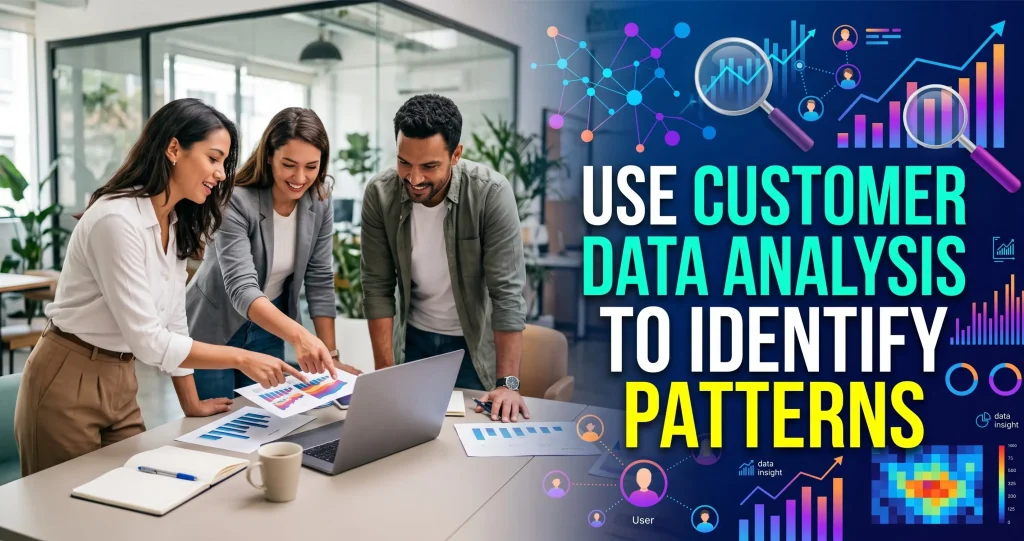 Customer Data Analysis transforms raw information into findings that businesses can use to understand purchasing decisions. It involves organizing customer records, comparing behaviors, identifying trends, and evaluating relationships between different variables. Effective analysis focuses on answering specific questions rather than producing reports that provide little practical value.
For example, businesses may investigate why certain customers abandon their shopping carts, why some campaigns generate more purchases than others, or which product categories attract repeat buyers. These findings can reveal opportunities to improve pricing, messaging, product presentation, and the overall purchasing experience.
Identify Purchase Triggers
Purchase triggers are events or conditions that encourage customers to consider or complete a purchase. These may include a product shortage, a seasonal need, a recommendation, a promotional offer, or a change in personal circumstances.
Analyzing customer journeys can help businesses identify common triggers. If customers frequently purchase after receiving a product demonstration or reading customer reviews, marketers can make those resources easier to access. Understanding these triggers allows businesses to support customer decisions with useful information rather than relying exclusively on discounts or aggressive promotions.
Recognize Barriers to Purchase
Not every interested customer completes a transaction. Unexpected costs, complicated checkout processes, unclear product details, limited payment options, and concerns about reliability can all discourage customers from purchasing.
Businesses can examine website behavior, cart abandonment rates, customer complaints, and checkout performance to understand where customers experience difficulty. Fixing these barriers can be more effective than increasing advertising spending because it helps convert existing interest into completed purchases.
Apply Audience Segmentation to Understand Customer Differences
Audience Segmentation divides customers into meaningful groups based on shared characteristics, behaviors, preferences, or needs. Instead of treating every customer identically, businesses can use segmentation to understand how different groups make purchasing decisions and what influences their choices.
Segmentation can be based on demographics, geographic location, purchase frequency, spending patterns, interests, or stage in the customer journey. The most useful approach depends on the business model and the questions the organization wants to answer. Segments should remain practical, measurable, and relevant to marketing decisions.
Segment Customers by Purchasing Behavior
Behavioral segmentation groups customers according to actions such as browsing activity, previous purchases, product preferences, brand interactions, and response to promotions. This method can help businesses distinguish frequent buyers from occasional shoppers, new customers from returning customers, and high-intent visitors from people still researching their options.
For example, returning customers may respond well to relevant product recommendations, while first-time visitors may need clearer product information and trust signals. By matching communication to observed behavior, businesses can make marketing more useful and avoid sending identical messages to audiences with different needs.
Personalize Marketing Messages
Customer Insights can help businesses create messages that reflect the needs and preferences of different audience segments. A customer interested in affordability may value transparent pricing, while another may prioritize product quality, convenience, or customer support.
Personalized marketing should be based on relevant information and reasonable expectations. Businesses can tailor product recommendations, email content, landing pages, and promotional messages without making customers feel that their private information has been used inappropriately. The goal is to improve relevance and customer experience rather than simply increase message frequency.
Use Predictive Analytics to Anticipate Buying Behavior
Predictive Analytics uses historical data, statistical techniques, and, in some cases, machine learning to estimate what customers may do in the future. Businesses can use these methods to identify customers who may be ready to purchase, estimate demand, recognize potential churn, and anticipate changes in product preferences.
Predictive models do not guarantee future outcomes. Their accuracy depends on data quality, suitable methods, changing market conditions, and regular evaluation. When used responsibly, predictive insights can help businesses plan campaigns and prioritize opportunities more effectively.
Forecast Customer Purchase Intent
Purchase intent refers to the likelihood that a customer will consider or complete a purchase. Signals such as repeated product-page visits, searches for product details, interactions with pricing pages, and previous transactions may indicate stronger interest.
Businesses can combine these signals to identify customers who may benefit from additional information, demonstrations, or reminders. However, a single action does not prove that someone intends to buy. Companies should use multiple relevant signals and test their assumptions before making significant marketing decisions.
Predict Customer Retention and Churn
Predictive models can help businesses identify patterns associated with repeat purchases or customer loss. Changes in purchasing frequency, declining engagement, unresolved service problems, or reduced subscription activity may indicate that a customer is becoming less engaged.
When these patterns appear, businesses can investigate the underlying causes and offer appropriate support. For example, a subscription company might improve onboarding or address recurring service issues. Retention campaigns are most effective when they solve real customer problems instead of relying only on incentives.
Understand the Customer Buying Journey
The customer buying journey includes the stages customers move through when discovering a need, researching solutions, comparing options, purchasing a product, and evaluating the experience. Understanding this journey helps businesses determine what information customers need at each stage and where they may encounter obstacles.
Customer Insights can connect website analytics, sales records, feedback, and customer interactions to reveal how people move between these stages. This information allows marketers to improve communication, provide relevant resources, and reduce unnecessary friction throughout the purchasing process.
Analyze Awareness and Consideration
During the awareness stage, customers identify a need and begin exploring possible solutions. They may discover a business through search engines, social media, advertising, referrals, or educational content. At the consideration stage, they often compare product features, prices, reviews, and competing brands.
Businesses can examine search queries, content engagement, product comparisons, and customer questions to understand these behaviors. Educational articles, transparent pricing, detailed product descriptions, and credible reviews can help customers make informed decisions without feeling pressured.
Improve the Purchase Experience
The purchase stage includes activities such as selecting a product, entering delivery information, choosing a payment method, and completing checkout. Even customers who strongly want a product may abandon a transaction when the process becomes confusing or inconvenient.
Businesses should analyze checkout completion rates, payment errors, page performance, and customer feedback to identify problems. Simplifying forms, displaying total costs clearly, offering suitable payment options, and providing accessible support can reduce purchasing friction and make it easier for customers to complete transactions.
Measure Customer Insights With Meaningful Metrics
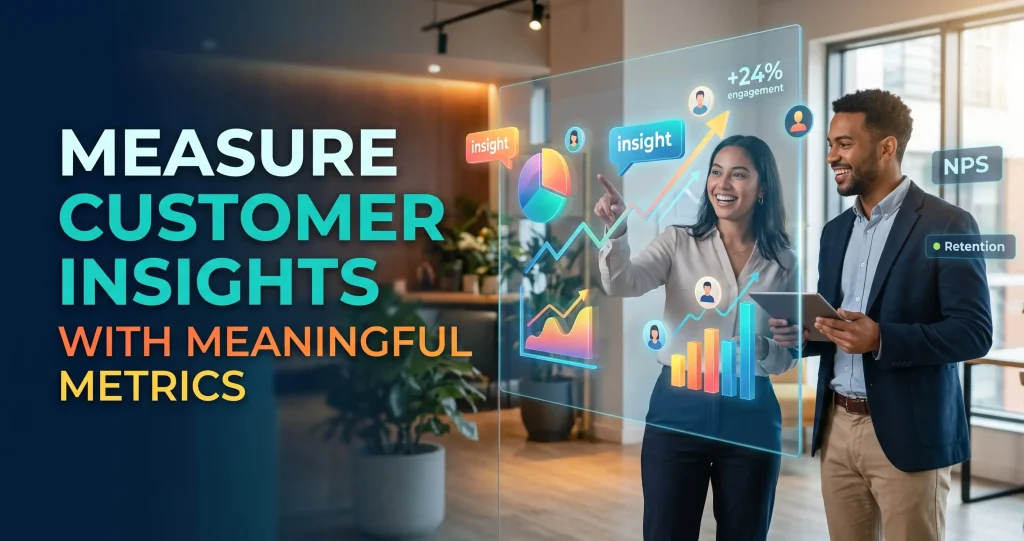 Businesses need measurable indicators to determine whether their customer insights are improving buying behavior and marketing performance. The right metrics depend on the business model, customer journey, and campaign objectives. Measurements should be evaluated over suitable periods and compared with relevant baselines.
Useful indicators include conversion rate, average order value, repeat-purchase rate, customer acquisition cost, cart abandonment rate, and customer lifetime value. Customer satisfaction and retention measures can also reveal whether improvements are creating lasting benefits beyond immediate sales.
Connect Insights to Business Results
Collecting customer data has limited value unless businesses use the findings to improve decisions. Each insight should lead to a clear hypothesis, an appropriate action, and a way to measure the outcome.
For example, if analysis suggests that unclear delivery information contributes to cart abandonment, a business can make delivery costs and timelines more visible. It can then compare checkout performance before and after the change. This process helps distinguish useful insights from assumptions and encourages continuous improvement.
Test and Refine Marketing Strategies
A/B testing allows businesses to compare different versions of a marketing message, landing page, offer, or product presentation. By measuring customer responses, organizations can determine which changes are associated with better outcomes.
Testing should focus on meaningful questions and use suitable sample sizes and evaluation periods. Businesses should also consider customer segments and external influences that may affect results. Regular testing helps organizations refine their strategies as customer preferences and market conditions evolve.
Best Practices for Using Customer Insights
Effective customer insight strategies require clear objectives, reliable data, appropriate analytical methods, and consistent evaluation. Businesses should begin with specific questions about buying behavior and collect only the information needed to answer them. This approach keeps analysis focused and makes it easier to translate findings into practical improvements.
Organizations should also protect customer privacy, restrict access to sensitive records, and follow applicable data protection laws. Customer information should be interpreted carefully because correlations do not always demonstrate cause and effect. Combining quantitative evidence with customer feedback can provide a more balanced understanding of purchasing decisions.
Conclusion
Customer Insights help businesses understand the motivations, preferences, and obstacles that shape buying behavior. By combining Customer Data Analysis, Audience Segmentation, and Predictive Analytics, organizations can identify purchasing patterns, personalize marketing, anticipate customer needs, and improve the buying journey.
The most effective approach connects every insight to a practical business decision and a measurable outcome. Businesses that collect reliable data, respect customer privacy, test their assumptions, and regularly review performance can build more relevant marketing strategies, improve customer experiences, and support sustainable growth.
Frequently Asked Questions
1. What are Customer Insights?
Customer Insights are meaningful findings derived from customer data, feedback, preferences, and behavior. They help businesses understand why customers make particular decisions and how products, services, and marketing strategies can better meet their needs.
2. How do Customer Insights help understand buying behavior?
Customer Insights reveal what customers purchase, which factors influence their decisions, what concerns delay purchases, and why customers return or leave. Businesses can use these findings to improve marketing messages, product offerings, and purchasing experiences.
3. What types of data are useful for understanding buying behavior?
Useful data includes purchase history, website activity, customer surveys, product reviews, support conversations, email engagement, and transaction records. Businesses should prioritize accurate, relevant information collected and used appropriately.
4. What is the role of Audience Segmentation in customer analysis?
Audience Segmentation groups customers according to shared characteristics, preferences, or behaviors. It helps businesses identify differences between customer groups and develop more relevant marketing messages, product recommendations, and promotional strategies.
5. How does Predictive Analytics help businesses understand customers?
Predictive Analytics uses historical data and analytical models to estimate future behavior, such as purchase likelihood, repeat purchases, customer demand, or churn risk. Predictions should be tested regularly because customer behavior and market conditions can change.
6. How can Customer Data Analysis improve marketing campaigns?
Customer Data Analysis helps marketers identify effective channels, understand customer preferences, recognize purchasing barriers, and measure campaign performance. These findings support better targeting, messaging, budget allocation, and ongoing campaign optimization.
7. How can businesses identify factors that influence purchase decisions?
Businesses can examine customer feedback, purchase patterns, website interactions, product reviews, and responses to different offers. Combining these sources can help reveal the influence of price, convenience, product quality, brand trust, and other factors.
8. Which metrics help measure buying behavior?
Important metrics include conversion rate, average order value, repeat-purchase rate, cart abandonment rate, customer acquisition cost, and customer lifetime value. The most relevant metrics depend on the organization’s goals and business model.
9. How can small businesses use Customer Insights?
Small businesses can review sales records, ask customers for feedback, monitor website analytics, and identify their most frequently purchased products. Even basic analysis can reveal opportunities to improve customer service, product selection, and marketing relevance.
10. How often should businesses review Customer Insights?
Businesses should review key customer metrics regularly, with the frequency depending on sales volume, market changes, and campaign activity. Fast-moving businesses may need weekly reviews, while others may benefit from monthly or quarterly analysis.



Leave a Reply