

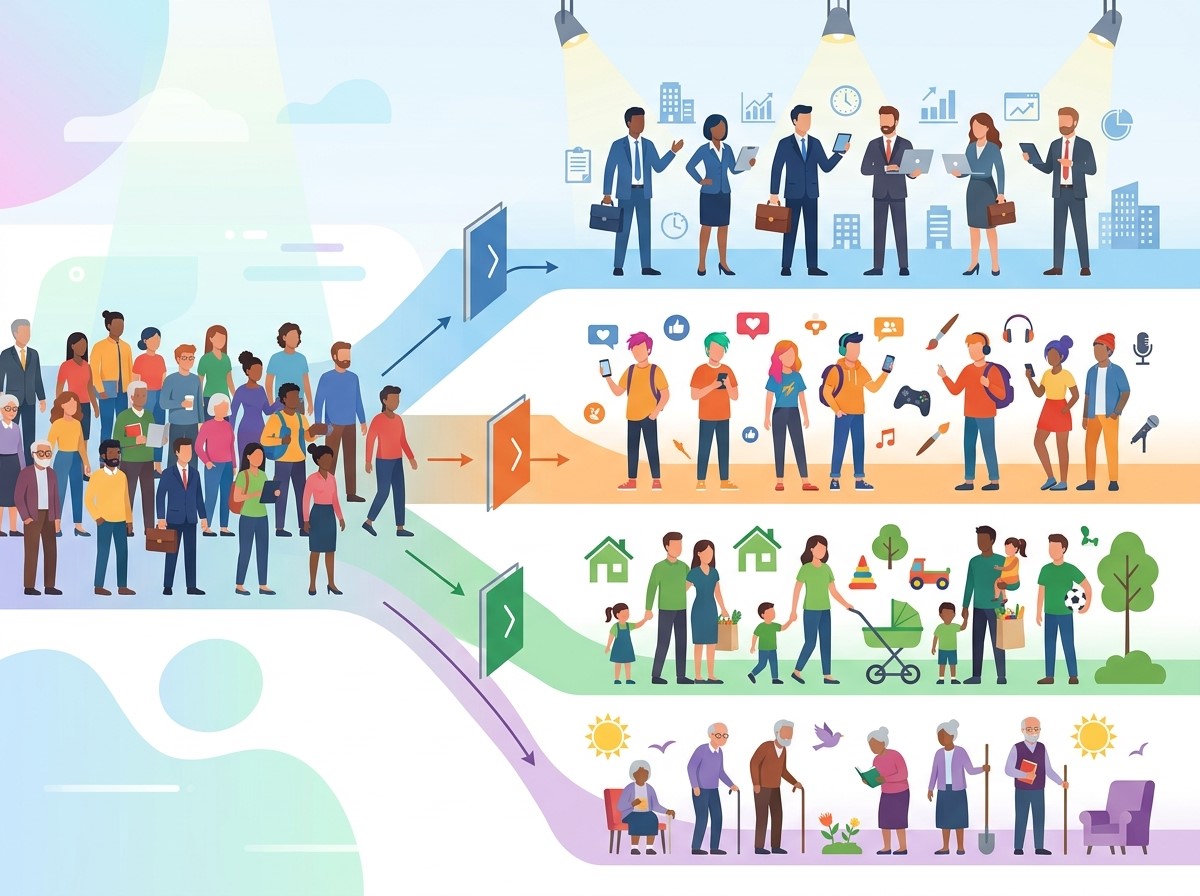
Audience Segmentation is an important marketing approach that helps businesses divide a broad audience into smaller groups based on shared characteristics, behaviors, interests, needs, or preferences. Instead of communicating with every potential customer using the same message, businesses can create more relevant campaigns for specific audience groups.
Lead generation becomes more effective when businesses understand who they are trying to reach. A generic campaign may attract attention, but targeted messaging can make it easier to connect with people who are more likely to show interest in a product or service.
Modern businesses can use customer data, Marketing Analytics, and Predictive Analytics to identify valuable audience groups and understand their behavior. These insights can help marketers create more relevant content, improve campaign targeting, optimize landing pages, and develop stronger lead-generation strategies.
What Is Audience Segmentation?
Audience Segmentation is the process of dividing a large target audience into smaller groups that share specific characteristics or behaviors. These characteristics may include demographics, geographic location, purchasing behavior, interests, engagement levels, or customer needs.
By creating meaningful segments, marketers can develop campaigns that address the specific expectations of different groups. This can make communication more relevant and help businesses focus their resources on audiences that matter most to their objectives.
Demographic Segmentation
Demographic segmentation groups audiences based on characteristics such as age, gender, income level, education, occupation, or family status when such information is relevant and appropriately collected.
For example, a business offering professional training may create different campaigns for university students, working professionals, and business owners. Each group may have different motivations and expectations, requiring different messaging.
Behavioral Segmentation
Behavioral segmentation focuses on how people interact with a brand. This may include website visits, product views, content downloads, email interactions, previous purchases, or other measurable activities.
Behavioral information can be especially useful for lead generation because it provides insight into what potential customers are actually doing rather than relying only on demographic information.
How Audience Segmentation Improves Lead Quality
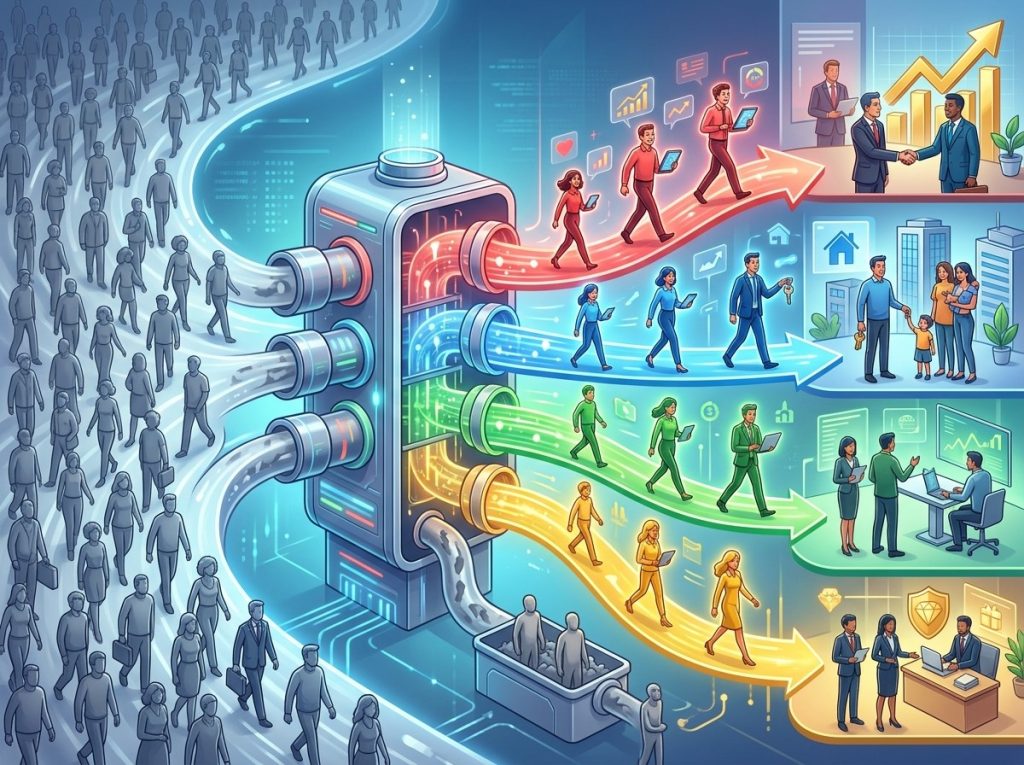 Not every visitor or contact has the same level of interest in a product or service. Audience segmentation allows marketers to distinguish between different types of prospects and create more relevant experiences for each group. This can help businesses focus their lead-generation efforts on people whose needs are more closely aligned with the available products or services.
Identifying High-Interest Prospects
A visitor who repeatedly visits a service page, downloads multiple resources, or interacts with product-related content may demonstrate stronger interest than someone who visits only once.
Businesses can use these behavioral signals to create segments and develop follow-up campaigns that provide more relevant information to highly engaged prospects.
Reducing Irrelevant Leads
Broad marketing campaigns can generate large numbers of contacts that may not match the target customer profile. While volume can appear attractive, irrelevant leads can consume significant sales and marketing resources.
Audience segmentation helps businesses define more specific target groups. This can improve the relevance of campaigns and reduce unnecessary outreach to people who are unlikely to become customers.
The Role of Marketing Analytics in Audience Segmentation
Marketing Analytics helps businesses understand how audiences interact with marketing campaigns and digital channels. By analyzing campaign data, marketers can identify patterns that may reveal meaningful customer segments.
Analytics can include information about website traffic, email engagement, advertising performance, content interactions, conversions, and customer journeys. These insights can support more informed segmentation decisions.
Analyzing Customer Behavior
Marketing analytics can show which pages customers visit, which content they interact with, and which campaigns generate responses. For example, if one audience group consistently engages with educational content while another responds more strongly to product demonstrations, marketers can create different content strategies for each segment.
Measuring Segment Performance
After creating audience segments, marketers can compare campaign performance across groups. Metrics such as click-through rates, engagement, lead volume, conversion rates, and cost per lead can provide useful information. This process helps businesses identify which segments are responding to particular messages and where campaign improvements may be necessary.
Using Predictive Analytics for Better Lead Generation
Predictive Analytics uses historical and current data to identify patterns that can help businesses anticipate possible future behaviors. In lead generation, this approach can help marketers identify prospects who may demonstrate stronger engagement or conversion potential.
Predictive models can consider multiple data points simultaneously, allowing businesses to move beyond simple audience categories and develop more data-informed targeting approaches.
Predicting Lead Intent
Some prospects show behavioral signals that indicate stronger purchase interest. Predictive Analytics can help identify combinations of behaviors associated with different stages of the customer journey.
For example, repeated website visits combined with product-page activity and resource downloads may indicate higher engagement. Marketers can use these insights to prioritize relevant communication.
Lead Scoring
Predictive models can support lead-scoring systems by assigning scores based on available customer data and behavioral signals. A higher score may indicate that a prospect matches certain characteristics associated with stronger engagement. Sales and marketing teams can then use these scores as one input when deciding which leads require additional attention.
Personalization Through Audience Segmentation
Personalization becomes easier when marketers understand that different audience groups have different needs. Instead of delivering identical messages to everyone, businesses can adapt content and offers based on segment characteristics. Personalized communication can be applied across websites, email campaigns, social media, advertising, and other marketing channels.
Personalized Email Campaigns
Email marketing can benefit significantly from audience segmentation. Businesses can create different email campaigns for new subscribers, returning customers, highly engaged prospects, inactive users, or people interested in particular products. Relevant subject lines, content, offers, and calls to action can then be adapted to each group.
Personalized Website Experiences
Businesses can also use segmentation insights to improve website experiences. Different visitors may be guided toward different resources, products, or educational content based on their interests and previous interactions. The goal is to make the customer journey more relevant without creating unnecessary complexity for users.
Audience Segmentation and Content Strategy
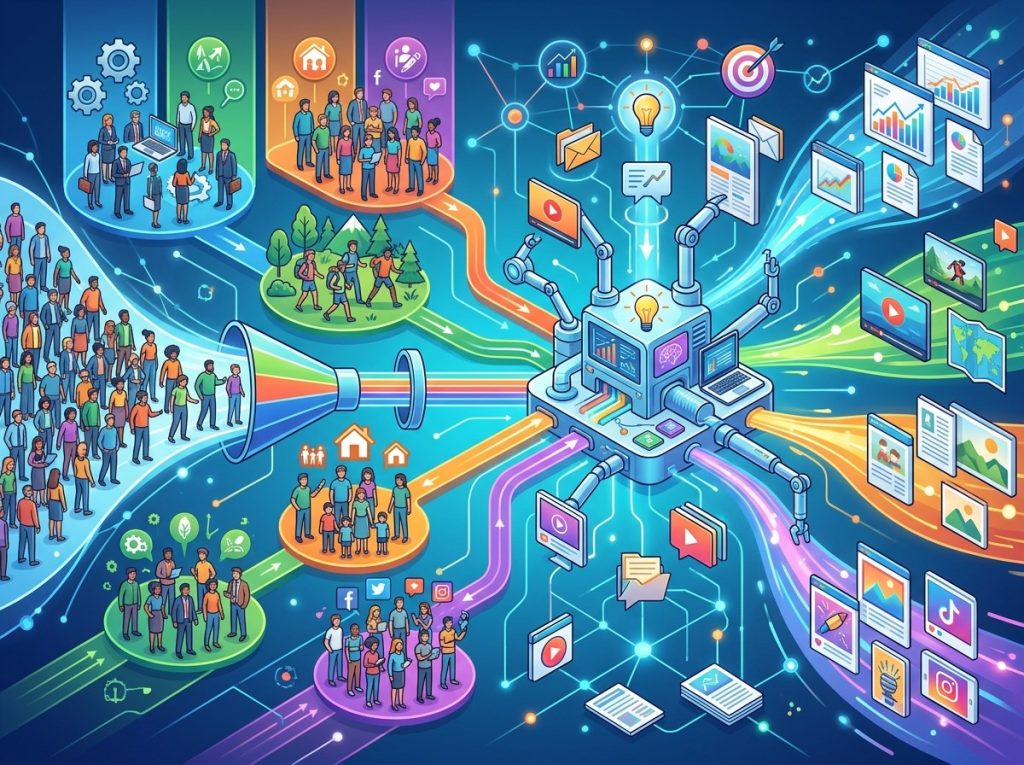 Content plays an important role in lead generation because potential customers often need information before they are ready to make a purchasing decision. Audience segmentation allows businesses to create content that addresses specific questions and concerns associated with different customer groups.
Creating Segment-Specific Content
A software company may have small-business owners, enterprise managers, and technical professionals among its audience. Each group may care about different benefits and challenges.
Instead of publishing only general content, the company can create resources addressing the specific interests of each group. This can make content more useful and relevant.
Improving Content Distribution
Segmentation can also help determine where and how content should be distributed. Some audience groups may respond better to email, while others may discover content through social media, search engines, or paid advertising. Understanding these differences can help marketers allocate content-distribution resources more effectively.
Improving Paid Advertising With Audience Segmentation
Paid advertising platforms provide businesses with various targeting options. Audience segmentation can help marketers develop more focused campaigns and create messages for specific customer groups.
Rather than using one advertisement for an entire market, businesses can develop different creative approaches based on audience characteristics and needs.
Creating Relevant Ad Messages
Different segments may respond to different value propositions. For example, a beginner may need educational information, while an experienced buyer may be more interested in advanced features or pricing.
Segment-specific advertising can help businesses present information that is more closely aligned with the prospect’s position in the customer journey.
Optimizing Advertising Budgets
Segmentation can also help marketers analyze which groups generate valuable leads. If certain segments consistently produce stronger results, businesses can investigate why and adjust campaign resources accordingly.
This does not mean automatically excluding other segments. Instead, performance data can help marketers make more informed decisions about campaign optimization.
Using Audience Segmentation Across the Customer Journey
Lead generation is only one stage of the customer journey. Prospects can move through awareness, consideration, evaluation, purchase, and retention stages. Audience segmentation can help marketers create different communication strategies based on where prospects are in this journey.
Awareness Stage
People in the awareness stage may not fully understand their problem or know which solutions are available. Educational content, guides, videos, and informative articles can help introduce the brand and topic. Segmentation can help marketers deliver introductory content to audiences who are still researching.
Consideration Stage
Prospects in the consideration stage may already understand their needs and be comparing possible solutions. They may benefit from case studies, product comparisons, demonstrations, testimonials, and detailed guides. Recognizing this stage can help businesses avoid sending overly basic content to highly engaged prospects.
Decision Stage
Decision-stage prospects may be looking for pricing, product details, consultations, free trials, or other information required to make a final decision. Segmenting these prospects allows businesses to provide more conversion-focused communication while maintaining relevance.
Common Audience Segmentation Challenges
Although segmentation can improve marketing efficiency, businesses may face several challenges when implementing it. Poor data quality, outdated customer information, overly broad segments, and insufficient analysis can reduce the usefulness of segmentation. Businesses should regularly review their segments and update them as customer behavior and business objectives change.
Avoiding Over-Segmentation
Creating too many small segments can make campaigns difficult to manage. Marketing teams may end up producing large amounts of content for groups that are too small to justify separate campaigns.
Segments should therefore be meaningful and actionable. The goal is to identify differences that can actually influence marketing communication or customer experiences.
Maintaining Data Quality
Accurate segmentation depends on reliable information. Duplicate records, outdated details, incorrect classifications, or incomplete behavioral data can lead to poor targeting. Businesses should establish processes for maintaining customer data and reviewing segmentation criteria regularly.
Measuring the Impact of Audience Segmentation
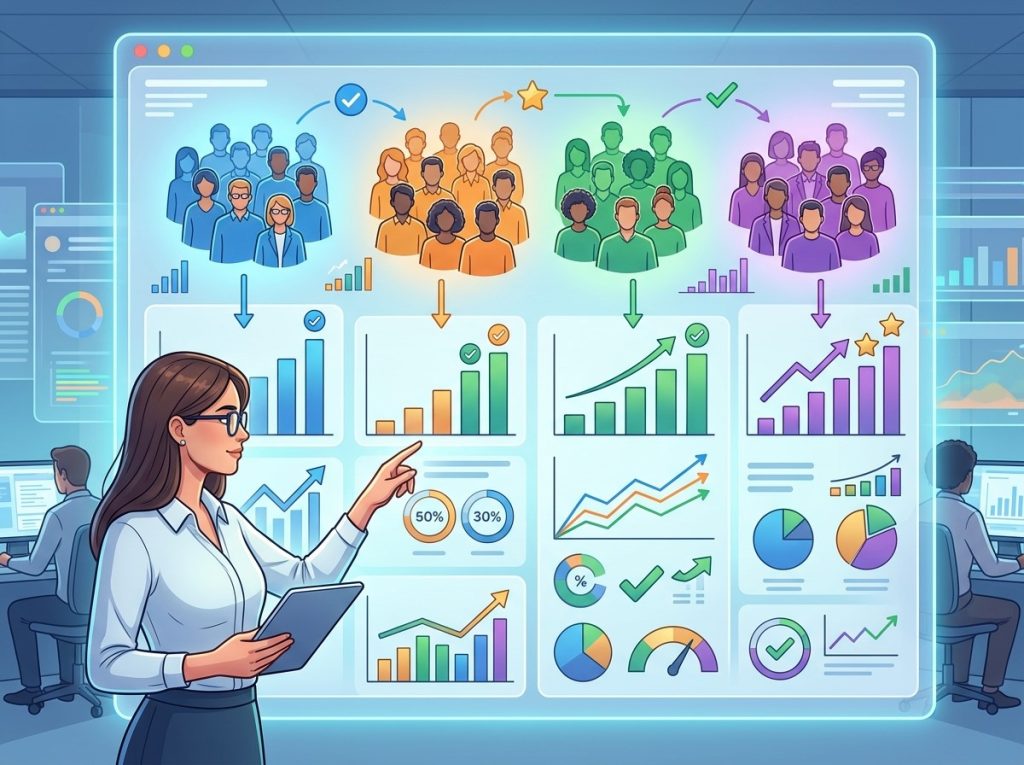 Businesses should measure whether segmentation is actually improving lead-generation performance. Useful metrics may include qualified lead volume, conversion rates, engagement, cost per lead, customer acquisition cost, and revenue generated from specific segments. Measurement allows marketers to determine whether their segmentation strategy is producing meaningful improvements.
Comparing Campaign Results
Marketers can compare results between segmented and broader campaigns where appropriate. They can also compare performance among individual audience groups. This analysis can reveal which segments respond to particular offers, content formats, or communication channels.
Improving Segmentation Over Time
Audience segmentation should not be treated as a one-time activity. Customer behavior changes, markets evolve, and new data becomes available. Regular analysis using Marketing Analytics and Predictive Analytics can help businesses refine their segments and improve future campaigns.
Conclusion
Audience Segmentation can make lead generation more focused by helping businesses understand different groups of potential customers and communicate with them more relevantly. Instead of relying on one message for an entire audience, marketers can develop campaigns based on customer characteristics, behaviors, interests, and journey stages.
Marketing Analytics provides valuable information about campaign and customer behavior, while Predictive Analytics can help identify patterns that may indicate future engagement or conversion potential. Together, these approaches can support more informed targeting and lead-management decisions.
Frequently Asked Questions
1. What is Audience Segmentation?
Audience Segmentation is the process of dividing a broad audience into smaller groups based on shared characteristics, behaviors, interests, needs, or other relevant factors.
2. How does Audience Segmentation improve lead generation?
It helps businesses create more relevant campaigns for specific customer groups, which can improve targeting, engagement, lead quality, and the overall efficiency of lead-generation activities.
3. What is behavioral segmentation?
Behavioral segmentation groups people according to their interactions with a business, such as website visits, content engagement, purchases, downloads, email activity, or other measurable behaviors.
4. How does Marketing Analytics support segmentation?
Marketing Analytics helps businesses analyze campaign performance, customer behavior, website activity, engagement, and conversions to identify meaningful audience patterns and improve segmentation decisions.
5. What is Predictive Analytics in lead generation?
Predictive Analytics uses historical and current data to identify patterns that may help businesses anticipate future customer behaviors, engagement, or conversion potential.
6. Can Audience Segmentation improve lead quality?
It can help improve lead quality by allowing businesses to focus messaging and campaigns on audience groups that more closely match their target customer profiles.
7. How can segmentation personalize marketing campaigns?
Businesses can use different content, offers, email messages, advertisements, and calls to action for different audience groups based on their interests, behaviors, needs, or journey stages.
8. What are the main types of Audience Segmentation?
Common approaches include demographic, geographic, behavioral, psychographic, firmographic, and lifecycle-based segmentation. The most appropriate approach depends on the business and available data.
9. Can small businesses use Audience Segmentation?
Yes. Small businesses can start with simple segments based on customer needs, behaviors, product interests, or engagement levels and gradually develop more advanced segmentation as more data becomes available.
10. How often should businesses update audience segments?
There is no universal schedule. Businesses should review segments regularly and update them when customer behavior, available data, marketing objectives, products, or market conditions change.



Leave a Reply