

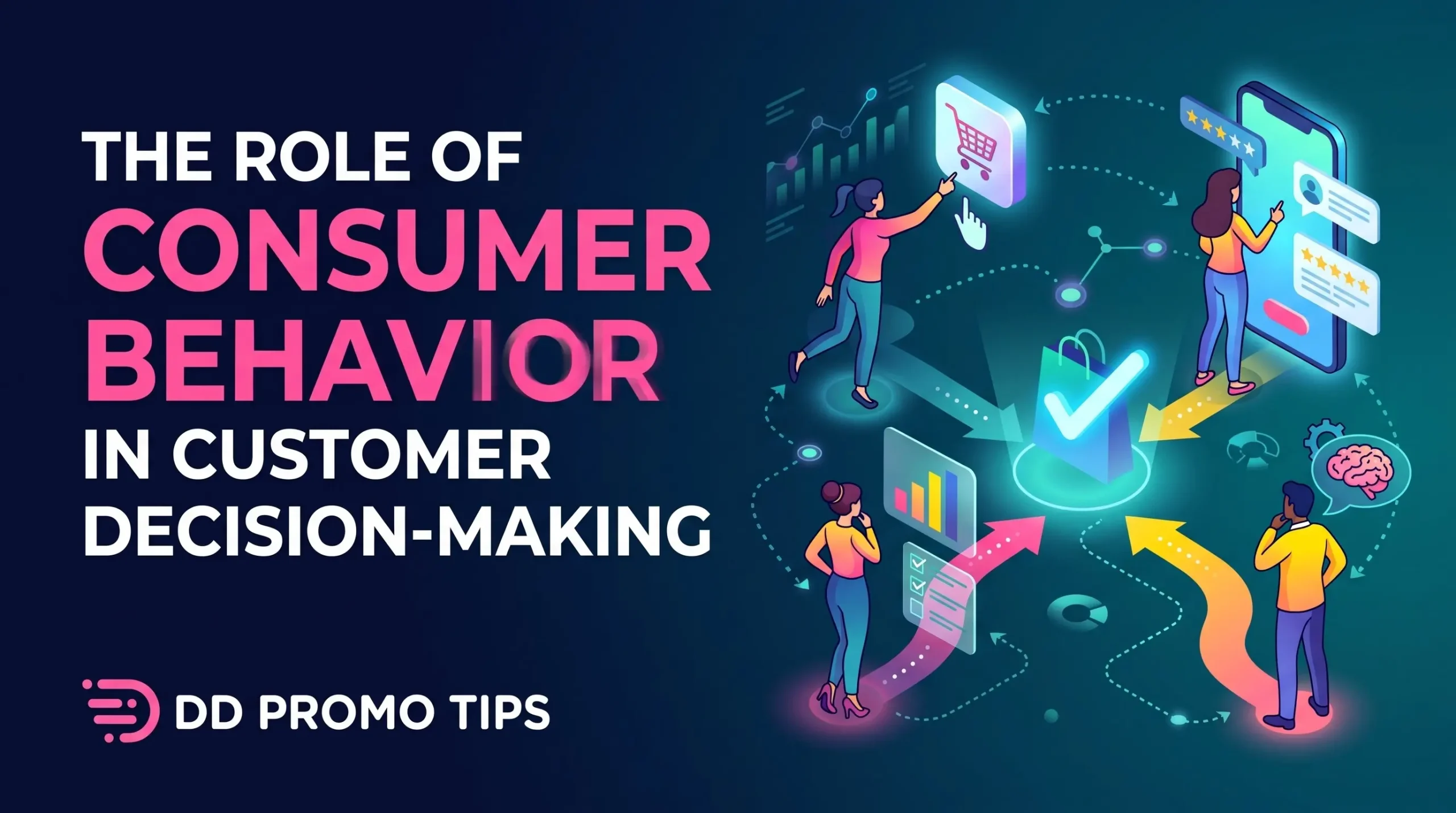
Consumer Behavior plays a crucial role in understanding how people discover products, evaluate alternatives, and make purchasing decisions. Customers do not choose products based on price or quality alone. Their decisions can also be influenced by personal preferences, emotions, cultural backgrounds, social recommendations, previous experiences, and marketing messages. Understanding these factors helps businesses develop relevant strategies that connect with customers and address their needs.
In today’s competitive marketplace, analyzing consumer behavior enables companies to understand what motivates customers to take action. Businesses can use Digital Marketing Analytics, Customer Insights, and Customer Data Analysis to identify purchasing patterns, evaluate marketing performance, and improve the customer experience. By combining behavioral research with reliable data, organizations can create more relevant campaigns, strengthen customer relationships, and support informed purchasing decisions. A deeper understanding of consumer behavior ultimately helps businesses align their products, communication, and services with customer expectations.
Understanding Consumer Behavior in Decision-Making
Consumer behavior refers to the ways individuals and households select, purchase, use, and evaluate products or services. It examines the psychological, social, cultural, and economic factors that influence buying decisions. Understanding these factors helps businesses recognize why customers choose certain brands and how they respond to different marketing activities.
The Psychology Behind Purchasing Decisions
Customer decisions are often influenced by emotions, perceptions, motivations, and personal experiences. Some customers prioritize convenience, while others focus on affordability, reliability, or status. These differences explain why people can respond differently to the same product or promotional message.
For example, a customer purchasing a smartphone may compare technical specifications, while another may prioritize brand reputation and design. Businesses that understand these motivations can communicate product benefits more effectively. Studying purchasing psychology also helps marketers identify concerns that prevent customers from completing a transaction.
The Customer Decision-Making Process
The customer decision-making process generally involves recognizing a need, researching available options, comparing alternatives, making a purchase, and evaluating the experience afterward. Although the process may vary depending on the product and situation, each stage creates opportunities for businesses to provide relevant information and assistance.
A customer buying an expensive product may conduct extensive research, whereas someone purchasing an everyday item may decide quickly. Businesses should adapt their marketing strategies to these differences. Providing helpful comparisons, transparent pricing, clear product information, and reliable customer support can make the decision process easier.
Key Factors That Influence Consumer Behavior
 Consumer behavior develops through a combination of personal circumstances and external influences. Factors such as income, lifestyle, cultural values, family recommendations, social trends, and previous purchasing experiences can affect how customers evaluate products. Recognizing these influences allows businesses to understand audience differences and develop more appropriate marketing messages.
Personal and Psychological Factors
Personal characteristics, including age, occupation, income, lifestyle, and interests, influence purchasing preferences. Psychological factors such as motivation, perception, attitudes, and learning also affect how customers interpret marketing messages and evaluate available options.
For example, budget-conscious customers may compare prices carefully, while customers seeking convenience may prefer services that save time. Businesses can use audience research to identify these differences and communicate benefits that matter to specific customer groups. However, marketers should avoid assuming that every person within a demographic group behaves identically.
Social and Cultural Influences
Family members, friends, online communities, cultural traditions, and social trends can shape purchasing decisions. Customers frequently consider recommendations and reviews because these sources help them evaluate products before spending money.
Social influence can be particularly important when customers face uncertainty about a product or brand. Authentic testimonials, credible reviews, and transparent communication can help businesses build trust. Understanding cultural preferences also allows companies to adapt their messaging appropriately while avoiding stereotypes or assumptions about individual customers.
The Role of Digital Marketing Analytics in Consumer Behavior
Digital Marketing Analytics helps businesses measure how audiences interact with websites, advertisements, emails, and social media content. By examining these interactions, marketers can understand which channels attract attention, what content encourages engagement, and where customers experience difficulties during the purchasing journey.
Tracking Customer Interactions Across Channels
Customers may discover a brand through a search engine, view its social media content, visit its website, and later return through an email campaign. Tracking these interactions helps businesses understand how different marketing channels contribute to customer decisions.
Website analytics, campaign tracking, and conversion reports can reveal which pages attract visitors and which actions lead to purchases. Businesses should interpret these findings carefully because a single interaction rarely explains an entire decision. Considering multiple touchpoints provides a more complete understanding of customer behavior.
Using Analytics to Improve Marketing Performance
Analytics allows businesses to compare campaign performance, identify effective content, and evaluate customer responses. Metrics such as conversion rate, engagement rate, click-through rate, and customer acquisition cost help marketers assess whether their activities support business objectives.
For example, a campaign may attract substantial website traffic but generate few purchases. Further analysis may reveal unclear product information, unexpected delivery costs, or a complicated checkout process. Addressing these problems can improve the customer experience and help businesses turn existing traffic into more meaningful results.
Using Customer Insights to Understand Buying Decisions
Customer Insights are meaningful interpretations of customer needs, preferences, motivations, and behavior. They help businesses move beyond surface-level statistics and understand why customers respond in particular ways. When companies combine customer feedback, behavioral observations, and market research, they can make better-informed decisions about products and marketing communication.
Identify Customer Needs and Preferences
Businesses can identify customer needs through surveys, interviews, support conversations, product reviews, and website behavior. These sources can reveal recurring concerns, desired features, purchasing motivations, and unmet expectations.
For instance, repeated questions about product durability may indicate that customers need stronger evidence of quality before purchasing. Businesses can respond by providing detailed specifications, demonstrations, warranties, or clearer explanations. Understanding customer preferences helps companies develop more useful content and reduce uncertainty throughout the decision-making process.
Segment Audiences for Relevant Communication
Audience segmentation groups customers according to meaningful characteristics, such as interests, purchasing history, engagement patterns, or stage in the buying journey. This approach allows businesses to tailor communication without treating every customer as identical.
A new visitor may need introductory information, while a returning customer may benefit from detailed comparisons or relevant product recommendations. Segmentation can make marketing messages more useful and timely. Businesses should use appropriate data, respect privacy requirements, and avoid collecting unnecessary personal information when developing audience segments.
How Customer Data Analysis Supports Better Decisions
 Customer Data Analysis involves examining customer-related information to identify patterns, understand purchasing behavior, and evaluate marketing outcomes. When data is collected and interpreted responsibly, it helps businesses distinguish between assumptions and evidence. This supports more effective marketing decisions and allows organizations to respond to changing customer expectations.
Analyze Purchasing Patterns and Trends
Purchasing records can reveal which products customers buy, when they purchase, and how spending patterns change over time. Businesses may discover seasonal demand, frequently purchased product combinations, or differences between first-time and repeat customers.
These patterns can inform inventory planning, promotional timing, product recommendations, and campaign development. However, historical behavior does not guarantee future purchases. Businesses should combine past data with current market conditions, customer feedback, and changing preferences to develop more reliable conclusions.
Use Data to Personalize Customer Experiences
Personalization uses relevant information to make customer interactions more useful. Businesses may recommend related products, provide information based on expressed interests, or send follow-up messages that reflect a customer’s previous interaction with the brand.
Effective personalization should help customers rather than overwhelm them with excessive communication. Recommendations should remain relevant, and customers should have appropriate control over their information and communication preferences. When implemented transparently, data-informed personalization can improve the shopping experience and help customers find suitable products more efficiently.
The Impact of Consumer Behavior on Digital Marketing Strategies
Understanding consumer behavior allows businesses to develop marketing strategies that reflect how customers research, compare, and purchase products. Instead of relying on generic promotional messages, marketers can use behavioral evidence to create relevant content, select suitable channels, and address customer concerns at different stages of the decision-making journey.
Create Content That Supports Customer Decisions
Content marketing can answer customer questions and provide information that supports purchasing decisions. Educational articles, product comparisons, demonstrations, and frequently asked questions help customers understand available options and assess whether a product meets their needs.
Businesses should align content with the audience’s level of awareness. Customers who are unfamiliar with a product may need basic explanations, while customers comparing alternatives may require detailed specifications and transparent pricing. Relevant content can reduce confusion and help customers make more confident decisions.
Optimize the Customer Journey
Customer journey optimization involves identifying and improving the interactions customers experience before, during, and after a purchase. Businesses should examine whether product pages provide sufficient information, checkout processes are convenient, and customer support is easy to access.
Analyzing abandonment rates, customer feedback, and conversion patterns can reveal areas that require improvement. Simplifying navigation, clarifying return policies, and providing secure payment options may help reduce purchasing barriers. Continuous optimization ensures that marketing activities support the complete customer experience rather than focusing exclusively on attracting new visitors.
Measuring and Improving Consumer Behavior Strategies
 Measuring consumer behavior strategies helps businesses determine whether their decisions improve customer engagement and purchasing outcomes. Organizations should establish clear objectives, monitor relevant indicators, and review results consistently. Combining quantitative data with qualitative feedback provides a more balanced understanding of customer motivations and marketing effectiveness.
Track Relevant Performance Indicators
Businesses can monitor conversion rates, repeat purchases, average order value, customer retention, engagement, and cart abandonment. These indicators reveal different aspects of customer behavior and help organizations evaluate progress toward their goals.
For example, increasing website engagement without improving conversions may suggest that visitors are interested but still face purchasing barriers. Reviewing customer feedback and page-level performance can help identify possible causes. Metrics should always be interpreted in context rather than treated as isolated evidence of success or failure.
Refine Strategies Through Continuous Testing
Consumer preferences and market conditions change, so businesses should regularly test and refine their marketing strategies. Testing different headlines, product descriptions, calls to action, or page layouts can reveal which approaches better support customer decisions.
Reliable testing requires clear objectives and consistent measurement. Businesses should avoid drawing strong conclusions from limited data or making several major changes simultaneously when they need to identify the cause of a result. Continuous improvement helps organizations adapt their strategies and respond more effectively to evolving customer expectations.
Conclusion
Consumer Behavior plays a central role in customer decision-making because it helps businesses understand the motivations, preferences, and experiences that influence purchasing choices. By studying personal, psychological, social, and cultural factors, organizations can develop more relevant marketing strategies and create better customer experiences.
Combining Digital Marketing Analytics, Customer Insights, and Customer Data Analysis enables businesses to identify patterns, measure performance, and make evidence-informed decisions. However, successful strategies require reliable data, thoughtful interpretation, and respect for customer privacy. Businesses that continuously learn from customer behavior can improve communication, reduce purchasing barriers, strengthen relationships, and build sustainable growth.
Frequently Asked Questions
1. What is consumer behavior in marketing?
Consumer behavior in marketing refers to how people discover, evaluate, purchase, and use products or services. Understanding these activities helps businesses identify customer needs and develop more relevant marketing strategies.
2. Why is consumer behavior important in customer decision-making?
Consumer behavior helps businesses understand why customers prefer certain products, compare alternatives, and respond to marketing messages. These insights can improve product positioning, customer communication, and the overall purchasing experience.
3. What factors influence consumer behavior?
Consumer behavior can be influenced by income, lifestyle, motivation, perception, cultural values, family recommendations, social trends, previous experiences, and marketing communication. The importance of each factor varies among individuals and situations.
4. How does digital marketing analytics help understand consumer behavior?
Digital Marketing Analytics measures how customers interact with websites, advertisements, and other digital channels. It helps businesses identify engagement patterns, evaluate conversions, and understand which marketing activities contribute to customer actions.
5. What are customer insights?
Customer Insights are interpretations of customer needs, preferences, motivations, and behavior. Businesses develop them by analyzing research, feedback, purchasing records, and interactions to make more informed marketing and product decisions.
6. Why is customer data analysis important?
Customer Data Analysis helps businesses identify purchasing patterns, evaluate campaign performance, and understand customer preferences. These findings can guide personalization, marketing investment, product planning, and customer experience improvements.
7. How can businesses use consumer behavior to increase sales?
Businesses can use consumer behavior research to improve product descriptions, create relevant campaigns, personalize customer experiences, address common concerns, and simplify the purchasing process. These improvements can reduce friction and support better conversion outcomes.
8. How does social media influence consumer behavior?
Social media can influence consumer behavior through product reviews, creator recommendations, community discussions, and brand content. These interactions may affect product discovery, brand perceptions, and the alternatives customers consider before purchasing.
9. How can businesses measure consumer behavior?
Businesses can measure consumer behavior through website analytics, conversion rates, surveys, purchase histories, customer feedback, retention metrics, and engagement data. Combining multiple sources provides a more complete understanding of customer decisions.
10. How often should businesses analyze consumer behavior?
Businesses should review consumer behavior regularly, with frequency depending on their sales cycle, data volume, and market changes. Ongoing monitoring and periodic strategic reviews help identify new trends and improve marketing decisions.



Leave a Reply