

Data-driven marketing transforms e-commerce by leveraging data for personalized campaigns, predictive analytics, and real-time insights. It enhances customer targeting, boosts engagement, and future-proofs strategies with emerging trends like AI, automation, and ethical data use, ensuring scalability and competitive advantage.
E-Commerce is Ever Changing, and Data is Transforming It!
Data-driven marketing is changing the way organizations engage with their customers, refine their offerings, and deliver tangible results. If you are an e-commerce entrepreneur or a marketer, knowing how to work with and best apply the power of data can liberate you from the restrictions that keep many of your rivals behind and unlock scalability.
I discussed how big data-driven marketing is transforming e-commerce in this article. We’ll explain the concept, show you the benefits, detail the best implementation steps, and provide you with tools, case studies, challenges, and future trends to make sure you succeed.
Comprehending Data-Driven Marketing on an E-commerce Platform
At its simplest, data-driven marketing means using data to make decisions about marketing and to inform strategy. For e-commerce vendors, it’s about tapping into customer behavior, preferences, and engagement data to create targeted campaigns, personalized experiences, and drive ROI.
Data-Driven Marketing vs Petronelli-Promoted Marketing
Instead of guessing and hunches, Data-Driven Marketing depends on analytics tools and actionable data that is well-organized. “User click behavior, abandoned cart metrics, or demographics, each data point brings with it the potential for refinement and improvement.
For example, through website analytics, a company might find that 40% of users are abandoning items at the checkout page. This simple metric could indicate direct actions to reduce cart abandonment, for example, personalized reminders or streamlined checkout processes.
The Role of Predictive Analytics in Data-Driven Marketing
As companies refine their data-driven marketing strategy, they are increasingly moving beyond simply analyzing past performance to anticipating future behaviors. This is where predictive analytics comes into play. Predictive analytics utilizes historical data, statistical algorithms, and machine learning techniques to identify the likelihood of future outcomes. Instead of just reacting to what a customer has already done, a robust data-driven marketing approach leverages these insights to forecast what a customer will do next—be it making a purchase, churning, or responding to a specific offer. By integrating predictive models, e-commerce businesses can transition from reactive measures to proactive engagement, securing a competitive edge in future trends in marketing.
Key Benefits of Predictive Analytics
- Optimized Customer Lifetime Value (CLV): By analyzing purchasing patterns, you can identify high-value customers early in their journey and tailor exclusive offers to maximize their long-term value.
- Churn Prevention: Predictive models can flag users who are showing subtle signs of disengagement before they leave, allowing you to trigger automated retention campaigns to win them back.
- Smarter Inventory Management: Data-driven marketing isn’t just about ads; it informs operations. Predictive analytics can forecast product demand spikes, ensuring you have the right stock levels to meet customer interest without overstocking.
- Hyper-Personalized Recommendations: Moving beyond basic “similar items,” predictive algorithms analyze complex behavioral data to suggest products a user is most likely to need next, significantly boosting cross-selling success.
Traditional Analytics vs. Predictive Analytics
To understand the leap forward that predictive modeling represents, it helps to compare it directly with the descriptive analytics most marketers are used to.
|
Feature |
Traditional Analytics (Descriptive) |
Predictive Analytics (Proactive) |
|---|---|---|
|
Primary Focus |
Hindsight: “What happened?” |
Foresight: “What will happen?” |
|
Data Usage |
Summarizes historical data to explain past events. |
Uses historical data to model future probabilities. |
|
Decision Making |
Reactive: Adjusts strategy after the fact. |
Proactive: Adjusts strategy before the event occurs. |
|
Customer Insight |
Segments users based on past actions (e.g., “Bought shoes”). |
Segments users based on potential actions (e.g., “Likely to buy socks”). |
|
Marketing Action |
Broad campaigns based on general trends. |
Targeted interventions based on individual propensity scores. |
Advantages Of Data-Driven Marketing In E-commerce
Improved Customer Targeting
You can segment your audience by digging into customer data. Data tells you who your customers are, what they want, and how they shop. With demographic and psychographic data at your disposal, you can craft laser-targeted marketing messages that talk directly to your community.
Enhanced Customer Experience
Creating personal shopping experiences is not a luxury; it is a necessity. Shoppers have come to expect personalized recommendations and frictionless shopping experiences. At an operational level, personalized email campaigns, dynamic product recommendations, and data-informed loyalty schemes combine to deliver a great customer experience.
Increased Engagement And Conversion Rates
Delivering relevant advertising to the right people at the right moment, you will see increased engagement and better conversion rates. Whether it is a personalized coupon offer or user-generated content, data-driven strategies lead to more meaningful connections with your audience, which leads them to transact.
Greater Retention and Loyalty
How to Get a Customer to Buy Again
The lifeblood of an e-commerce business is someone buying a product, loving it, and buying another. Businesses that use data to learn purchasing habits, monitor satisfaction, and then design loyalty programs are rewarding customers to return.
Cost-Effectiveness
Instead of throwing loose and less effective campaigns together, data wonkiness means you spend your resources on precision targeting. By targeting their efforts where they can have the biggest impact, companies cut waste advertising spend and maximize ROI.
Emerging Trends in Data-Driven Marketing
The landscape of data-driven marketing is evolving at breakneck speed, pushed forward by technological advancements that are redefining how brands interact with consumers. We are moving beyond simple demographic targeting into an era of hyper-relevance, where algorithms can predict needs before a customer even articulates them. Emerging trends suggest a shift towards privacy-first personalization, where zero-party data—information a customer intentionally shares—becomes the gold standard for building trust and accuracy. Furthermore, the integration of AI in marketing is enabling automated, large-scale decision-making that was previously impossible, allowing marketers to optimize campaigns in real-time based on live performance data rather than historical averages.
Key Trends Shaping the Future
- Real-Time Personalization: Static customer profiles are out. Systems now adjust content, offers, and recommendations instantly based on a user’s current session behavior, location, and even local weather.
- Predictive AI Modeling: Advanced AI in marketing isn’t just reacting to data; it’s forecasting future purchases. Brands are using these models to automate inventory stocking and dynamic pricing strategies.
- Voice Search Optimization: As smart speakers proliferate, optimizing data strategies for voice queries—which are often more conversational and intent-driven—is becoming a critical component of SEO.
- Ethical Data Usage: With tightening regulations, transparent data collection methods are trending. Brands that prioritize user consent and data security are seeing higher engagement rates than those relying on third-party tracking.
Impact of Trends on E-Commerce
The shift towards these new technologies creates distinct advantages for early adopters. Here is how these trends translate into tangible business impacts:
|
Trend |
Operational Impact |
Business Outcome |
|---|---|---|
|
Real-Time Personalization |
dynamically changes website layout and product suggestions per user. |
Increases conversion rates by reducing friction and enhancing relevance. |
|
AI-Driven Chatbots |
Provides 24/7 instant customer support and shopping assistance. |
Reduces support costs while boosting customer satisfaction scores. |
|
Unified Customer Data Platforms (CDP) |
Breaks down silos to create a single source of truth for customer data. |
Enables consistent messaging across email, social, and web, improving retention. |
|
Visual Search Technology |
Allows users to search for products using images rather than text. |
Captures high-intent shoppers who know what they want visually but can’t describe it. |
Ready to future-proof your business? Start integrating these trends into your strategy today to stay ahead of the curve.
How to Execute Data Strategy into a Marketing Action Plan
Implementing Data-Driven E-commerce Marketing: A Structured Approach
It is structured rather than completely ad hoc. Here’s how:
Define Your Objectives
Identify what you hope to accomplish. Do you want to engage more, retain more, or convert more customers? Goals set in advance help you keep the data aligned to your business goals.
Collect Relevant Data
Aggregate insights from various touchpoints, including your website, email campaigns, social media channels, and customer feedback. Types of information might be:
- Demographics
- Purchase history
- Browsing behavior
- Engagement metrics
Invest in Analytics Tools
Make the most of your data. Choose analytical tools that will enable you to gather, see, and interpret data seamlessly. Products such as Google Analytics give us visibility into traffic to our site, how customers are navigating to conversion, etc.
Segment Your Audience
Now categorize customers based on your findings in step 1. This way, you can throw your marketing efforts at the wall and it will stick for each targeted group.
Create Data-Driven Campaigns
Divide your audience , then create special campaigns for each group. For example:
- Discounts to keep customers who haven’t ordered in months.
- Recommend trending items to shoppers who buy the newest products.
Monitor and Optimize
Data-Informed Marketing Feeds on the Feedback Loop
Marketers are all about iterating. Employ performance metrics to measure campaign success and tweak strategies depending on what’s working and not.
Data-Driven Marketing Tools and Technologies
This kind of data-driven marketing requires the right tools and platforms:
- Google Analytics (Website performance): Traffic source data, customer journey data, and conversion data
- HubSpot (CRM and automation): Email marketing automation, customer tracking, and extensive reporting
- Klaviyo (Email marketing): Highly effective data-driven email and retargeting campaigns
- Hotjar (User experience): Heatmaps and user recordings
- Facebook Ads Manager (Paid targeting): Tweak ads for targeted audiences
Barriers in Implementing Data-Driven Marketing and Remedies
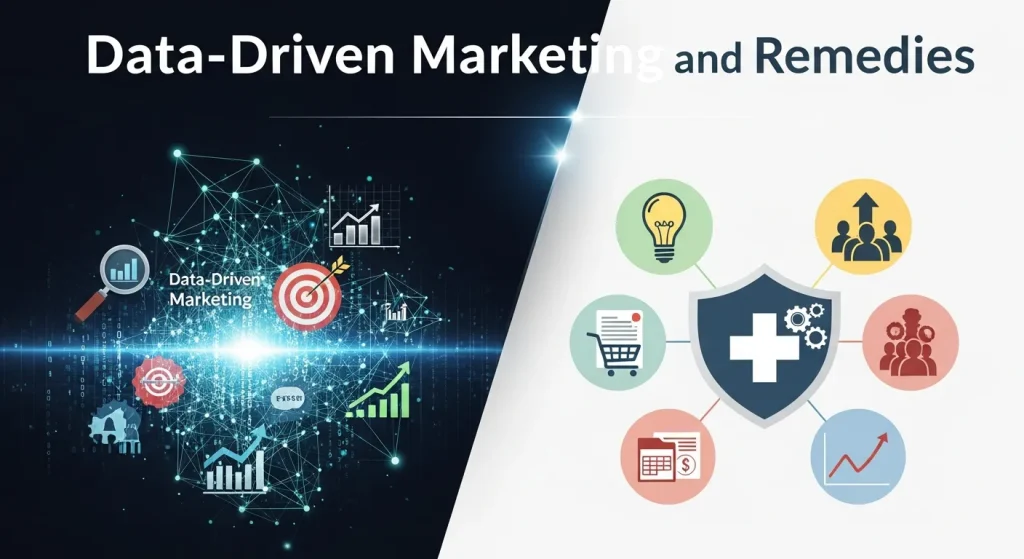
Challenge 1. Data Silos
Solution: Centralize the data into one place, like a customer relationship management system.
Challenge 2. Privacy Concerns
Solution: Have clear and transparent privacy policies, and follow the rules such as GDPR.
Challenge 3. Data Overload
Solution: Concentrate on KPIs that directly contribute to business goals.
What’s Next in Data-Driven E-commerce Marketing
The next phase of data-driven marketing is an even higher level of personalization, predictive analytics , and machine learning. Here’s what to expect:
- AI-Assisted Intelligence (e.g., ChatGPT for copy and customer interactions)
- Voice-Based Shopping through Natural Language Processing
- Real-Time Personalization, predicting and displaying options personalized to the immediate user context.
Why You Should Integrate Data-Driven Marketing into Your Business
Data-driven marketing isn’t a choice anymore; it’s the framework that the most successful e-commerce companies thrive in. It is the leverage of analyzing and acting on data that separates good brands from great brands.
If you’re enthusiastic about upending your marketing strategy using data, take little steps but dream big. Invest in the right tools, follow steps based on your particular needs, and keep an eye on changing trends. Data is not a number, but the answer to unlocking the potential that is your brand.
Frequently Asked Questions (FAQs)
1. What is data-driven marketing and why is it essential for modern e-commerce?
Data-driven marketing is a strategic approach where marketers use collected data to determine optimal strategies, personalized messaging, and key customer insights. It is essential for modern e-commerce because it removes guesswork, allowing brands to target audiences more precisely, improve customer experiences, and significantly increase their return on investment (ROI) compared to traditional marketing methods.
2. How does a data-driven marketing strategy improve customer retention rates?
Implementing a solid data-driven marketing strategy allows businesses to analyze customer behavior and purchase history effectively. By understanding what customers want and when they want it, brands can create personalized loyalty programs, timely re-engagement emails, and targeted offers. This level of personalization makes customers feel valued, which directly boosts loyalty and increases long-term retention rates.
3. Can small businesses benefit from data-driven marketing, or is it only for large enterprises?
Absolutely, small businesses can benefit immensely. While large companies use data-driven marketing on a massive scale, small businesses can leverage accessible tools like Google Analytics and email platforms to understand their niche audience. Even simple metrics like email open rates or website traffic sources can provide actionable insights to refine marketing efforts and compete effectively with larger rivals.
4. What are some examples of how companies use data-driven marketing to boost sales?
Many successful companies use data-driven marketing to recommend products based on browsing history, similar to Amazon’s “customers who bought this also bought” feature. Others use retargeting ads to remind visitors of abandoned carts or send personalized birthday discounts. These specific, data-backed actions are proven to drive higher conversion rates and increase overall sales volume.
5. How does B2B data-driven marketing differ from B2C strategies?
While B2C focuses on individual consumer emotions and quick purchases, B2B data-driven marketing focuses on lead quality, long sales cycles, and account-based targeting. In B2B, data is used to identify key decision-makers within a company, track engagement across multiple touchpoints, and nurture leads with educational content that addresses specific business pain points rather than impulsive buying triggers.
6. What constitute the first steps in creating a data-driven marketing guide for my team?
To create a comprehensive data-driven marketing guide, start by defining clear business objectives. Next, audit your current data sources to ensure accuracy and relevance. Then, invest in the right analytics tools to capture customer interactions. Finally, establish a routine for analyzing reports and adjusting your strategy based on performance metrics, ensuring your team relies on facts rather than intuition.
7. What are the biggest challenges when implementing data-driven marketing?
One of the primary challenges is data silos, where information is trapped in different departments without being shared. Additionally, ensuring data privacy and compliance with regulations like GDPR is critical. Finally, “analysis paralysis” can occur when teams have too much data and struggle to identify which key performance indicators (KPIs) actually impact their bottom line or business goals.
8. Which tools are essential for executing a successful data-driven marketing campaign?
To execute a successful campaign, you need a robust stack of tools. This typically includes Google Analytics for tracking website behavior, a Customer Relationship Management (CRM) system like HubSpot for managing leads, and email marketing platforms like Klaviyo. Additionally, heatmap tools like Hotjar provide visual insights into user experience, helping you understand exactly how visitors interact with your site.
9. How does artificial intelligence (AI) enhance data-driven marketing efforts?
Artificial intelligence significantly enhances data-driven marketing by processing vast amounts of data faster than humans can. AI can predict future consumer trends, automate customer service through chatbots, and generate dynamic content. This allows for real-time personalization, where marketing messages adapt instantly to a user’s current context and behavior, leading to higher engagement and satisfaction.
10. How often should we review our data to ensure our strategy remains effective?
Data should be reviewed continuously, but the depth of review depends on the metric. operational metrics like ad spend and daily traffic should be monitored daily or weekly. However, broader strategic trends should be reviewed monthly or quarterly. Regular reviews ensure you can pivot quickly if a campaign isn’t working and capitalize on new opportunities as they arise in the market.



Leave a Reply