

There is too much at stake in today’s competitive marketing environment to simply guess and hope for the best. Successful businesses need accurate data to help drive their decisions to ensure that they make the most of their efforts. Cue the data-driven marketing approach.
A data-based marketing plan leverages strong data analysis and incorporation insights that inform campaigns, allowing marketers to make every step with reliable evidence. But what does it take to build that kind of strategy, from scratch?
This guide will walk you through the process of creating a data-driven marketing strategy. Whether you’re a novice or pro, this approach should ensure that you get very clear on what you want to achieve with your marketing and see measurable results.
Identification of Key Performance Indicators (KPIs)
Before you can start using data, you need to decide what success means. That’s where key performance indicators (KPIs) come in. KPIs are actionable metrics that help you determine the success of your campaigns.
Define the Objective
Begin by responding to the question, “What do I hope to accomplish with this campaign?” Is it more prospects, more cross-traffic to your website, or more influential social media visits? Your end goal will direct which KPIs you decide to track.
Examples of KPIs
Here are a variety of marketing KPI examples you might consider, depending on your goals:
- Lead Gen: Conversion rate, form submissions, or subscribe to new.
- Web Traffic: Click-through rates, unique users, average session time.
- Sales: Increased revenue, cost of acquisition, and customer lifetime value.
These KPIs will form your benchmarks and inform the rest of your strategy.
Tip: Consider Micro Goals
While you want to track high-level KPI’s, there is nothing wrong with “micro goals.” If you want more conversions, perhaps look at email open rates or even what people do on your landing pages leading up to these conversions.
Methods of Data Collection and Analysis
 Once the KPIs have been selected, the next step is to collect the data necessary to measure these. Data analysis and data capture are two very important elements in this type of marketing.
Sources of Data Collection
There’s a lot of data at the fingertips of marketers; however, you need to know where to look for it:
-
Website Analytics: Utilize technologies such as Google Analytics to track site traffic, user behavior, and engagement.
-
Social Media Insights: Facebook, Instagram , and LinkedIn offer integrated analytics to follow the engagement and audience demographics.
-
CRM Software: Report on and analyse customer-based interactions and sales performance.
-
Surveys and Feedback: Gather qualitative feedback from your audience through online surveys or online reviews.
Analyzing the Data
Once the dust has settled and you’ve gathered your data, the next step is to make sense of it. That includes identifying patterns, trends, and outliers that could influence your marketing choices. Invest in data visualization tools such as Tableau or Power BI to interpret the data effectively.
Simplify and Segment
You don’t have to follow up on every piece of information. Concentrate on insights that are related to your KPIs, and try and segment your audience into different groups such as behavior, interests, or demographics. This is how you make your campaigns super focused.
The Role of Predictive Analytics in Data-Driven Marketing
While analyzing past performance is crucial, the true power of a data-driven marketing strategy lies in anticipating the future. Predictive analytics takes your data strategy a step further by using historical data, statistical algorithms, and machine learning techniques to identify the likelihood of future outcomes. Instead of simply reacting to what a customer did last week, predictive models allow you to forecast what they will likely do next month. This proactive approach empowers marketers to anticipate needs, identify potential high-value leads before they convert, and prevent churn by flagging at-risk customers early. By shifting from reactive to proactive, you stop chasing the market and start leading it.
Key Benefits of Implementing Predictive Analytics
- Optimized Budget Allocation: Stop wasting spend on audiences that won’t convert. Predictive models identify the channels and segments with the highest probability of ROI, allowing you to focus your budget where it counts.
- Enhanced Customer Retention: By analyzing behavioral signals, you can identify customers who are showing signs of disengagement before they leave, allowing you to intervene with timely, personalized retention offers.
- Precision Cross-Selling and Upselling: Predictive algorithms analyze purchase history to recommend the exact product a customer is most likely to buy next, significantly increasing average order value.
- Improved Lead Scoring: Move beyond basic demographic scoring. Predictive lead scoring uses thousands of data points to rank prospects based on their actual propensity to buy, helping sales teams prioritize their efforts effectively.
Comparing Popular Predictive Analytics Tools
Choosing the right tool depends on your specific needs, technical expertise, and budget. Here is a comparison of some top-rated options currently shaping the market.
|
Tool Name |
Best For |
Key Features |
Complexity Level |
|---|---|---|---|
|
SAS Customer Intelligence |
Enterprise-level businesses |
Advanced AI capabilities, real-time decision making, deep customer journey mapping. |
High (Requires technical expertise) |
|
Salesforce Einstein |
Salesforce users |
Native CRM integration, automated lead scoring, opportunity insights, email timing optimization. |
Medium (User-friendly for Salesforce users) |
|
HubSpot Marketing Hub |
Mid-sized businesses |
Predictive lead scoring, behavioral targeting, easy-to-use interface, all-in-one marketing platform. |
Low (Designed for marketers, not data scientists) |
|
IBM Watson Studio |
Data-heavy organizations |
Open source tools support, visual model building, deep machine learning capabilities. |
High (Best for data science teams) |
|
RapidMiner |
Analysts and Data Scientists |
visual workflow designer, automated machine learning, supports text mining and predictive maintenance. |
Medium-High |
Applying Data Insights to Marketing Campaigns
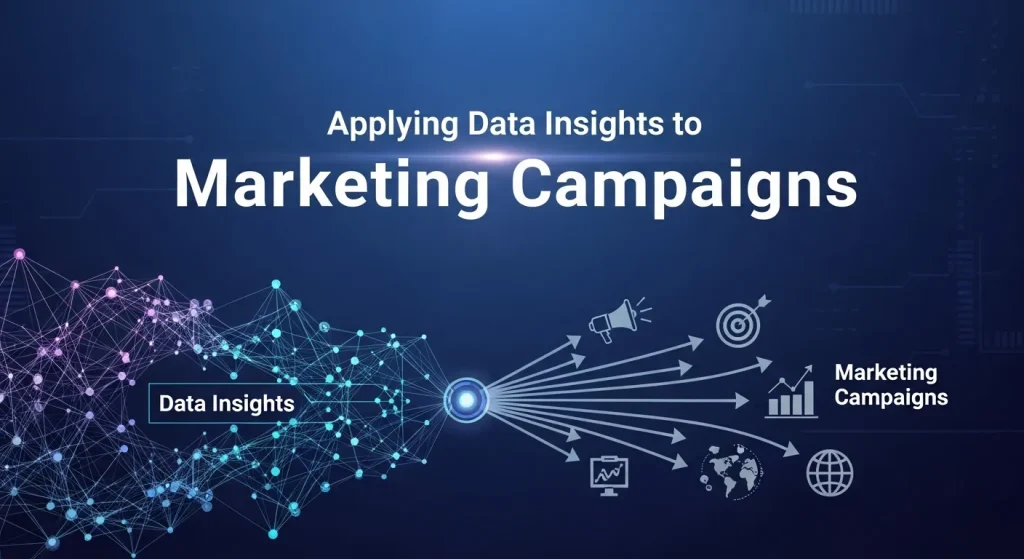 Data alone is worthless if you don’t do something with it. The third stage is to use these insights in your email campaigns.
Customizing the Programs by Audience Segment
You know how you broke your audience up back in Step 2? Now’s the time to act on it. Tailor your outreach with:
- Targeted Ads: Use behavioral analysis to design ads for specific demographics.
- Email Campaigns: Use user interests to personalize subject lines and content.
Build Buyer Personas
Data can assist in building specific buyer personas representing various factions of your audience. Personas help you develop messages that will resonate with a particular segment and drive more engagement and conversions.
Real-Life Application Example
For example, say an e-commerce brand crunches the numbers and determines that a sizable share of its customers shop on mobile. They could leverage this intelligence to help optimize the mobile shopping experience or to develop mobile-first ad campaigns.
Common Pitfalls in Data-Driven Marketing and How to Avoid Them
Embarking on a data-driven journey is transformative, but it isn’t without its stumbling blocks. Many organizations rush into data collection without a clear plan, leading to wasted resources and confusing signals. The challenge often isn’t a lack of data, but rather an inability to filter the noise from the signal. Marketers can easily become overwhelmed by the sheer volume of metrics available, leading to “analysis paralysis” where decision-making stalls completely. Furthermore, relying too heavily on data without considering the human element—creativity, intuition, and emotional connection—can result in sterile campaigns that fail to resonate with real people. To succeed, you must navigate these common traps with awareness and a strategic mindset.
Watch Out for These Common Mistakes
- Chasing Vanity Metrics: It is easy to feel good about high page views or social likes, but if these numbers don’t correlate with revenue or genuine engagement, they are misleading. Focus on metrics that actually move the needle for your business.
- Data Silos: When sales, marketing, and customer support teams keep their data in separate systems, you get a fragmented view of the customer. This lack of integration makes it impossible to create a seamless customer journey.
- Ignoring Data Privacy: In the rush to gather insights, some marketers overstep boundaries. Failing to respect user privacy or comply with regulations like GDPR can destroy brand trust and lead to hefty legal fines.
- Confirmation Bias: This happens when you only look for data that supports your existing beliefs or desired outcomes. True data-driven marketing requires the courage to let the numbers prove you wrong.
Solutions to Overcome Data Hurdles
Identifying the problem is half the battle; fixing it is the other. Here is a quick reference guide to turning these common pitfalls into opportunities for growth.
|
Common Pitfall |
The Fix |
Actionable Step |
|---|---|---|
|
Data Overload |
Focus on Quality over Quantity |
Limit your dashboard to 5-7 key metrics that directly align with your primary business goals. Ignore the rest until you master those. |
|
Dirty Data |
Regular Hygiene Checks |
Schedule quarterly audits to clean your CRM. Remove duplicate contacts, fix formatting errors, and purge outdated records. |
|
Lack of Context |
Qualitative Analysis |
Don’t just look at what happened; ask why. Supplement hard numbers with customer surveys and feedback forms to understand the “why” behind the behavior. |
|
Short-Termism |
Patience and Long-Term View |
Resist the urge to pivot strategy every week. Give your data-driven campaigns at least 3-6 months to mature and show statistically significant results. |
|
Tool Incompatibility |
Integration First Approach |
Before buying new software, ensure it integrates with your existing stack. Use tools like Zapier or native APIs to connect your platforms and unify your data. |
Testing and Tweaking Your Strategies
 Marketing success is not a one-off exercise. What worked yesterday isn’t necessarily going to work tomorrow. That’s why it’s so important to test and optimize.
A/B Testing
A/B testing is one of the best methods to test changes. Create two versions (A and B) of a marketing asset and compare their performance.
Examples:
- “Buy Now” vs “Get Yours Today” CTA buttons.
- Testing various email subject lines or display ad creatives
Monitor Performance
Track campaign performance via analytics tools. Measure against your KPIs, and adjust if necessary.
Continuously Refine
With data-driven marketing, you can always pivot. Adapt your strategy based on what works and what doesn’t. Keep your tactics flexible and informed by fresh data.
Data-Driven Marketing – What Lies Ahead
It’s not just about being competitive now. The future of data-driven marketing is evolving with:
- AI and Machine Learning: Automating tasks and delivering deeper insights.
- Hyper-Personalization: Enhanced individual targeting based on real-time behaviors.
The takeaway? Now is the time to invest in a data-driven approach that continues to deliver value.
Get Started Today
It can be a challenge to adopt data-driven marketing, but the benefits are simply too good to ignore. Start small, focus on those KPIs, and scale from there. With time, you’ll get faster and start to see your efforts rewarded.
Frequently Asked Questions (FAQs)
1. What is a data-driven marketing strategy and why is it important?
A data-driven marketing strategy involves using customer information and analytics to optimize marketing efforts. Instead of relying on guesswork, marketers use hard data to make decisions. It is crucial because it allows for personalization, improves customer experience, maximizes budget efficiency, and ultimately leads to higher conversion rates and better ROI for businesses.
2. How can small businesses implement a data-driven approach with a limited budget?
Small businesses can start by utilizing free or low-cost tools like Google Analytics and social media insights. Focus on collecting data from existing customer interactions, such as email open rates and website behavior. By identifying just one or two key metrics to track initially, you can make informed adjustments without needing expensive enterprise-level software.
3. What are the most common challenges when building a data-driven strategy?
The most significant challenges include data silos, where information is trapped in different departments, and data quality issues, such as outdated or inaccurate records. Additionally, many teams struggle with the “analysis paralysis” of having too much data and not knowing which insights are actually actionable for their specific business goals.
4. How does data privacy legislation like GDPR impact data-driven marketing?
Privacy laws require marketers to be transparent about how they collect, store, and use consumer data. This means you must obtain explicit consent from users before tracking them. While this limits some traditional data collection methods, it encourages building trust and focuses your strategy on zero-party data—information customers willingly share with you.
5. What is the difference between data-driven marketing and traditional marketing?
Traditional marketing often relies on broad assumptions, mass media, and a “spray and pray” approach where the same message is sent to everyone. Data-driven marketing, conversely, focuses on precision. It uses specific insights to segment audiences and deliver personalized messages to the right people at the right time, resulting in higher engagement.
6. Which tools are essential for a successful data-driven marketing campaign?
While the specific stack varies, essential tools typically include a Customer Relationship Management (CRM) system to house customer data, web analytics tools (like Google Analytics 4) to track behavior, email marketing platforms with reporting features, and data visualization tools like Tableau or Looker Studio to make complex data easy to understand.
7. How long does it take to see results from a data-driven marketing strategy?
Data-driven marketing is a long-term play rather than a quick fix. While you might see some immediate improvements from A/B testing within weeks, building a robust database and refining your buyer personas usually takes several months. Consistent analysis and optimization over 6 to 12 months typically yield the most significant and sustainable results.
8. Can data-driven marketing help in improving customer retention rates?
Absolutely. By analyzing customer behavior and purchase history, you can predict when a customer might churn and intervene with targeted offers. Data allows you to identify your most loyal customers and reward them, as well as spot friction points in the customer journey that need fixing, thereby significantly boosting overall retention.
9. What specific metrics should B2B companies focus on compared to B2C?
B2B companies often focus on lead quality, lead-to-close time, and Customer Lifetime Value (CLV) because sales cycles are longer. In contrast, B2C companies might prioritize immediate metrics like conversion rate, average order value, cart abandonment rate, and social media engagement, as consumer purchasing decisions tend to be faster and more transactional.
10. Is creativity still relevant in a data-driven marketing environment?
Yes, creativity is more important than ever. Data tells you what your audience prefers and where they hang out, but it doesn’t create the message. Creativity is needed to design the compelling visuals and write the persuasive copy that data suggests will work. Data provides the roadmap, but creativity drives the car.



Leave a Reply