

Predictive Marketing is transforming how businesses plan, execute, and evaluate their marketing campaigns. Instead of relying entirely on historical results or assumptions, organizations can use data, artificial intelligence, and predictive analytics to understand customer behavior and anticipate future market trends. This approach helps marketing teams make informed decisions about advertising investments, customer targeting, content distribution, and campaign optimization. As competition increases across digital channels, businesses need more accurate strategies to reach potential customers and generate measurable results.
Modern marketing campaigns produce large amounts of information through website visits, social media interactions, email engagement, purchasing activities, and customer feedback. By analyzing these data sources, businesses can identify patterns and predict which marketing activities are more likely to succeed. Effective Marketing Intelligence, Audience Segmentation, and Customer Data Analysis help organizations understand customer preferences and deliver relevant messages. When businesses apply predictive insights strategically, they can reduce unnecessary spending, improve campaign performance, increase conversions, and achieve stronger return on investment (ROI).
Understanding Predictive Marketing and Its Importance
Predictive Marketing is a data-driven marketing approach that uses historical information, statistical models, and machine learning technologies to estimate future customer behavior. It helps businesses understand which customers may purchase particular products, respond to specific advertisements, or interact with certain marketing messages. These insights allow marketing professionals to plan campaigns based on measurable possibilities rather than depending only on assumptions.
Unlike traditional marketing methods, predictive strategies focus on identifying future opportunities through existing customer information. Businesses can use predictive models to estimate customer demand, identify purchasing patterns, and determine which communication channels may deliver better results. This makes campaign planning more structured and supports continuous improvements across different marketing activities.
How Predictive Marketing Works
Predictive marketing systems collect information from different sources, including customer relationship management platforms, website analytics, advertising systems, and transaction records. Analytical tools process this information to identify patterns and relationships that may indicate future customer actions. Machine learning models can then generate predictions that support marketing decisions.
For example, a business may identify customers who frequently visit product pages but rarely complete purchases. Predictive models can help estimate which customers are more likely to respond to personalized offers. Marketing teams can use these insights to develop targeted campaigns and improve conversion opportunities.
Improving Campaign Performance Through Data-Driven Decisions
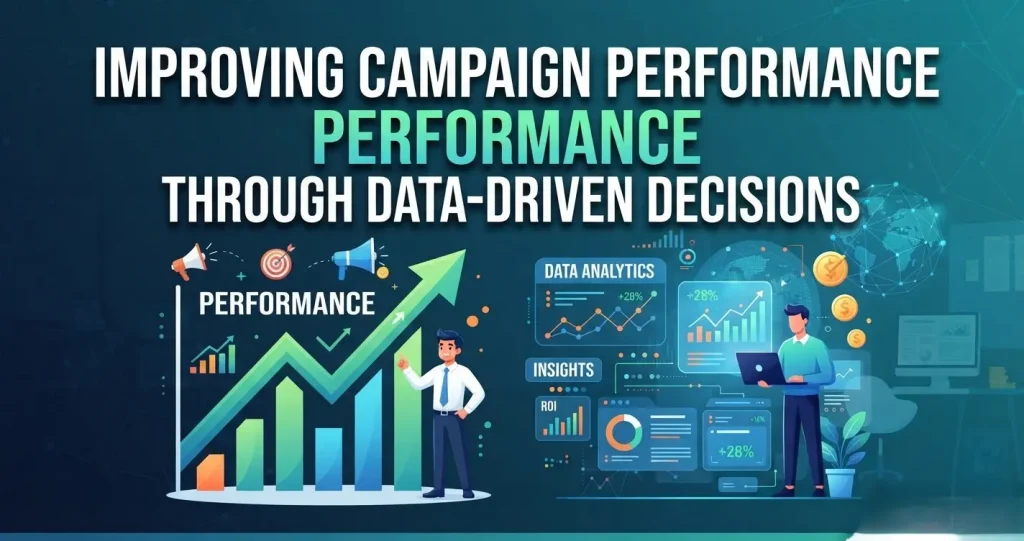 Successful marketing campaigns require careful planning, accurate targeting, and continuous performance evaluation. Predictive marketing improves these activities by helping businesses understand which strategies are more likely to generate positive outcomes. Instead of allocating budgets equally across every channel, marketing teams can prioritize campaigns based on customer behavior and predicted engagement.
Data-driven decisions also help businesses identify weaknesses before they create significant financial losses. By reviewing campaign patterns and predictive insights, organizations can adjust their messaging, targeting strategies, and advertising investments. This approach supports more efficient campaign management and creates opportunities for better marketing results.
Identifying High-Performing Marketing Channels
Businesses often promote their products and services through search engines, social media, email marketing, display advertisements, and other digital channels. However, each channel attracts different audiences and produces different engagement levels. Predictive analytics helps marketers evaluate which platforms are more likely to generate valuable interactions and conversions.
By comparing customer behavior across multiple channels, marketing teams can identify where potential buyers are most active. They can then allocate advertising resources toward channels with stronger expected performance. This reduces unnecessary spending and allows businesses to build more focused marketing campaigns.
Optimizing Campaign Timing
The timing of a marketing message can significantly influence customer engagement and conversion rates. Customers may respond differently depending on their daily routines, purchasing habits, seasonal interests, and previous interactions with a brand. Predictive models can analyze historical engagement patterns to estimate suitable campaign schedules.
For example, an online retailer may discover that certain customer groups are more likely to purchase during weekends or seasonal promotional periods. Marketing teams can use these insights to schedule advertisements and promotional emails more strategically. Better timing increases the possibility of reaching customers when they are most interested in a product or service.
The Role of Marketing Intelligence in Better Campaign Decisions
Marketing Intelligence involves collecting and analyzing information about customers, competitors, market conditions, and industry trends to support business decisions. Predictive marketing uses these insights to identify opportunities and anticipate changes that may influence campaign performance. When organizations understand market behavior, they can develop more relevant promotional strategies and respond effectively to changing customer expectations.
Marketing intelligence also helps businesses evaluate competitive activities and recognize emerging opportunities. By combining market research with customer analytics, marketing teams can identify which products attract attention, what messages influence purchasing decisions, and where potential demand may increase.
Understanding Customer Preferences
Customer preferences influence how people interact with brands, evaluate products, and make purchasing decisions. Predictive marketing analyzes previous interactions, browsing activities, purchasing histories, and feedback to identify patterns in customer interests. These insights help businesses understand what their audiences may need in the future.
For example, an online fashion store can analyze previous purchases and browsing behavior to identify customers interested in particular clothing categories. Marketing teams can use this information to create relevant promotional messages and product recommendations. This improves communication quality and increases the likelihood of meaningful customer engagement.
Monitoring Market Trends and Competitors
Market conditions can change because of new technologies, competitor activities, economic developments, and shifting customer expectations. Predictive marketing helps businesses examine historical market information and identify patterns that may indicate future opportunities or challenges.
Companies can combine industry research, competitor monitoring, and customer feedback to understand where market demand may be heading. These insights support better campaign planning and help organizations adjust their promotional strategies before competitors capture emerging opportunities.
Improving Audience Segmentation and Customer Targeting
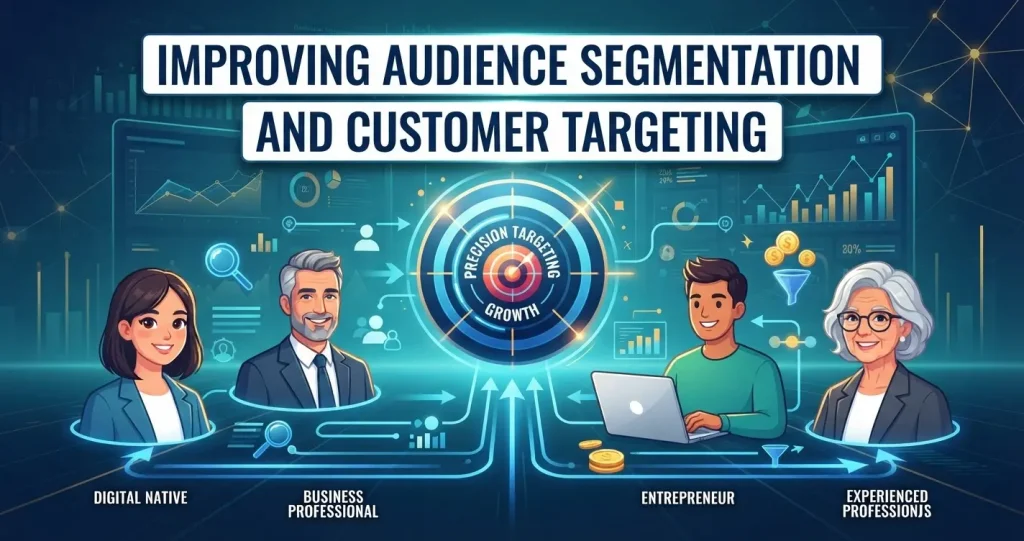 Audience Segmentation is the process of dividing a broader customer base into smaller groups according to shared characteristics, interests, behaviors, or purchasing patterns. Predictive marketing improves segmentation by using analytical models to identify similarities between customers and estimate their future actions. This allows businesses to create more relevant campaigns instead of delivering identical messages to every potential buyer.
Traditional segmentation often depends on basic information such as age, location, and general interests. Predictive segmentation can go further by examining purchasing frequency, website activity, previous campaign engagement, and customer preferences. As a result, marketing teams can develop more precise targeting strategies and improve the relevance of their promotional communication.
Creating Behavior-Based Customer Groups
Customer behavior provides valuable information about purchasing intentions and brand interactions. Predictive analytics can group customers according to activities such as repeated website visits, product searches, abandoned shopping carts, and previous purchases. These behavioral patterns help marketers understand which audiences may respond to specific offers.
For instance, customers who repeatedly view a product without purchasing may respond positively to additional product information or a limited promotional offer. Meanwhile, existing customers with frequent purchases may be more interested in loyalty programs. Behavior-based segmentation helps businesses deliver appropriate messages to different customer groups.
Reaching Potential Customers More Effectively
Identifying potential customers is important for improving advertising efficiency and reducing wasted campaign spending. Predictive marketing can analyze existing customer characteristics to identify similar audiences who may have an interest in a company’s products or services.
Marketing teams can use these insights to develop targeted advertising campaigns and personalized communication strategies. Instead of reaching broad audiences without clear targeting objectives, businesses can focus on people whose interests and behaviors indicate stronger potential engagement.
Using Customer Data Analysis to Increase Marketing ROI
Customer Data Analysis plays an important role in predictive marketing because accurate predictions depend on reliable and relevant information. Businesses collect customer data through website interactions, purchase records, email subscriptions, social media engagement, and customer service activities. Analyzing these sources helps organizations understand customer journeys and identify opportunities to improve marketing performance.
When businesses examine customer information systematically, they can determine which campaigns attract valuable customers and which activities produce limited results. These insights help marketing teams improve resource allocation, refine promotional messages, and develop strategies that generate stronger financial outcomes.
Predicting Customer Lifetime Value
Customer Lifetime Value (CLV) estimates the total revenue a business may generate from a customer throughout their relationship with the company. Predictive models can examine purchasing frequency, average transaction value, customer retention, and engagement patterns to estimate future customer value.
Businesses can use these predictions to identify customers who may contribute significant long-term revenue. Marketing teams can prioritize retention campaigns, personalized recommendations, and loyalty initiatives for valuable customer groups. This approach encourages businesses to focus on sustainable customer relationships instead of measuring success only through immediate purchases.
Identifying Customers at Risk of Leaving
Customer retention is essential for maintaining consistent revenue and reducing the cost of acquiring new customers. Predictive marketing can identify warning signs that suggest a customer may stop purchasing or discontinue a subscription. These signals may include declining engagement, reduced purchase frequency, repeated complaints, or changes in browsing behavior.
Once businesses identify customers at risk of leaving, they can develop appropriate retention campaigns. Personalized offers, improved customer support, and relevant product recommendations may help rebuild engagement. Early identification allows organizations to address potential problems before customer relationships are permanently lost.
Reducing Advertising Costs and Improving Marketing ROI
Marketing ROI measures how effectively marketing investments generate financial returns. Businesses need to understand whether their advertising expenses produce meaningful revenue, qualified leads, and customer relationships. Predictive marketing improves this evaluation by helping organizations identify campaigns, channels, and audience groups with stronger expected outcomes.
Instead of spending budgets based only on previous assumptions, marketing teams can use predictive insights to prioritize opportunities. They can reduce investment in activities with consistently weak results and redirect resources toward campaigns that show stronger conversion potential. This improves budget management and supports more responsible advertising decisions.
Reducing Unnecessary Advertising Expenses
Advertising costs can increase when campaigns target audiences with limited interest in a company’s products or services. Predictive analytics helps businesses identify customer groups that are more likely to engage with particular advertisements. This makes it easier to refine targeting parameters and reduce spending on less relevant audiences.
For example, a company can analyze previous advertising results to identify which audience characteristics are associated with qualified leads. Future campaigns can prioritize those characteristics while continuing to test new audience groups. This approach helps businesses improve advertising efficiency without depending entirely on expensive broad-reach campaigns.
Measuring Campaign Effectiveness
Campaign performance should be evaluated using relevant metrics rather than relying only on impressions or clicks. Businesses can examine conversion rates, customer acquisition costs, revenue generated, engagement levels, and return on advertising spend to understand actual campaign outcomes.
Predictive models can also compare expected results with real performance. When a campaign performs below expectations, marketers can investigate potential problems and adjust targeting, messaging, or channel selection. Continuous evaluation helps organizations improve future campaigns and make more informed investment decisions.
Challenges of Implementing Predictive Marketing
Although predictive marketing provides valuable opportunities, businesses must address several challenges before depending on analytical predictions. Data quality, system integration, privacy requirements, technical expertise, and implementation expenses can influence the effectiveness of predictive strategies. Organizations should understand these limitations and develop realistic expectations before introducing advanced analytical systems.
Predictive models are not guaranteed to produce accurate results because customer behavior and market conditions can change unexpectedly. Businesses need regular model evaluation, reliable information, and appropriate human supervision to ensure that marketing decisions remain relevant and responsible.
Maintaining Accurate and Reliable Data
Predictive marketing depends heavily on the quality of customer information. Incomplete records, duplicate entries, outdated details, and inconsistent tracking can reduce analytical accuracy. Businesses should establish clear data management practices and regularly review the information collected through their marketing platforms.
Organizations should also collect customer information responsibly and follow applicable privacy and data protection requirements. Proper consent management, transparent data practices, and appropriate security controls help maintain customer trust while supporting reliable marketing analysis.
Selecting Suitable Marketing Technologies
Businesses may need analytics platforms, customer relationship management software, data integration tools, and machine learning solutions to implement predictive marketing effectively. Selecting unsuitable technologies can create unnecessary expenses and make campaign management more complicated.
Organizations should evaluate available platforms according to their business objectives, integration requirements, security features, scalability, and budget. Starting with a smaller predictive marketing project can help teams understand its practical value before expanding implementation across multiple campaigns.
The Future of Predictive Marketing
 Predictive marketing will continue evolving as artificial intelligence, machine learning, automation, and customer analytics become more advanced. Businesses are increasingly exploring ways to understand customer intentions, anticipate market demand, and deliver personalized experiences across digital channels. These developments will create new opportunities for organizations to improve campaign performance and build stronger customer relationships.
Future marketing systems may provide more accurate forecasting, real-time audience insights, and automated campaign recommendations. However, successful adoption will depend on reliable data, responsible technology use, and continuous performance monitoring. Businesses that combine analytical insights with creative marketing strategies will be better positioned to adapt to changing market conditions and customer expectations.
Conclusion
Predictive Marketing helps businesses improve campaign performance and ROI by transforming customer information into actionable marketing insights. Through better audience targeting, campaign timing, customer retention, and advertising budget management, organizations can make more informed decisions and reduce unnecessary spending.
By combining Marketing Intelligence, Audience Segmentation, and Customer Data Analysis, businesses can understand customer behavior more effectively and identify opportunities for sustainable growth. Although successful implementation requires accurate data, suitable technology, and responsible management, predictive marketing offers a valuable approach to building efficient, measurable, and customer-focused marketing campaigns.
Frequently Asked Questions (FAQs)
1. What Is Predictive Marketing?
Predictive marketing is a data-driven approach that uses historical information, statistical analysis, and machine learning to estimate future customer behavior. It helps businesses plan campaigns, identify potential customers, and make informed marketing decisions based on predicted outcomes.
2. How Does Predictive Marketing Improve Campaign Performance?
Predictive marketing improves campaign performance by identifying valuable audiences, optimizing advertising schedules, and selecting suitable communication channels. These insights help businesses create more relevant campaigns, increase engagement, and improve the likelihood of generating conversions.
3. How Does Predictive Marketing Increase ROI?
Predictive marketing increases ROI by helping businesses allocate budgets toward campaigns with stronger expected performance. It also reduces unnecessary advertising expenses, improves customer targeting, and supports retention strategies that contribute to long-term revenue growth.
4. What Is the Role of AI in Predictive Marketing?
Artificial intelligence helps predictive marketing systems analyze large datasets, identify behavioral patterns, and generate forecasts. Machine learning models can support customer recommendations, lead scoring, campaign optimization, and personalized marketing communication.
5. How Does Audience Segmentation Support Predictive Marketing?
Audience segmentation divides customers into groups according to shared interests, behaviors, and purchasing patterns. Predictive marketing uses these groups to estimate future actions and develop targeted campaigns that better match individual customer needs.
6. What Types of Data Are Used in Predictive Marketing?
Predictive marketing commonly uses purchasing histories, website interactions, customer demographics, email engagement, social media activity, transaction records, and customer feedback. Businesses should collect and process this information responsibly according to applicable privacy requirements.
7. Can Small Businesses Use Predictive Marketing?
Yes, small businesses can use predictive marketing through affordable analytics platforms, CRM software, and marketing automation tools. They can begin by analyzing customer purchases, website activity, and campaign results before introducing more advanced predictive technologies.
8. What Is the Difference Between Traditional Marketing and Predictive Marketing?
Traditional marketing often relies on historical results, general market research, and established promotional strategies. Predictive marketing uses analytical models to estimate future customer behavior and identify opportunities for more targeted and data-driven campaign planning.
9. What Are the Main Challenges of Predictive Marketing?
Common challenges include poor data quality, privacy concerns, integration difficulties, implementation costs, and limited analytical expertise. Businesses must address these issues through proper planning, reliable technologies, employee training, and continuous performance monitoring.
10. Which Metrics Should Businesses Track in Predictive Marketing?
Businesses should monitor conversion rates, customer acquisition costs, customer lifetime value, return on advertising spend, engagement rates, and customer retention. Comparing predicted results with actual campaign outcomes also helps improve future marketing decisions.



Leave a Reply