


Customer Behavior Analysis helps businesses understand how customers think, search, compare, purchase, and interact with brands. Instead of making marketing decisions based only on assumptions, businesses can use customer behavior insights to create more relevant campaigns, improve customer experiences, and allocate marketing resources more effectively.
Modern customers interact with businesses across websites, social media, search engines, email, mobile applications, and other digital channels. Analyzing these interactions can reveal important patterns about customer preferences and purchasing decisions. When businesses understand these patterns, they can create more personalized marketing strategies, improve engagement, increase conversions, and build stronger long-term customer relationships.
What Is Customer Behavior Analysis?
Customer Behavior Analysis is the process of collecting and evaluating information about how customers interact with a business, product, service, or marketing campaign. It can include browsing behavior, purchase history, search activity, engagement, demographics, preferences, and customer feedback.
Why Customer Behavior Matters
Understanding customer behavior allows businesses to move beyond basic audience targeting. Instead of treating every customer as part of the same group, marketers can identify different needs, motivations, interests, and purchasing patterns.
These insights help businesses create messages that are more relevant to specific audiences and improve the overall effectiveness of their marketing activities.
Key Customer Behaviors to Monitor
Businesses can analyze website visits, product views, search queries, email interactions, social media engagement, abandoned carts, repeat purchases, customer reviews, and conversion activity.
Studying these behaviors over time can reveal patterns that help marketers understand what attracts customers, what prevents conversions, and what encourages repeat engagement.
How Customer Behavior Analysis Improves Marketing Performance
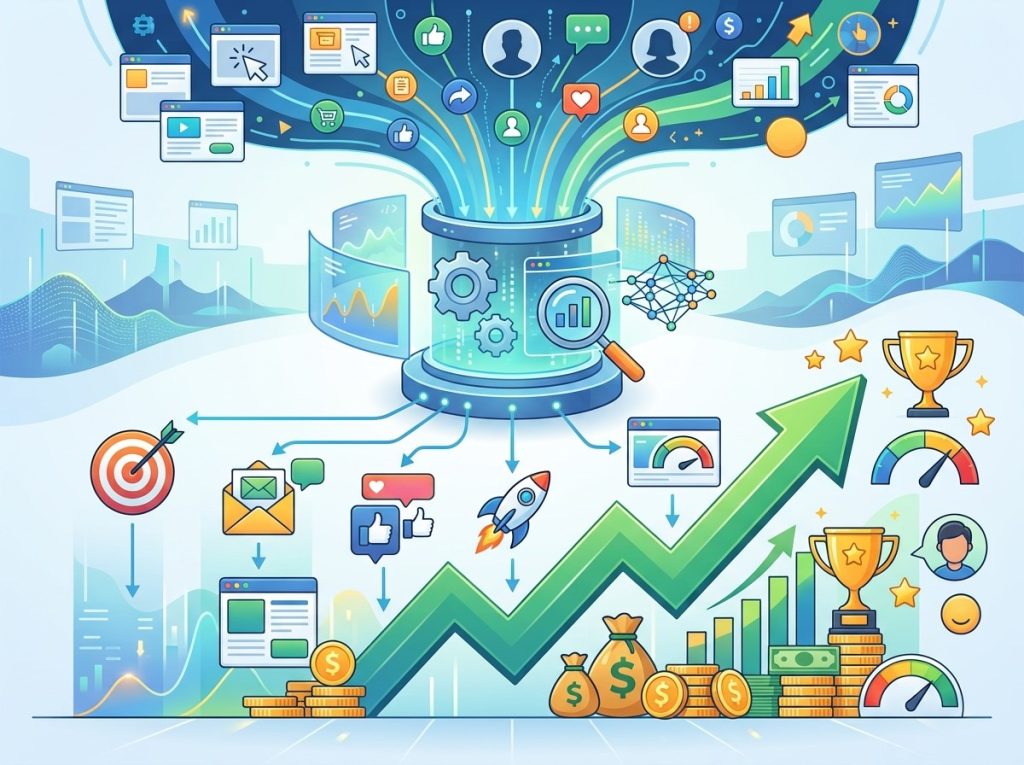 Customer insights can influence almost every stage of marketing, from audience targeting and content creation to advertising and customer retention. By understanding what customers actually do, businesses can make marketing decisions based on evidence rather than assumptions.
Improve Audience Targeting
Customer behavior data can help marketers identify different audience groups based on interests, actions, purchase history, and engagement patterns.
Instead of delivering the same message to everyone, businesses can create targeted campaigns for customers at different stages of the buying journey. This can improve relevance and reduce wasted marketing spending.
Create More Relevant Marketing Messages
Customers are more likely to respond to messages that address their needs and interests. Behavioral information can show which topics, products, features, or offers attract specific audiences.
Marketers can use these insights to develop headlines, advertisements, email campaigns, landing pages, and content that better match customer expectations.
Improve Conversion Rates
Understanding where customers leave the buying journey can help businesses identify conversion problems. For example, customers may visit a product page but leave without purchasing because of unclear information, complicated checkout processes, or unexpected costs. Analyzing these behaviors allows marketers to identify friction points and improve the customer journey.
Use Customer Data Analysis for Better Decisions
Customer Data Analysis turns raw customer information into useful marketing insights. It helps businesses identify patterns, compare customer groups, measure campaign performance, and understand how different interactions influence purchasing behavior.
Collect Data From Multiple Channels
Customers interact with brands across many touchpoints. Businesses can collect useful information from websites, social media, email platforms, CRM systems, online stores, customer service interactions, and advertising platforms.
Combining information from multiple channels can provide a more complete view of customer behavior and reduce the risk of making decisions based on incomplete information.
Identify Customer Patterns
Customer data can reveal patterns such as frequently purchased products, popular website pages, high-performing content, preferred communication channels, and common conversion paths. These patterns can help marketers understand what customers value and which marketing activities are generating meaningful engagement.
Use Data Responsibly
Customer information should be handled responsibly. Businesses should follow applicable privacy requirements, communicate clearly about data collection, and avoid using customer information in ways that could damage trust. Responsible data practices can support stronger customer relationships while reducing potential privacy and reputational risks.
Use Marketing Analytics to Improve Campaign Performance
Marketing Analytics helps businesses measure and interpret the performance of their marketing activities. Combining analytics with customer behavior insights allows marketers to understand not only what happened but also which customer actions contributed to the result.
Measure Campaign Engagement
Marketers can monitor impressions, clicks, engagement rates, website sessions, email interactions, video views, and other metrics to understand how audiences respond to campaigns. Comparing these metrics across campaigns can reveal which messages, formats, and channels attract the strongest customer interest.
Track Customer Journeys
Customer journeys often involve multiple interactions before a purchase. A customer might discover a brand through search, visit its website, engage with social media content, and later convert through email.
Tracking these touchpoints helps marketers understand how different channels work together rather than evaluating each channel in isolation.
Identify High-Performing Channels
Analytics can help businesses determine which marketing channels generate the most valuable customers. A channel with high traffic may not necessarily produce the strongest conversions.
Businesses should compare engagement, conversion rates, customer value, and acquisition costs when deciding where to allocate marketing resources.
Personalize the Customer Experience
Customer behavior insights can support personalization by helping businesses understand what individual customers or audience segments are likely to find useful.
Recommend Relevant Products and Content
Businesses can use browsing and purchase behavior to recommend related products, educational content, services, or resources. Relevant recommendations can make customer experiences more useful while increasing opportunities for additional engagement and sales.
Personalize Email Marketing
Email campaigns can be customized based on customer behavior. Businesses may send different messages to new subscribers, active customers, inactive customers, repeat buyers, or customers who abandoned a purchase.
Behavior-based personalization can make email communication more relevant and reduce the likelihood of customers ignoring generic messages.
Deliver More Relevant Offers
Customer behavior can also help businesses determine which promotions may be appropriate for different audiences. Instead of sending the same discount to everyone, marketers can create offers based on customer interests, purchase history, or engagement. This can improve promotional efficiency while creating a more personalized experience.
Use SEO and Inbound Marketing to Understand Customer Intent
 SEO and Inbound Marketing can work closely with Customer Behavior Analysis because both approaches focus on understanding what audiences need and how they discover information.
Analyze Search Intent
Search behavior provides valuable information about customer needs. Keywords and search queries can reveal whether users are researching a problem, comparing solutions, looking for specific products, or preparing to make a purchase. Understanding search intent helps businesses create content that matches customer needs at different stages of the buying journey.
Create Content Around Customer Questions
Customer questions can reveal opportunities for educational content. Businesses can analyze search queries, support questions, reviews, and sales conversations to identify topics customers frequently want to understand. Creating useful content around these questions can improve visibility while helping customers make more informed decisions.
Connect SEO With Customer Journey Data
SEO can attract customers at the beginning of their research journey, while other marketing channels can support them toward conversion. Analyzing how organic visitors behave after arriving on a website can help businesses improve landing pages, internal links, calls to action, and content pathways.
Improve Customer Retention
Customer behavior analysis is not limited to acquiring new customers. It can also help businesses understand why customers return, become inactive, or leave.
Identify Repeat Purchase Patterns
Businesses can analyze purchase frequency, product combinations, order timing, and customer engagement to identify repeat purchasing patterns. These insights can help companies create retention campaigns and personalized communications designed to encourage customers to return.
Recognize At-Risk Customers
Declining engagement, fewer purchases, reduced website activity, or unsubscribing from communications may indicate that a customer is becoming less active. Businesses can identify these signals and develop appropriate retention strategies before the customer relationship is lost.
Improve Customer Loyalty
Understanding what loyal customers value can help businesses improve loyalty programs, exclusive offers, customer experiences, and personalized communication. Customer behavior insights can therefore support stronger relationships rather than focusing only on individual transactions.
Optimize Content Marketing With Customer Insights
Customer behavior can show marketers which types of content attract attention and which fail to generate meaningful engagement.
Identify Popular Content Topics
Website analytics and engagement data can reveal which articles, videos, guides, and other resources customers find most useful. Businesses can use this information to create more content around successful topics while improving or replacing content that performs poorly.
Match Content to Customer Intent
Different customers need different information depending on where they are in the buying journey. Educational content may work well for new prospects, while comparison guides, case studies, and product information may be more useful for customers closer to a purchase. Matching content with intent can improve both engagement and conversions.
Use Customer Behavior Analysis for Better Advertising
Advertising performance can improve when campaigns are based on actual customer behavior rather than broad assumptions.
Create Better Audience Segments
Behavioral data can help marketers build audiences based on website visits, product interactions, previous purchases, engagement levels, or other meaningful actions. More relevant segmentation can help businesses deliver advertisements to people who are more likely to respond.
Retarget Interested Customers
Customers who visit a product page or interact with specific content may already have an interest in a company’s offering. Retargeting can remind these customers about relevant products or information without treating them like completely new prospects.
Improve Advertising Budgets
Marketing teams can compare customer acquisition costs, conversion rates, revenue, and customer value across campaigns. This information helps businesses identify where advertising budgets are producing the strongest returns and where spending may need to be adjusted.
Common Customer Behavior Analysis Mistakes
One common mistake is collecting large amounts of data without knowing what business questions the data should answer. More data does not automatically mean better insights. Another mistake is focusing only on vanity metrics such as impressions or page views. Businesses should connect behavioral information with meaningful outcomes such as leads, conversions, purchases, retention, and customer value.
Ignoring data quality can also create problems. Inaccurate tracking, duplicate records, missing information, or disconnected systems can lead to misleading conclusions. Businesses should also avoid relying entirely on automated analysis. Human judgment remains important when interpreting customer motivations and deciding how insights should influence marketing strategies.
Best Practices for Customer Behavior Analysis
Businesses should begin by defining clear objectives. They should determine whether they want to improve conversions, increase retention, understand customer preferences, reduce acquisition costs, or improve marketing efficiency. Next, marketers should identify the most relevant data sources and establish consistent tracking. Customer information should be organized so that teams can compare behaviors across channels and customer segments.
Regular analysis is also important. Customer preferences can change over time, so businesses should continuously review behavioral trends rather than relying on outdated information. Finally, insights should lead to action. Customer behavior analysis becomes valuable when businesses use the findings to improve campaigns, content, customer experiences, products, and overall marketing strategy.
The Future of Customer Behavior Analysis
 Technology is making customer behavior analysis more advanced and accessible. Artificial intelligence, predictive analytics, automation, and real-time reporting can help businesses identify patterns more quickly and deliver more personalized experiences.
Future marketing strategies are likely to focus increasingly on predictive customer insights. Instead of only analyzing what customers did in the past, businesses can use available data to anticipate potential needs and behaviors. However, technology must be combined with responsible data practices. Businesses that balance personalization with transparency and privacy can build stronger relationships while using customer insights effectively.
Conclusion
Customer Behavior Analysis gives businesses a clearer understanding of how customers interact with brands, content, products, and marketing campaigns. By analyzing these behaviors, marketers can improve targeting, personalization, content strategy, advertising performance, conversions, and customer retention.
Combining Marketing Analytics, Customer Data Analysis, and SEO and Inbound Marketing can provide a stronger foundation for data-driven marketing. Instead of guessing what customers want, businesses can use behavioral insights to create more relevant experiences and make smarter marketing decisions. The most successful approach is not simply collecting more customer data. It is identifying meaningful patterns, understanding customer intent, and turning those insights into practical marketing improvements.
Frequently Asked Questions
1. What is Customer Behavior Analysis?
Customer Behavior Analysis is the process of studying how customers interact with a business, including their browsing, purchasing, engagement, preferences, and responses to marketing activities.
2. Why is Customer Behavior Analysis important for marketing?
It helps marketers understand customer needs and preferences, improve targeting, personalize campaigns, identify conversion problems, and make better decisions based on actual customer behavior.
3. What is Customer Data Analysis?
Customer Data Analysis involves examining customer information to identify patterns, trends, preferences, and behaviors that can support marketing, sales, and customer experience decisions.
4. How does Marketing Analytics support customer behavior analysis?
Marketing Analytics helps businesses measure campaign performance and connect customer interactions with outcomes such as engagement, leads, conversions, sales, and retention.
5. Can Customer Behavior Analysis improve conversions?
Yes. It can identify customer journey problems, content gaps, poor landing pages, checkout issues, and other factors that may prevent customers from completing desired actions.
6. How can businesses collect customer behavior data?
Businesses can collect behavioral information through websites, CRM platforms, email systems, analytics tools, social media platforms, e-commerce systems, surveys, and customer service interactions.
7. How does customer behavior improve personalization?
Behavioral insights can help businesses understand individual or segment-level interests and use that information to personalize content, product recommendations, emails, advertisements, and offers.
8. What role does SEO and Inbound Marketing play?
SEO and Inbound Marketing help businesses attract customers based on their search intent and information needs. Customer behavior analysis can then reveal how those visitors interact with the content and website.
9. How often should businesses analyze customer behavior?
Businesses should analyze customer behavior regularly. Monthly or quarterly reviews can identify important trends, while real-time monitoring may be useful for active campaigns and high-volume businesses.
10. What is the biggest benefit of Customer Behavior Analysis?
The biggest benefit is the ability to make marketing decisions based on real customer insights. This can improve relevance, engagement, conversions, customer satisfaction, and long-term business performance.



Leave a Reply