


Mastering Data-Driven Marketing enables brands to make smarter decisions, enhance engagement, and drive conversions. This guide explores strategies, tools, and solutions, emphasizing the importance of a data-driven culture. Learn how to overcome challenges, leverage technology, and achieve long-term success in both B2B and B2C marketing landscapes.
Set Clear Objectives and KPIs
Before you take the plunge, you first need to determine the “why” and the “what” of your marketing approach. What are you trying to achieve? How do you define success? Defining clear objectives and Key Performance Indicators (KPIs) brings direction and structure to your data-driven marketing strategy.
Examples of Marketing Goals:
- Achieve 30% more traffic to your site in 6 months.
- Increase Email Click-Through Rate by 10%.
- Produce 50 qualified leads each month.
Choosing KPIs That Matter
Your KPIs should be directly related to your goals. For example:
- Page views, unique visitors, or bounce rate percentages could be KPIs for website traffic objectives.
- For email objectives, consider open rates, click-through rates, or conversion rates.
- Track metrics such as lead quality score or cost-per-acquisition (CPA) for lead generation targets.
By establishing clear goals, you are setting the foundation for your data-driven efforts.
Definition and Collection of Relevant Data
 Data is the bedrock of data-driven marketing, but not all data is created equal. You must pay attention to the data that supports your specific objectives.
Types of Data to Collect
- Demographic Information: Your audience’s age, gender, location, and other such information.
- Behavioral Data: User engagements on your website, with an email, or on social media.
- Transactional Information: Purchase history, items added to the cart, and subscription preferences.
- Feedback Data: Surveys, reviews, or support tickets that reveal customer sentiment.
Tools to Help Collect Data
- Google Analytics: If you want to know how users got to your site and what they did when they arrived, then Google Analytics is your friend.
- Customer Data Platforms (CDPs): Tools such as Segment and Twilio Segment aggregate customer data from multiple touchpoints.
- Email Marketing Software: Platforms like Mailchimp or HubSpot track open rates, click-through trends, and other metrics.
Once you have identified the most important data, set up a clean process to continuously collect and monitor it.
Data Analysis and Insight Extraction
Raw data, without analysis, doesn’t tell much of a story. One of the most crucial skills for data-driven marketing is being able to make sense of your data and find actionable insights.
Simplifying Data Analysis
- Utilize visual aids, such as charts and dashboards, to make complex data simple. Tools like Google Data Studio or Tableau can help.
- Segment your audience by geography, behavior, or even past purchases. This helps you begin to see patterns and trends that aren’t so obvious at first glance.
Example Insights
- If most of your website traffic occurs between 5 PM and 10 PM, you should schedule your campaigns to run within these hours.
- If a blog post receives a lot of traffic but has a low average time on page, the headline is interesting, but the content might be lacking.
It’s not just about numbers. Search for the takeaways you can use to develop more effective strategies.
Applying Data-Driven Strategies
 Fight feature-to-feature battles. Now you have some insights—now it’s time to take action. The clear emphasis of data-driven strategies is the ability to transform observation into action.
Strategies to Follow
- Targeted Marketing: Use audience data to personalize messages. For example, recommend products based on browsing history.
- Content Optimization: Focus on the topics, keywords, and formats that your audience prefers most.
- Predictive Analytics: Use platforms like IBM Watson or Salesforce Einstein to predict customer behavior based on past interactions.
- Campaign Optimization: Invest more in channels that show the highest return on investment (ROI).
When you’re guided by data, much of the guesswork disappears because your actions are backed by insight.
Testing and Iterating
Success in marketing doesn’t happen overnight. It is crucial to test and refine your approach based on new data to continuously improve.
A/B Testing
Experiment with variations to determine what performs best. Examples include:
- Two email versions with different subject lines.
- Two ad visuals to see which one drives more engagement.
Feedback Loops
Set up systems to consistently evaluate performance:
- Regularly monitor KPIs to track progress toward goals.
- Compare performance over time to spot significant shifts.
- Ask for direct feedback from your audience through surveys or reviews.
Remember, mastering data-driven marketing is not an overnight success. The more you test and hone your strategy, the better your results will be.
Data Defined: The Future of Data-Driven Marketing
The future of marketing is not a matter of speculating. Data-first approaches are changing how companies think about customers, content, and when it comes to decisions.
And just by following those 5 fundamental steps, you will not only master how to apply data-driven marketing, but also set you or your brand up for long-term success.
Would you like to be the first? Begin with a limited test campaign and observe how data changes everything.
Building a Culture of Data-Driven Decision Making
Successfully mastering data-driven marketing requires more than just implementing the right tools; it demands a fundamental cultural shift within an organization. A true data-driven marketing strategy is one where every team member, from content creators to campaign managers, feels empowered to use insights to guide their actions. This involves breaking down departmental silos to ensure that information flows freely between sales, marketing, and customer service. Leadership plays a crucial role in championing this change, encouraging experimentation and treating failures as learning opportunities. Providing ongoing training and creating a common language around metrics helps embed this mindset. This data-driven marketing guide emphasizes that the goal is not just to collect data but to cultivate curiosity and an analytical perspective across the board. When companies use data-driven marketing as a shared framework for decision-making, they create a resilient and adaptive organization capable of responding swiftly to market changes and consistently delivering superior customer experiences, which is the ultimate goal of any effective marketing effort.
The Evolution of B2B Data-Driven Marketing
The landscape of B2B data-driven marketing is rapidly evolving, moving beyond simple lead generation to foster sophisticated, long-term client relationships. Unlike B2C strategies that often target large audiences with broad demographic data, a successful B2B data-driven marketing strategy focuses on highly specific firmographic and behavioral signals. Companies use data-driven marketing to identify key decision-makers within target organizations, understand their unique pain points, and map out complex buying journeys. This granular approach allows for hyper-personalized account-based marketing (ABM) campaigns, where content and outreach are tailored to the needs of a specific company. As this field matures, predictive analytics is becoming a cornerstone, enabling businesses to forecast which accounts are most likely to convert or churn. By integrating data from CRM systems, sales calls, and website interactions, organizations can build a comprehensive profile of each client, ensuring every marketing touchpoint is relevant, timely, and impactful. This strategic application of data is essential for mastering data-driven marketing in the competitive B2B space, turning insights into sustainable revenue growth and stronger partnerships.
The Role of Technology in Data-Driven Marketing
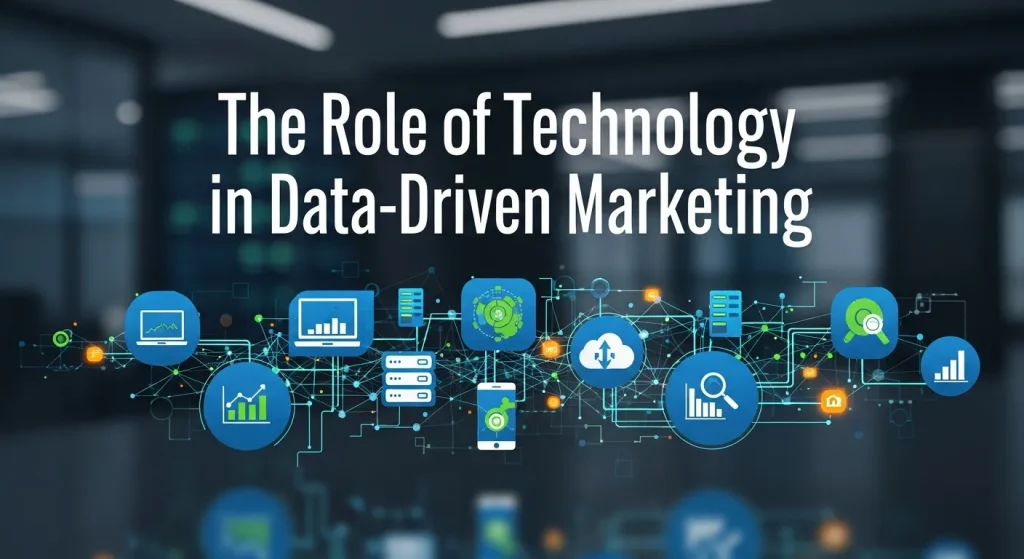 Technology is the engine that powers any successful data-driven marketing guide. The right tools not only automate data collection but also help you analyze it at scale, making it possible to uncover patterns that would be invisible to the naked eye. From tracking website visitors to managing complex B2B data-driven marketing campaigns, technology provides the framework for execution.
Key technological components include:
- Analytics Platforms: These are essential for tracking user behavior, measuring campaign performance, and understanding your audience.
- Customer Relationship Management (CRM) Systems: A CRM centralizes customer data, from contact information to interaction history, giving you a 360-degree view.
- Marketing Automation Software: These tools allow you to execute personalized campaigns at scale, such as sending triggered emails based on user actions.
- Data Visualization Tools: Software like Tableau or Power BI transforms raw numbers into intuitive charts and graphs, making it easier to spot trends.
By integrating these technologies, you create a powerful ecosystem that supports every stage of your data-driven marketing journey.
Common Challenges and Solutions in Data-Driven Marketing
Adopting a data-driven approach is not without its hurdles. Many companies use data-driven marketing but struggle with common issues that can hinder their progress. Recognizing these challenges and knowing how to address them is key to building a sustainable and effective strategy.
Common obstacles include data silos, where information is trapped in different departments, a lack of analytical skills within the team, and concerns over data privacy. Overcoming these requires a clear plan. For example, implementing a Customer Data Platform (CDP) can unify disparate data sources. Investing in training or hiring data analysts can bridge the skills gap. Finally, being transparent about data usage and adhering to regulations like GDPR builds trust with your audience.
|
Challenge |
Description |
Solution |
|---|---|---|
|
Data Silos |
Data is isolated in different departments (e.g., marketing, sales, service) and cannot be easily accessed or combined for a unified view. |
Implement a centralized data warehouse or a Customer Data Platform (CDP) to integrate data from all sources into a single location. |
|
Lack of Skills |
The team may not have the analytical expertise to interpret data, identify trends, and derive actionable insights from the information collected. |
Invest in training programs for the existing team, hire a dedicated data analyst, or partner with a specialized marketing agency. |
|
Data Quality Issues |
The data collected is inaccurate, incomplete, or outdated, leading to flawed analysis and poor decision-making. |
Establish clear data governance protocols, regularly clean and audit your database, and use validation tools at the point of data entry. |
|
Privacy Concerns |
Customers are increasingly worried about how their data is being used, and regulations like GDPR and CCPA impose strict rules on data handling. |
Be transparent with your data policies, obtain explicit consent from users, and ensure full compliance with all relevant privacy laws. |
Frequently Asked Questions (FAQs)
1. What is data-driven marketing?
Data-driven marketing is a strategic approach that uses data collected from audience interactions and market research to inform and optimize marketing decisions. It moves beyond guesswork, allowing brands to personalize content, predict trends, and measure campaign effectiveness with high accuracy.
2. Why is a data-driven marketing strategy important?
A data-driven marketing strategy is important because it enables you to understand your customers on a deeper level. This understanding leads to more relevant messaging, improved customer experiences, higher engagement rates, and ultimately, a better return on investment for your marketing efforts.
3. What are some examples of how companies use data-driven marketing?
Companies use data-driven marketing in various ways. For example, Netflix analyzes viewing habits to recommend personalized content and create original shows. Amazon uses purchase history to suggest products, while Spotify creates customized playlists based on a user’s listening activity.
4. What is the first step in creating a data-driven marketing plan?
The first step is to define clear and measurable objectives. You need to know what you want to achieve before you can determine what data to collect and analyze. Setting specific goals, like increasing website traffic or lead generation, provides focus and a benchmark for success.
5. How can B2B data-driven marketing differ from B2C?
B2B data-driven marketing often involves longer sales cycles, smaller target audiences, and a focus on firmographic data (like company size and industry). In contrast, B2C marketing typically deals with larger audiences, shorter purchase cycles, and emphasizes demographic and behavioral data.
6. What kind of data should I collect for my campaigns?
You should collect data that directly relates to your goals. This includes demographic data (age, location), behavioral data (website clicks, email opens), transactional data (purchase history), and psychographic data (interests, values). The key is to focus on quality over quantity.
7. What tools are essential for a data-driven marketing guide?
Essential tools include a web analytics platform like Google Analytics, a Customer Relationship Management (CRM) system, marketing automation software like HubSpot or Mailchimp, and data visualization tools like Tableau. These technologies help you collect, analyze, and act on your data effectively.
8. How do I measure the ROI of my data-driven efforts?
To measure ROI, you compare the revenue generated from your marketing campaigns against the cost of executing them, including technology and personnel. Key metrics to track include Customer Acquisition Cost (CAC), Customer Lifetime Value (CLV), and conversion rates for specific goals.
9. How can I ensure data privacy while using data-driven techniques?
To ensure data privacy, be transparent about what data you collect and how you use it. Always obtain consent from users before tracking their information. Comply with regulations like GDPR and CCPA, and implement robust security measures to protect customer data from breaches.
10. How long does it take to see results from data-driven marketing?
The time to see results varies based on your industry, goals, and the quality of your execution. While some optimizations, like A/B testing an email subject line, can show results quickly, building a comprehensive, long-term strategy and seeing significant ROI can take several months.



Leave a Reply