


Data-driven marketing analytics refers to using data to have better or more reliable marketing. Profile of a marketing analyst. Companies can also use customer behavior, market trends and historical campaign data to finetune their marketing strategies and get better outcomes.
Why does it matter? Marketers have access to more data than ever before, meaning they have more opportunity than ever to move from speculation into making accurate, quantifiable decisions that fuel business growth. From user engagement to conversion rates to lifetime customer value, gaining a mastery of data analytics might be the dividing factor between lackluster campaigns and stunning triumph.
In this blog we take a look at the basics of data-driven marketing, we highlight some of the key tools that will put you on that road and we even put forward some practical strategies to help you get there.
The Fundamentals of Data-Driven Marketing Analytics
Before you start analyzing numbers, it’s important to familiarize yourself with key concepts and terms commonly used in marketing analytics. Here are a few foundational ideas you need to know:
1. Metrics vs. KPIs
Though often used interchangeably, metrics and KPIs are distinct.
- Metrics refer to measurable data points, such as website traffic or bounce rates.
- KPIs (Key Performance Indicators) are specific metrics tied to business goals, such as a 5% increase in conversion rates over six months.
2. Attribution Models
Attribution is about identifying which marketing activities drive conversions. Common models include:
- First Touch (the first interaction is credited with the conversion)
- Last Touch (the final touchpoint before conversion gets credit)
- Multi-Touch (credit is shared across multiple interactions)
Understanding attribution models can help you optimize your customer journeys.
3. Customer Segmentation
Customer segmentation involves dividing your audience into groups based on similar traits, such as demographics, behaviors, or purchasing patterns. The goal? To create highly targeted marketing campaigns that resonate with specific segments.
4. ROI in Campaigns
Your return on investment (ROI) is arguably the most impactful metric. Calculating ROI in marketing lets you measure the profitability of your campaigns by comparing costs against revenue generated.
Having a solid grasp of these concepts makes it easier to evaluate campaign effectiveness and create data-backed strategies.
Challenges in Data-Driven Marketing Analytics
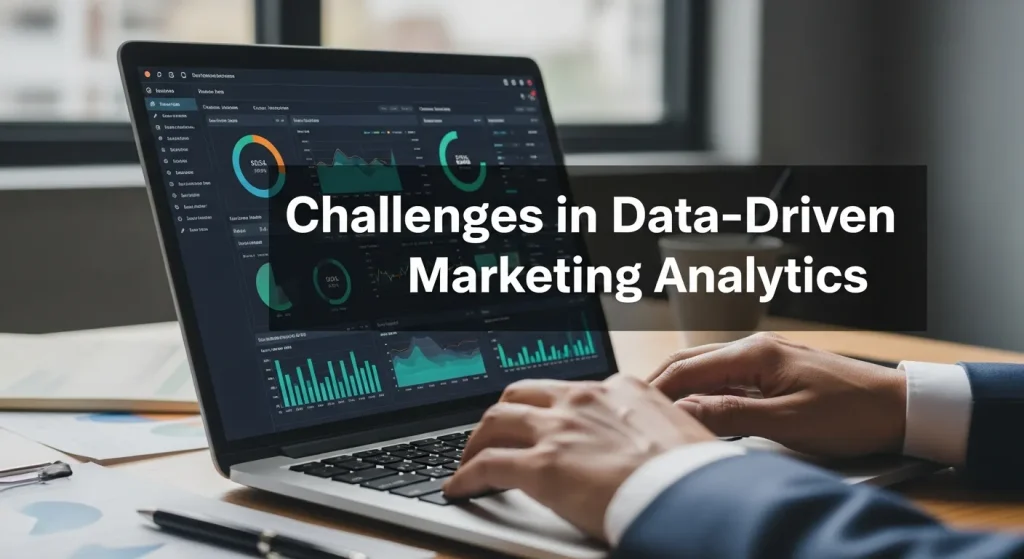
While data-driven marketing analytics offers immense potential, it comes with its own set of challenges. Marketers often face issues like data overload, lack of expertise, and integration difficulties. Understanding these challenges is the first step toward overcoming them.
Key Challenges:
- Data Overload: With so much data available, it can be overwhelming to identify what’s relevant.
- Data Silos: Disconnected systems make it hard to get a unified view of customer data.
- Lack of Expertise: Not all marketers are trained in analytics, leading to underutilization of tools.
- Privacy Concerns: Striking a balance between personalization and respecting user privacy is critical.
- Integration Issues: Combining data from multiple platforms can be technically challenging.
Common Challenges and Solutions
| Challenge | Solution |
|---|---|
| Data Overload | Focus on key metrics and KPIs relevant to your goals. |
| Data Silos | Use integrated platforms like HubSpot or Salesforce. |
| Lack of Expertise | Invest in training and certifications for your team. |
| Privacy Concerns | Ensure compliance with GDPR and other data protection regulations. |
| Integration Issues | Leverage tools with API capabilities for seamless data integration. |
Designing a Comprehensive Data-Driven Marketing Strategy
Creating a successful data-driven marketing strategy requires more than just access to analytics tools; it demands a cultural shift within your organization to prioritize evidence over intuition. The first step in this process involves clearly defining your objectives. Rather than collecting every possible data point, you must identify which specific questions you need to answer to drive business growth. This focused approach prevents the analysis paralysis that often plagues marketing teams and ensures that every metric tracked serves a distinct purpose in your broader campaign goals.
Once your objectives are set, the integration of data sources becomes the next critical phase. A robust data driven marketing guide will always emphasize the importance of breaking down silos between departments. When sales, customer support, and marketing teams share their data, you create a unified view of the customer journey. This holistic perspective allows you to see not just how a customer arrived at your site, but how they interacted with support after the purchase or why they churned. It transforms isolated numbers into a coherent story about your audience’s needs and behaviors.
Finally, execution must be agile. The beauty of this approach is the ability to pivot based on real-time feedback. If you are looking for data driven marketing a quick guide to success, it essentially boils down to a cycle of testing, learning, and iterating. You launch a campaign, monitor the incoming data immediately, and adjust your tactics while the campaign is still live. This continuous loop of refinement ensures that your budget is always being reallocated to the highest-performing channels, maximizing efficiency and impact without waiting for a post-mortem analysis at the end of the quarter.
Must-Have Tools & Technologies for Marketing Analytics
With the basics down, you’re going to need the right tools to collect, analyze and act on your data. Here’s a breakdown of requisite software platforms for various marketing needs:
1. Google Analytics
The fact is, Google Analytics is still the most widely used tool for monitoring website traffic, user behavior, and your sales funnel. Its sophisticated capacities comprise of audience segmentation, real time reporting, and also attribution modeling. Bonus? It’s free to use.
2. HubSpot
HubSpot consolidates CRM, email marketing, and analytics in one platform, offering detailed insights into your customer lifecycle. It’s beginner-friendly, making it perfect for data-driven marketing newbies.
3. Tableau
A leading data visualization tool, Tableau is ideal for marketers looking to create interactive dashboards showcasing campaign performance. It’s robust enough for advanced users while still offering intuitive options for beginners.
4. Facebook Ads Manager and Google Ads
Both platforms provide powerful analytical features for tracking ad performance. Use them to monitor CTRs, cost per acquisition, and audience engagement on paid campaigns.
5. Marketing Automation Platforms
Tools like Market, Pardot, or Mailchimp combine automation with analytics, enabling marketers to optimize email workflows, lead scoring, and more.
Pro tip: You don’t need every tool from day one. Start with Google Analytics or HubSpot, then add more specialized platforms as you scale your analytics efforts.
Unlocking Growth with B2B Data-Driven Marketing
While consumer brands often grab the headlines, B2B data-driven marketing is where some of the most sophisticated analytical work occurs. The B2B sales cycle is typically longer and more complex than B2C, involving multiple stakeholders and touchpoints over months or even years. In this environment, data serves as the connective tissue that holds the long-term relationship together. By tracking interactions across this extended timeline, B2B marketers can identify the precise moments when a prospect moves from awareness to consideration, allowing them to deliver the right whitepaper, case study, or sales call exactly when it is most likely to influence a decision.
Many successful companies use data-driven marketing in the B2B space to bridge the historical gap between marketing and sales teams. By utilizing predictive analytics and lead scoring, marketing can hand off prospects to sales only when the data indicates a high intent to purchase. This ensures that sales teams aren’t wasting time on cold leads, while marketing teams can prove their direct contribution to revenue. It shifts the conversation from “how many leads did we generate” to “how much revenue influenced by marketing did we close,” which is a far more valuable metric for business leaders.
Furthermore, account-based marketing (ABM) relies heavily on this data-centric approach. Instead of casting a wide net, B2B marketers use data to identify high-value target accounts and personalize content specifically for the decision-makers within those organizations. This level of hyper-personalization is impossible without deep, accurate data insights. By understanding the unique pain points and browsing behaviors of specific companies, you can tailor your messaging to resonate deeply, turning cold outreach into warm, informed conversations that drive substantial business value.
Trends Shaping the Future of Data-Driven Marketing
The landscape of data-driven marketing is constantly evolving. Staying ahead of trends can help marketers leverage new opportunities and maintain a competitive edge. Here are some key trends shaping the future of this field.
Emerging Trends:
- AI and Machine Learning: Automating data analysis and predictive modeling for better insights.
- Real-Time Analytics: Making decisions on the fly with live data.
- Personalization at Scale: Using data to create hyper-personalized experiences for large audiences.
- Voice and Visual Search Analytics: Adapting to new search behaviors driven by smart devices.
- Privacy-First Marketing: Building trust with customers by prioritizing data security and transparency.
Trends and Their Impact
| Trend | Impact on Marketing |
|---|---|
| AI and Machine Learning | Enables smarter, faster decision-making and campaign optimization. |
| Real-Time Analytics | Allows marketers to adapt strategies instantly based on live data. |
| Personalization at Scale | Improves customer engagement and conversion rates. |
| Voice and Visual Search | Expands reach by optimizing for new search methods. |
| Privacy-First Marketing | Builds customer trust and ensures compliance with regulations. |
Where to Learn Data-Driven Marketing Analytics
If you’re ready to upskill, there’s no shortage of educational resources to get you started. Here are recommendations for courses, books, and communities:
Courses
- Google Analytics Academy (Free): Learn the ins and outs of analyzing website and campaign performance using Google’s tool.
- HubSpot Academy’s Marketing Analytics Course (Free): Covers basic principles of marketing analytics using the HubSpot platform.
- Coursera’s Marketing Analytics Certificate (Paid): This program dives into key skills such as predictive modeling and customer segmentation.
Books
- “Marketing Metrics” by Farris, Bendle, Pfeifer, & Reibstein – A practical guide to understanding and using marketing KPIs.
- “Data-Driven Marketing” by Mark Jeffery – Ideal for those interested in blending analytics with strategy.
Online Communities
- LinkedIn Groups (e.g., “Marketing Analytics & Attribution Professionals”)
- Twitter Marketing Chats (e.g., #DigitalMarketing)
Immersing yourself in these resources ensures that you not only understand analytics concepts but gain hands-on practice applying them.
Practical Applications of Data-Driven Marketing Analytics
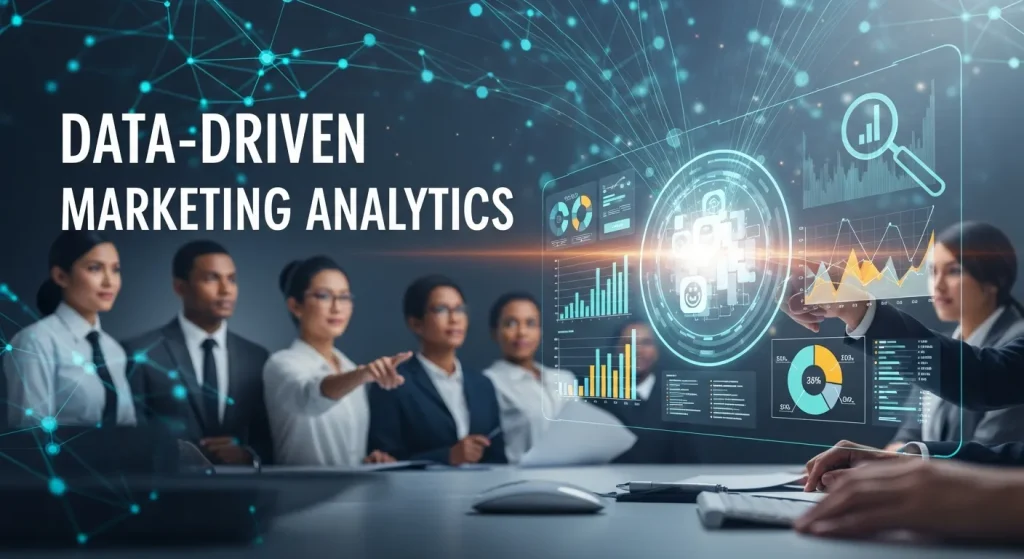
Still wondering how analytics can transform your workflow? Here are some examples of how real businesses apply data-driven marketing:
1. Personalized Email Campaigns
By analyzing customer behavior, an e-commerce company can create personalized product recommendations in its email campaigns, leading to a 15% boost in click-through rates.
2. Optimized Ad Spend
A DTC (direct-to-consumer) brand uses attribution modeling to identify that Instagram ads yield a lower cost-per-lead than search ads. The company then reallocates its budget, increasing ROI by 21%.
3. Enhanced User Experience
An online travel intermediary studies user heat-maps to learn that people quit booking forms halfway down the process. By simplifying the design of the forms, they decrease the drop-off rates by 35%.
These use cases illustrate the actual results you can achieve with your campaigns, from making your ads work harder to creating personalized customer experiences
The Future Belongs to Data-Driven Marketers
Mastering data-driven marketing isn’t just a trend; it’s a necessity for staying competitive in today’s digital landscape. With the right tools, a commitment to continuous learning, and a strategic mindset, you can uncover deeper insights, optimize campaigns, and create personalized experiences at scale.
Start your analytics learning journey by exploring some of the free tools and courses listed above. And remember, the key to getting ahead in marketing is simple: know your data, trust your insights, and consistently refine your strategy.
FAQ: Data-Driven Marketing Analytics
1. What is data-driven marketing analytics?
Data-driven marketing analytics refers to the process of using data to make informed decisions, optimize marketing strategies, and improve campaign outcomes. It involves analyzing metrics, customer behavior, and trends to create impactful, measurable marketing efforts.
2. Why is data-driven marketing important?
Data-driven marketing is important because it allows marketers to move beyond guesswork and make accurate, quantifiable decisions. This approach helps businesses optimize campaigns, improve ROI, and drive sustainable growth by leveraging actionable insights.
3. What are some key metrics in marketing analytics?
Key metrics in marketing analytics include website traffic, bounce rates, conversion rates, customer lifetime value, and cost per acquisition. These metrics help evaluate campaign performance and guide data-driven decision-making.
4. What is the difference between metrics and KPIs?
Metrics are general measurable data points, such as page views or email open rates. KPIs (Key Performance Indicators) are specific metrics tied to business goals, like achieving a 10% increase in sales within a quarter.
5. What tools are best for beginners in marketing analytics?
Beginners in marketing analytics can start with tools like Google Analytics and HubSpot. These platforms are user-friendly, offer free versions, and provide essential insights into website traffic, customer behavior, and campaign performance.
6. How do attribution models work?
Attribution models assign credit to marketing activities that contribute to conversions. For example, first-touch models credit the first interaction, while multi-touch models distribute credit across multiple touchpoints in the customer journey.
7. What is customer segmentation?
Customer segmentation involves dividing your audience into smaller groups based on shared characteristics like demographics, purchasing behavior, or interests. This allows marketers to create highly targeted campaigns that resonate with specific audience segments.
8. How can I calculate ROI in marketing campaigns?
ROI (Return on Investment) is calculated by dividing the revenue generated from a campaign by its total cost, then multiplying by 100. This metric helps measure the profitability of marketing efforts.
9. What are some free resources to learn marketing analytics?
Free resources to learn marketing analytics include Google Analytics Academy, which offers courses on website and campaign analysis, and HubSpot Academy, which provides beginner-friendly lessons on marketing analytics and CRM tools.
10. How can data-driven marketing improve customer experience?
Data-driven marketing improves customer experience by enabling businesses to personalize campaigns, optimize user journeys, and address customer pain points. This leads to higher engagement, satisfaction, and loyalty over time.



Leave a Reply