

Data-driven marketing uses customer data to optimize campaigns, personalize experiences, and improve results, boosting engagement, loyalty, and business growth.
Marketing used to be about gut feelings and creative hunches. Brilliant campaigns emerged from boardroom brainstorming sessions, fueled by coffee and intuition. But those days are rapidly becoming a relic of the past.
Modern businesses generate more customer data than ever before. Every click, purchase, email open, and social media interaction creates a digital footprint that reveals valuable insights about consumer behavior. The companies that harness this information through data-driven marketing strategies consistently outperform their competitors who still rely on guesswork.
This shift isn’t just about having better analytics—it’s about fundamentally changing how businesses understand and connect with their customers. When you make marketing decisions based on concrete evidence rather than assumptions, you can allocate resources more effectively, create more personalized experiences, and ultimately drive better results for your bottom line.
What Is Data-Driven Marketing?
Data-driven marketing is the practice of making strategic marketing decisions based on data analysis rather than intuition or assumptions. This approach involves collecting, analyzing, and interpreting customer data to optimize marketing campaigns, improve targeting, and enhance overall marketing performance.
The process typically involves gathering information from multiple sources, including website analytics, social media metrics, email campaign performance, customer relationship management (CRM) systems, and sales data. Marketers then analyze this information to identify patterns, trends, and insights that inform future marketing strategies.
Unlike traditional marketing methods that rely heavily on demographic assumptions or broad market research, data-driven marketing focuses on actual customer behavior and preferences. This creates a more accurate picture of what motivates customers to make purchases and how they interact with your brand across different touchpoints.
The Business Impact of Data-Driven Decision-Making
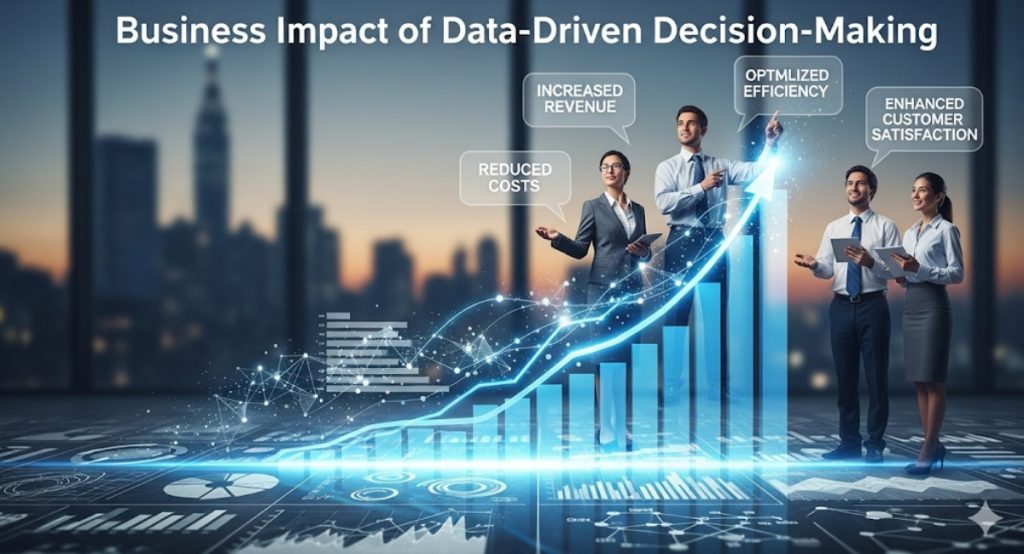
Companies that embrace data-driven marketing strategies see measurable improvements across key performance indicators. Organizations using data-driven marketing are six times more likely to be profitable year-over-year compared to their competitors who don’t prioritize data analysis.
Customer acquisition costs decrease significantly when marketing teams can identify the most effective channels and messaging for their target audience. Instead of spreading marketing budget across multiple channels with uncertain returns, data-driven marketers concentrate their efforts on proven strategies that deliver consistent results. Learn more about using data-driven marketing to grow your business.
Personalization becomes more sophisticated and effective when backed by customer data. Businesses can create targeted campaigns that speak directly to individual customer needs and preferences, leading to higher engagement rates and conversion percentages. This level of customization would be impossible to achieve at scale without data-driven insights.
Customer lifetime value also improves as companies better understand which customers are most valuable and how to retain them long-term. Data analysis reveals patterns in customer behavior that help predict future purchases and identify opportunities for upselling or cross-selling.
Key Components of Effective Data-Driven Marketing
Customer Segmentation
Effective data-driven marketing starts with understanding your customer base through detailed segmentation. Rather than treating all customers the same way, data analysis reveals distinct groups with different behaviors, preferences, and purchasing patterns. Advanced segmentation strategies are discussed in our data-driven account-based marketing guide.
Advanced segmentation goes beyond basic demographics to include behavioral data, purchase history, engagement levels, and customer journey stages. This creates more nuanced customer profiles that enable highly targeted marketing campaigns with better response rates.
Predictive Analytics
Predictive analytics uses historical data to forecast future customer behavior and market trends. This capability allows marketers to anticipate customer needs, identify potential churn risks, and optimize timing for marketing campaigns.
Machine learning algorithms can process vast amounts of customer data to identify patterns that humans might miss. These insights help marketers make proactive decisions rather than reactive ones, staying ahead of customer needs and market changes.
Real-Time Optimization
Data-driven marketing enables real-time campaign adjustments based on performance metrics. Instead of waiting for campaign completion to analyze results, marketers can monitor key indicators and make immediate optimizations to improve outcomes. This agility is particularly valuable for digital advertising campaigns where bid adjustments, audience targeting, and creative variations can be tested and refined continuously. Real-time optimization ensures marketing budgets are always directed toward the highest-performing strategies.
Learn more about implementing a data-driven communications strategy in your campaigns.
This agility is particularly valuable for digital advertising campaigns where bid adjustments, audience targeting, and creative variations can be tested and refined continuously. Real-time optimization ensures marketing budgets are always directed toward the highest-performing strategies.
Building Your Data-Driven Marketing Framework

Data Collection Strategy
Success begins with collecting the right data from appropriate sources. This includes first-party data from your website, email campaigns, and customer transactions, as well as third-party data that provides additional context about customer behavior and market conditions.
Implement tracking systems that capture customer interactions across all touchpoints, from initial awareness through post-purchase engagement. Ensure data quality by establishing consistent collection methods and regular data audits to maintain accuracy.
Technology Infrastructure
Invest in marketing technology platforms that integrate data from multiple sources into a unified view of your customers. Data-driven marketing software helps centralize information and enables more sophisticated analysis and campaign execution.
Choose tools that offer robust analytics capabilities and can scale with your business growth. The technology should support both historical analysis and real-time decision making to maximize the value of your data-driven marketing efforts.
Team Development
Build analytical capabilities within your marketing team through training and strategic hiring. Data-driven marketing requires professionals who can interpret data insights and translate them into actionable marketing strategies.
Foster a culture that values testing and experimentation. Encourage team members to question assumptions, propose data-backed hypotheses, and continuously refine their approach based on performance results.
Measuring Success in Data-Driven Marketing
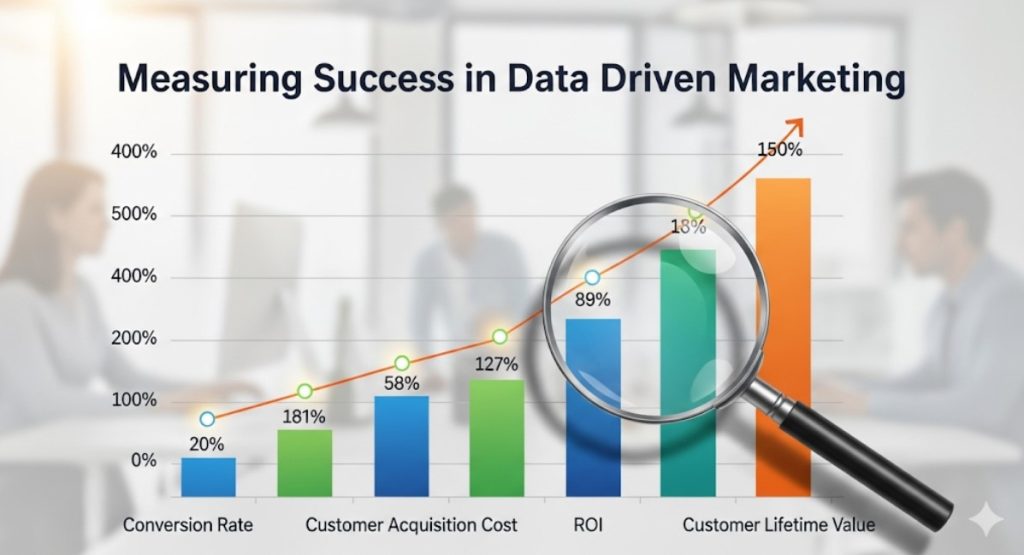
Establish clear key performance indicators (KPIs) that align with your business objectives. These might include customer acquisition cost, customer lifetime value, conversion rates, and return on advertising spend. Regular monitoring of these metrics helps ensure your data-driven strategies are delivering expected results.
Implement attribution modeling to understand how different marketing touchpoints contribute to conversions. This provides a more complete picture of customer journey effectiveness and helps optimize budget allocation across channels.
Create regular reporting cycles that communicate data insights to stakeholders across the organization. Data-driven marketing works best when insights inform decisions beyond the marketing department, influencing product development, customer service, and overall business strategy.
Data-Driven Marketing as a Competitive Advantage
In crowded markets, competitive advantage rarely comes from creativity alone. It comes from understanding customers better and acting on that understanding faster than competitors. Data-driven marketing enables both.
Organizations that leverage data effectively respond more quickly to changes in customer behavior, market conditions, and performance signals. Instead of reacting after results decline, they anticipate shifts and adjust strategies proactively.
This agility compounds over time. As data-driven processes mature, decision-making becomes faster, more accurate, and more confident. Marketing evolves from a support function into a strategic driver of growth, differentiation, and long-term success.
Data-Driven Marketing Across the Full Customer Journey
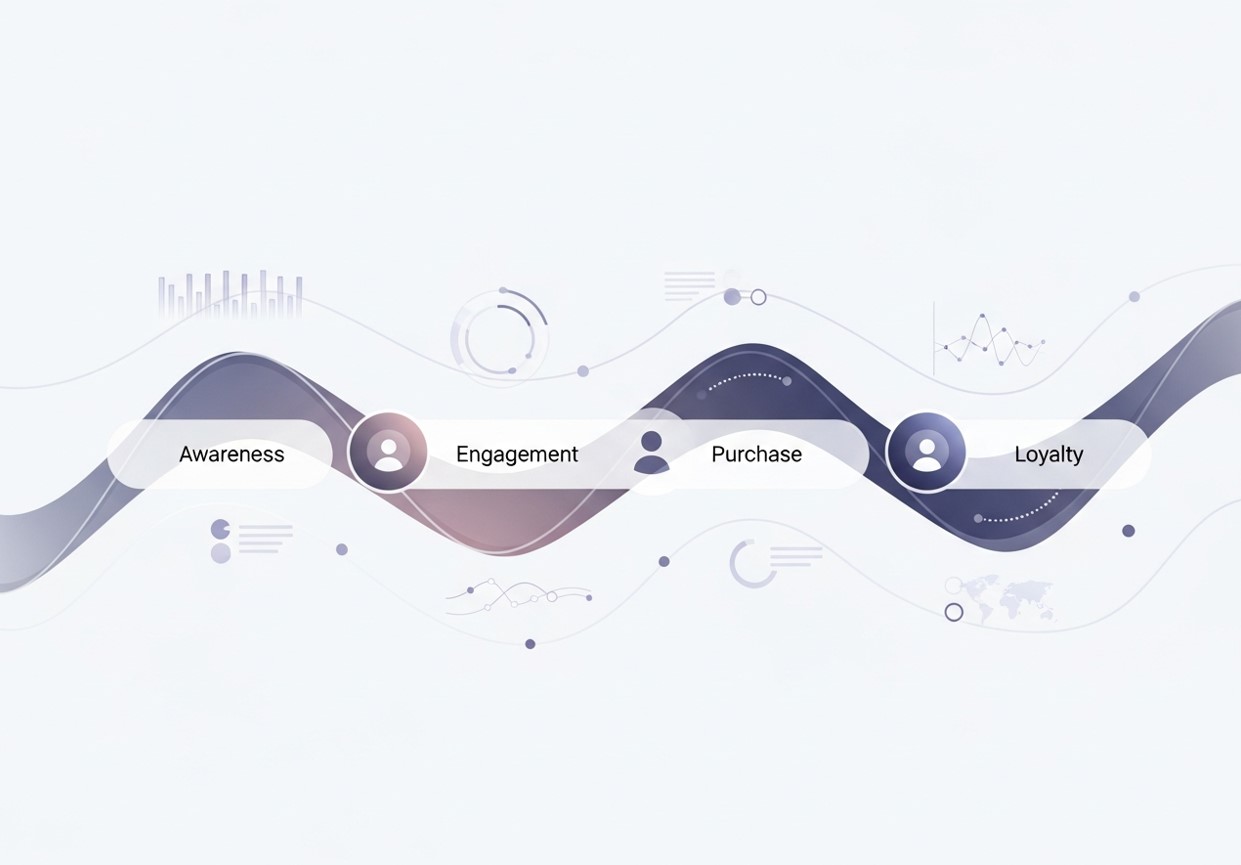
One of the most powerful advantages of data-driven marketing is its ability to illuminate the entire customer journey rather than isolated touchpoints. Traditional marketing often focuses on individual campaigns or channels, but data allows businesses to understand how customers move from initial awareness to consideration, conversion, and long-term loyalty.
By analyzing journey-level data, marketers can identify where prospects drop off, where engagement peaks, and which interactions have the greatest influence on purchasing decisions. This insight helps eliminate friction points that quietly erode performance. For example, data may reveal that customers consistently engage with educational content before converting, signaling an opportunity to strengthen mid-funnel nurturing efforts.
A journey-based approach also improves message consistency. When marketing teams understand how customers progress, they can deliver the right message at the right time instead of repeating generic promotions. This creates smoother, more cohesive experiences that feel intentional rather than fragmented.
Attribution Models and Understanding True Marketing Impact
One of the biggest challenges in modern marketing is understanding which efforts actually drive results. Customers rarely convert after a single interaction, yet traditional measurement models often oversimplify attribution by crediting only the final touchpoint.
Data-driven marketing introduces advanced attribution models that consider multiple interactions across the customer journey. By analyzing how different channels work together, marketers gain a clearer understanding of influence rather than coincidence. This insight prevents overinvestment in visible but low-impact channels while uncovering undervalued contributors.
Improved attribution leads to smarter budget allocation. When businesses understand which combinations of touchpoints drive conversions, they can optimize spend with confidence, ensuring resources are directed toward strategies that create meaningful impact.
Data-Driven Marketing and Brand Consistency
While data-driven marketing is often associated with performance optimization, it also plays a critical role in maintaining brand consistency. Data reveals how audiences perceive and respond to brand messaging across different channels and campaigns.
By analyzing engagement patterns and sentiment, marketers can identify which messages strengthen brand perception and which create confusion. This insight ensures that creativity remains aligned with brand values while still adapting to audience preferences. Consistency becomes intentional rather than accidental.
Over time, data-driven consistency builds stronger brand recognition and trust. Customers experience coherent messaging regardless of where or how they interact with the brand, reinforcing credibility and emotional connection.
Using Data to Improve Marketing Timing and Frequency
Even the most compelling message can fail if delivered at the wrong time or too often. Data-driven marketing helps businesses identify optimal timing and frequency for customer communication, reducing fatigue while increasing effectiveness.
Engagement data reveals when customers are most receptive to emails, ads, and content. Purchase history and behavioral signals indicate when customers are ready for an offer versus when they need education or reassurance. This insight allows marketers to align outreach with natural decision-making cycles.
By respecting customer attention and preferences, data-driven timing improves engagement rates and strengthens relationships. Marketing becomes helpful rather than intrusive, increasing long-term loyalty.
Overcoming Common Challenges
Data privacy regulations require careful attention to compliance while maintaining effective marketing capabilities. Develop transparent data collection practices and ensure customers understand how their information will be used to build trust and maintain legal compliance.
Data silos can limit the effectiveness of data-driven marketing efforts. Work to integrate data sources and break down organizational barriers that prevent comprehensive customer analysis. This might require investment in new technology platforms or changes to internal processes.
Avoid analysis paralysis by focusing on actionable insights rather than collecting data for its own sake. Establish clear processes for moving from data analysis to campaign implementation to ensure insights translate into improved marketing performance.
The Future of Marketing Is Data Driven
The marketing landscape continues to evolve rapidly, with new data sources and analytical capabilities emerging regularly. Businesses that establish strong data-driven marketing foundations now will be better positioned to adapt to future changes and maintain competitive advantages.
Artificial intelligence and machine learning will make data analysis more sophisticated and accessible to marketers at all skill levels. These technologies will automate routine analytical tasks and surface insights that drive better marketing decisions across organizations of all sizes.
Start building your data-driven marketing capabilities by identifying your most valuable data sources and establishing processes for regular analysis and optimization. The investment in data infrastructure and analytical skills will pay dividends in improved marketing performance and business growth for years to come.
Frequently Asked Questions (FAQ)
Is data-driven marketing only relevant for digital businesses?
Data-driven marketing benefits both digital and offline businesses. While digital channels provide more immediate data, offline interactions such as in-store purchases, call center activity, and events can also be captured and analyzed to inform marketing decisions.
How much data is enough to start data-driven marketing?
You do not need massive datasets to begin. Even basic website analytics, email performance data, and customer purchase history can provide valuable insights. The key is consistency and a commitment to learning from the data you already have.
Does data-driven marketing reduce creativity?
Data-driven marketing enhances creativity rather than replacing it. Data identifies what resonates with audiences, while creativity determines how those insights are expressed through messaging, visuals, and storytelling. The strongest campaigns combine both.
How long does it take to see results from data-driven marketing?
Some improvements, such as better targeting or budget optimization, can produce results within weeks. More advanced outcomes, like increased customer lifetime value, develop over time as insights compound and strategies mature.
What skills are needed for data-driven marketing?
Successful data-driven marketing requires analytical thinking, curiosity, and the ability to translate insights into action. While technical skills are helpful, clear communication and strategic decision-making are just as important.
Can small teams realistically adopt data-driven marketing?
Small teams are often well-positioned to adopt data-driven marketing because they can move quickly and experiment more easily. With the right tools and focus, even lean teams can achieve significant performance gains.



Leave a Reply