

Marketing has always been about understanding the customer. But for a long time, that “understanding” was based more on intuition than on concrete facts. Marketers relied on broad demographic data and educated guesses to craft campaigns they hoped would resonate. Today, the landscape is entirely different. The rise of digital technology has created an ocean of data, and marketers now have the tools to analyze it, transforming guesswork into a science.
This shift has given rise to data-driven marketing, an approach that uses customer data to inform and optimize marketing strategies. It’s no longer enough to just create a compelling message; that message must be delivered to the right person, at the right time, on the right platform. This guide will explore the key trends shaping the future of data-driven marketing, from the growing role of artificial intelligence to the increasing importance of privacy and ethical data use. Understanding these changes is crucial for any business that wants to stay competitive.
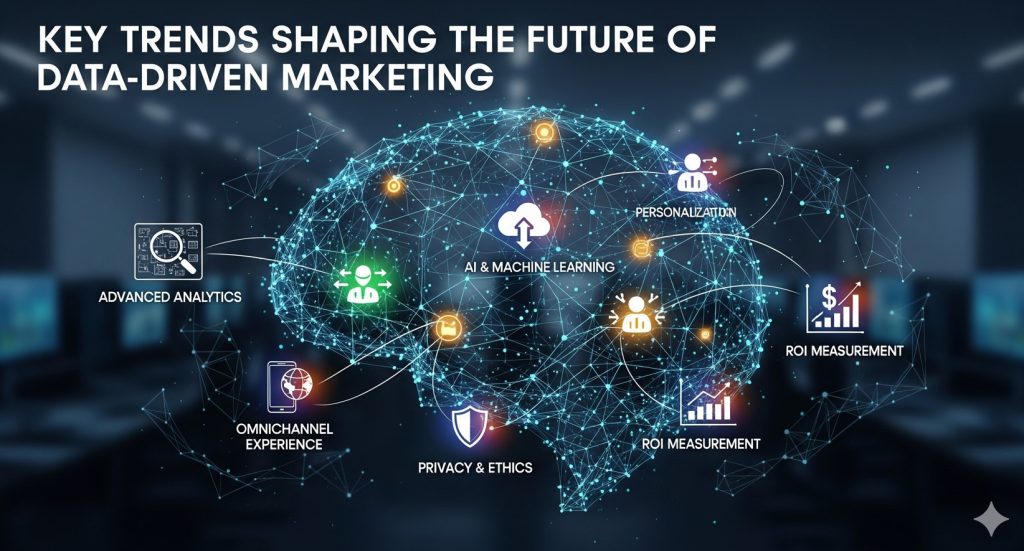
Key Trends Shaping the Future of Data-Driven Marketing
The world of data is constantly evolving, and marketing must evolve with it. Several key trends are set to redefine how businesses connect with their audiences in the coming years.
Artificial Intelligence and Machine Learning
Artificial intelligence (AI) and machine learning (ML) are at the forefront of the data revolution. These technologies can process and analyze vast datasets far beyond human capabilities, uncovering patterns and insights that would otherwise remain hidden. Companies interested in AI applications in AR can explore how AI is revolutionizing augmented reality experiences.
For marketers, this means more sophisticated and automated strategies. AI algorithms can analyze customer behavior to predict future actions, allowing for highly targeted and personalized campaigns. For example, AI can determine the optimal time to send an email to a specific customer, the type of content they are most likely to engage with, and even the products they are most likely to buy.
Machine learning also powers predictive analytics, which helps businesses forecast trends and customer demand. By analyzing historical data, ML models can identify which marketing efforts will yield the highest return on investment (ROI), allowing companies to allocate their resources more effectively.
Hyper-Personalization at Scale
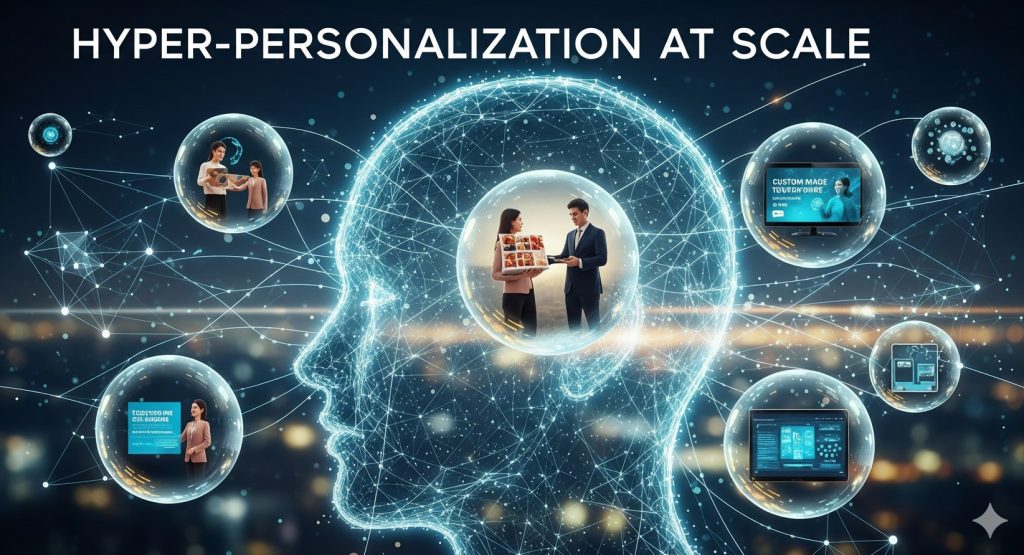
Customers today expect personalized experiences. By collecting and analyzing data from various touchpoints, such as website visits, social media interactions, and purchase history—businesses can deliver hyper-personalized content. You can see real-world examples in personalized data-driven marketing.
By collecting and analyzing data from various touchpoints—such as website visits, social media interactions, and purchase history—businesses can create detailed customer profiles. This information allows them to deliver hyper-personalized content and offers. Imagine an e-commerce site that dynamically changes its homepage to feature products based on a visitor’s browsing history, or a streaming service that recommends shows with uncanny accuracy.
This level of personalization not only improves the customer experience but also drives loyalty and conversions. When customers feel understood, they are more likely to engage with a brand and make a purchase.
The Rise of First-Party Data
As concerns about privacy grow, the digital landscape is shifting away from third-party cookies. Browsers like Safari and Firefox have already blocked them, and Google Chrome is phasing them out. This change is forcing marketers to rethink how they collect and use customer data.
The solution lies in first-party data—information that a company collects directly from its customers with their consent. This includes data from website analytics, CRM systems, customer surveys, and loyalty programs. First-party data is more accurate and reliable than third-party data, and its use is more transparent to the consumer.
Building a robust first-party data strategy is essential for the future of data-driven marketing. It requires businesses to build trust with their customers and provide real value in exchange for their information. Companies that succeed in this will have a significant competitive advantage.
Ethical Data Use and Transparency
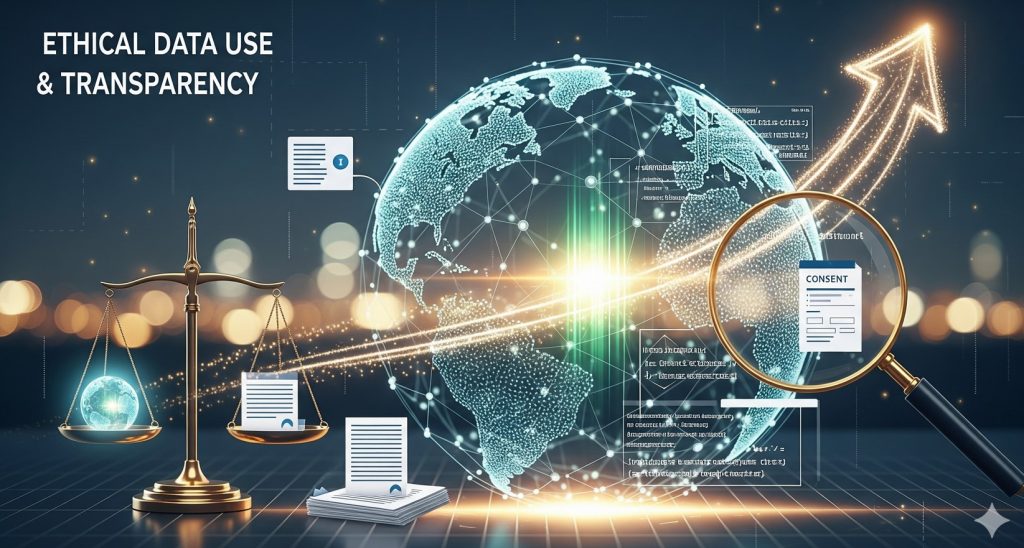
Privacy is no longer just a compliance issue; it’s a core component of brand trust. Consumers are more aware than ever of how their data is being used, and they are demanding greater transparency and control. Regulations like the GDPR in Europe and the CCPA in California have set new standards for data protection, and businesses must adapt.
In the future, successful marketing will be built on a foundation of trust. This means being open and honest about what data is being collected and why. It also means giving customers easy ways to manage their data and opt-out if they choose.
Companies that prioritize ethical data practices will not only avoid legal trouble but also build stronger relationships with their customers. Trust is a valuable asset, and it will be a key differentiator in the years to come.
Privacy is now a core component of brand trust. Ethical practices include transparency, consent, and security. Our post on data-driven marketing ethics and trust dives deeper into this topic.
The Integration of Omnichannel Marketing
Customers interact with brands across a multitude of channels, from social media and email to in-store visits and mobile apps. An omnichannel approach to data-driven marketing aims to create a seamless and consistent customer experience across all these touchpoints.
This requires breaking down data silos within an organization. When data from different departments—such as marketing, sales, and customer service—is integrated, businesses can gain a holistic view of the customer journey. This allows them to deliver consistent messaging and personalized experiences, no matter how a customer chooses to interact with them.
For example, a customer who abandons their online shopping cart could receive a reminder email with a special offer. If they later visit a physical store, a sales associate could have access to their browsing history and offer personalized recommendations. This level of integration creates a powerful and cohesive brand experience.
Customer Data Platforms (CDPs) and Unified Customer Insights
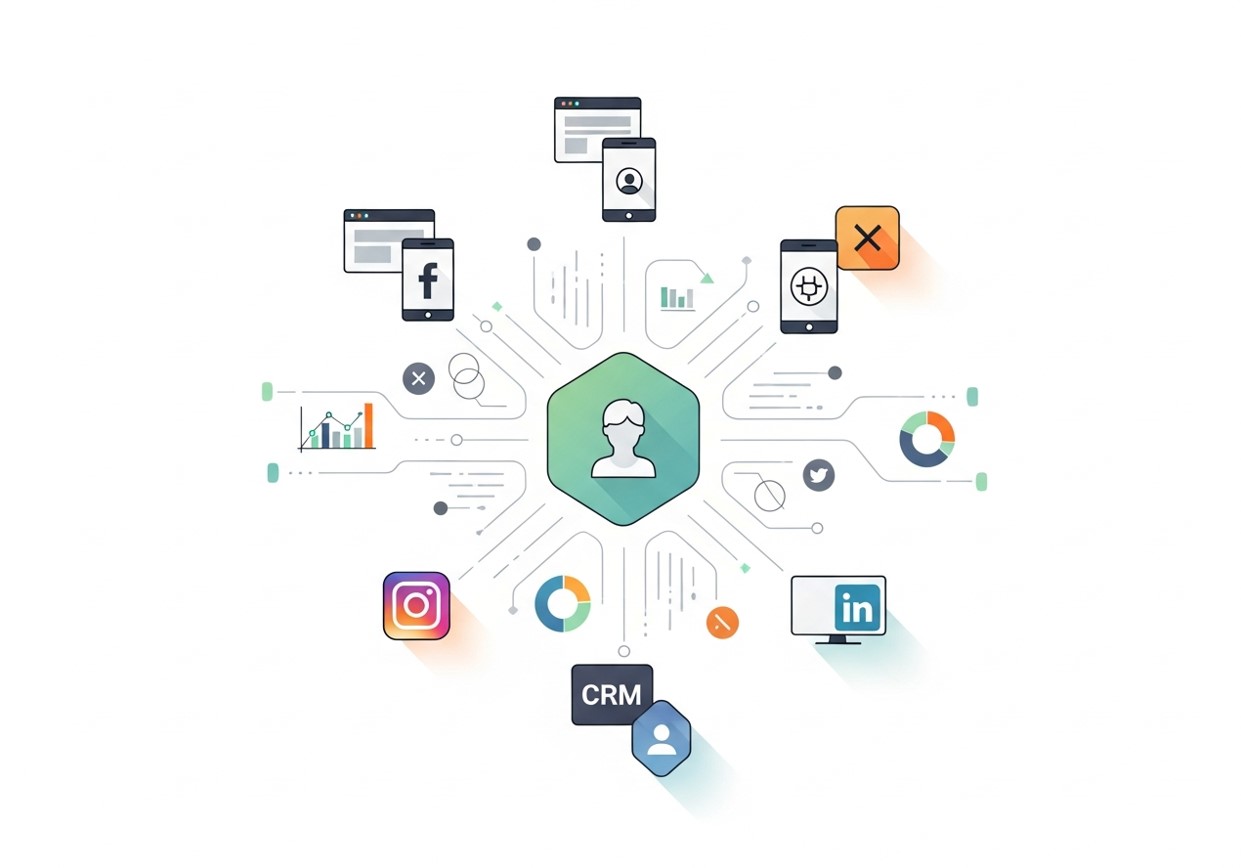
As the volume of customer data grows, businesses face the challenge of data fragmentation. Customer Data Platforms (CDPs) address this problem by unifying data from multiple sources—websites, mobile apps, social media, CRM systems, and offline interactions—into a single, coherent customer profile.
A unified view enables marketers to understand individual behaviors, preferences, and interactions across channels. This insight makes hyper-personalization more effective and ensures consistency in messaging. For example, if a customer engages with a brand on social media and later visits the website, a CDP allows marketers to connect these touchpoints and deliver tailored recommendations that reflect past behavior.
CDPs also facilitate segmentation and predictive analytics. By analyzing combined datasets, businesses can identify high-value customer segments, predict churn, and anticipate future needs. Organizations leveraging CDPs gain a competitive advantage by transforming raw data into actionable insights that drive more effective marketing strategies.
Privacy-First Marketing Technologies
With consumer privacy concerns rising and regulations tightening, privacy-first marketing technologies are becoming essential. These solutions allow businesses to gather insights and personalize experiences while respecting user consent and data protection laws.
Privacy-first technologies include server-side tracking, consent management platforms, and privacy-compliant analytics tools. They help marketers collect meaningful data without relying on third-party cookies or invasive tracking methods. For instance, first-party data collection via email sign-ups, surveys, or loyalty programs enables personalization while maintaining transparency.
Adopting privacy-first approaches not only ensures compliance but also strengthens customer trust. Brands that communicate their commitment to protecting data and provide users with control over their information are more likely to foster loyalty and long-term engagement.
Marketing Automation and Workflow Optimization
Data-driven marketing is inseparable from marketing automation. Automation platforms use data insights to streamline repetitive tasks, such as email campaigns, social media posting, lead nurturing, and ad targeting. By automating these processes, marketers save time and ensure consistent messaging across channels.
Modern marketing automation platforms are powered by AI, enabling dynamic personalization based on real-time user behavior. For example, if a lead downloads a product guide, the system can automatically trigger a tailored email series with relevant case studies or offers. Automation also helps enforce consistent workflows, reducing errors, improving response times, and enhancing customer experience.
Workflow optimization extends beyond external communications. Internally, automation ensures that teams have access to the right data at the right time, supporting informed decision-making and fostering collaboration between marketing, sales, and customer service departments.
AI-Powered Content Marketing
Content marketing has always been central to engaging audiences, but the rise of AI is transforming how content is created, distributed, and personalized. AI-driven tools analyze vast datasets, including search trends, social engagement, and customer preferences, to identify topics that resonate with your target audience. This allows marketers to produce content that is not only timely but also highly relevant.
Beyond topic selection, AI can assist in content creation itself. Natural Language Generation (NLG) algorithms can draft blog posts, email newsletters, product descriptions, and even ad copy. While human oversight is still crucial to maintain brand voice and quality, AI significantly reduces the time and effort required for content production.
AI also enhances content personalization at scale. By analyzing user behavior, AI can determine which type of content a particular audience segment prefers and deliver it through the optimal channel at the right time. This leads to higher engagement rates, stronger brand affinity, and improved ROI from content marketing initiatives.
Marketing Automation and Workflow Optimization
Data-driven marketing is inseparable from marketing automation. Automation platforms use data insights to streamline repetitive tasks, such as email campaigns, social media posting, lead nurturing, and ad targeting. By automating these processes, marketers save time and ensure consistent messaging across channels.
Modern marketing automation platforms are powered by AI, enabling dynamic personalization based on real-time user behavior. For example, if a lead downloads a product guide, the system can automatically trigger a tailored email series with relevant case studies or offers. Automation also helps enforce consistent workflows, reducing errors, improving response times, and enhancing customer experience.
Workflow optimization extends beyond external communications. Internally, automation ensures that teams have access to the right data at the right time, supporting informed decision-making and fostering collaboration between marketing, sales, and customer service departments.
Data Governance and Compliance in the Age of Data-Driven Marketing
As marketing becomes increasingly data-centric, the importance of strong data governance cannot be overstated. Collecting, storing, and utilizing customer data responsibly is not only a regulatory requirement but also a critical factor in maintaining customer trust.
Data governance involves establishing policies for data collection, storage, access, and usage. Marketers must ensure that all customer information is accurate, up-to-date, and used only for approved purposes. Implementing structured processes helps minimize errors, prevent data breaches, and maintain compliance with regulations like GDPR, CCPA, and other regional privacy laws.
A solid data governance strategy also defines roles and responsibilities within the organization. Marketers, IT teams, and data analysts must collaborate to maintain quality standards, audit data sources, and verify that all usage aligns with ethical and legal requirements.
For businesses that prioritize transparency and compliance, robust data governance becomes a competitive advantage. Customers are more likely to engage with brands they trust, and regulators are less likely to impose fines, allowing marketing teams to focus on innovation rather than risk management.
Prepare Your Marketing for Tomorrow
The future of data-driven marketing is dynamic. AI, hyper-personalization, first-party data, ethical practices, and omnichannel integration represent a fundamental shift in how businesses connect with customers. Start preparing now with insights from why data-driven marketing is your secret weapon.
To stay ahead, organizations must be agile and willing to adapt. This means investing in the right technologies, building a strong data infrastructure, and fostering a culture that values data and respects customer privacy. The journey toward a fully data-driven marketing strategy may be challenging, but the rewards—stronger customer relationships, increased loyalty, and sustainable growth—are well worth the effort. The time to start preparing for this future is now.
Frequently Asked Questions (FAQ)
What is the difference between traditional marketing and data-driven marketing?
Traditional marketing relies on broad assumptions, demographic targeting, and intuition. Data-driven marketing, on the other hand, uses concrete data and analytics to inform decisions. This allows for precise targeting, measurable outcomes, and continuous optimization of campaigns.
How does AI improve marketing effectiveness?
AI can analyze massive datasets to identify patterns, predict behavior, and automate campaign personalization. It helps marketers deliver the right message to the right person at the right time, increasing engagement, conversions, and ROI.
What is first-party data, and why is it important?
First-party data is information collected directly from your customers, such as website activity, purchase history, or survey responses. It is more reliable and privacy-compliant than third-party data, and it allows marketers to build trust while delivering highly personalized experiences.
How can small businesses implement data-driven marketing?
Small businesses can start by collecting and analyzing data from customer interactions, social media, and website analytics. Affordable tools and platforms can help manage first-party data, run automated campaigns, and generate actionable insights. Even modest efforts can deliver measurable results over time.
What are the ethical considerations in data-driven marketing?
Marketers must prioritize transparency, consent, and security. Ethical practices include informing customers about data collection, offering opt-out options, and safeguarding sensitive information. Building trust through ethical data use enhances brand reputation and loyalty.
How do you measure the success of data-driven marketing?
Success can be measured through key performance indicators such as conversion rates, customer lifetime value, engagement metrics, and campaign ROI. Attribution modeling and real-time analytics allow marketers to assess the effectiveness of each touchpoint and continuously optimize campaigns.



Leave a Reply