


Understanding Data in Marketing Automation
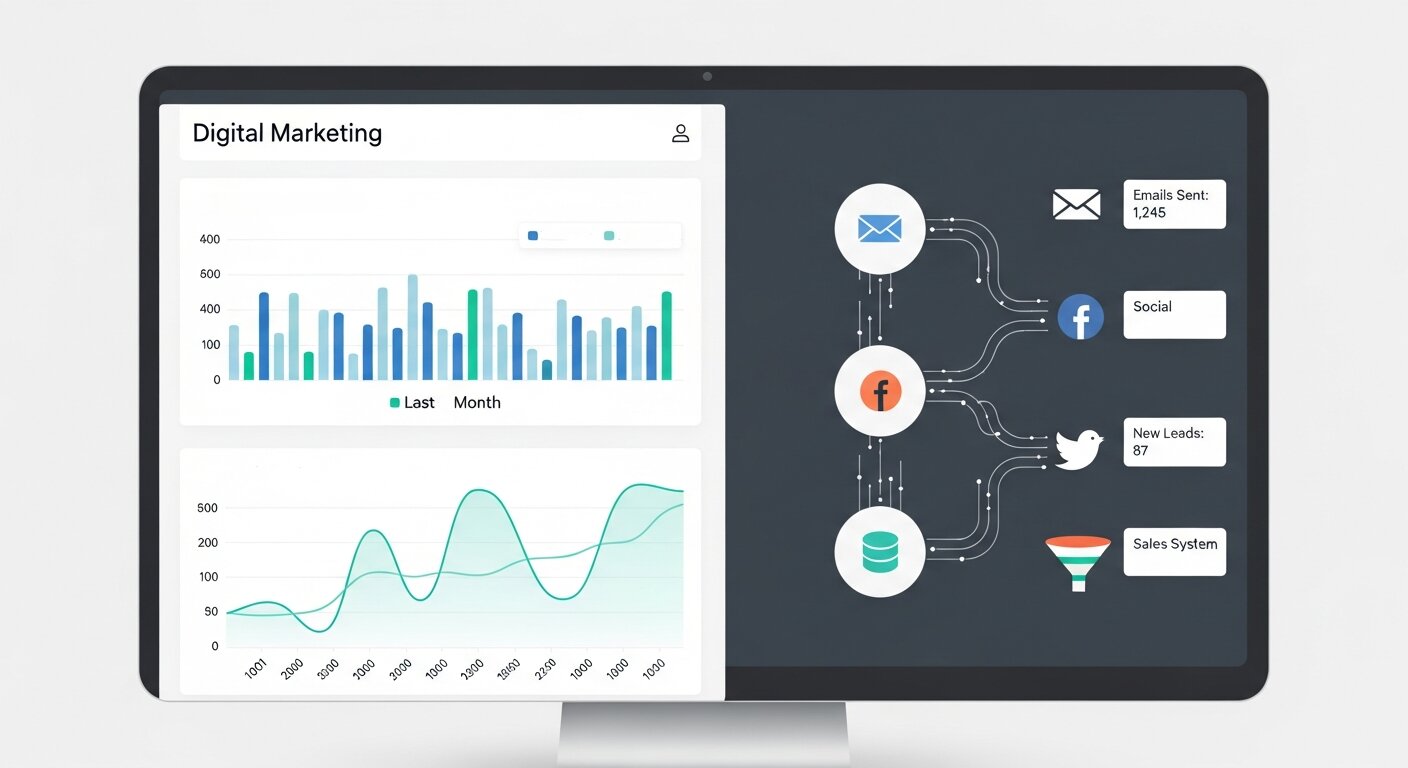
Before leveraging marketing automation tools effectively, it’s crucial to understand the types of data that fuel Data-Driven Marketing Automation strategies. The quality and accuracy of your data directly influence how personalized, efficient, and impactful your automated campaigns will be. Let’s dive into the key data types that form the backbone of successful marketing automation workflows.
Demographic Data
Demographic data consists of fundamental information about your customers, including age, gender, location, occupation, income level, and education. In the context of Data-Driven Marketing Automation, this data allows marketers to segment audiences with precision and create campaigns that resonate with specific customer groups. For example, a travel company might automatically send family vacation packages to users identified as parents while promoting adventure trips to younger, single travelers. By integrating demographic data into your marketing automation workflows, you can deliver messages that feel relevant and personal, significantly increasing engagement and conversion rates. You can also learn more about data-driven content marketing strategies for leveraging demographic insights.
Behavioral Data
Behavioral data tracks how customers interact with your brand across multiple channels, including website visits, email opens, clicks, social media interactions, app usage, and content downloads. In Data-Driven Marketing Automation, this type of data is invaluable because it reveals customer preferences, intent, and engagement patterns. By analyzing behavioral data, automation platforms can trigger actions such as sending a reminder email when a customer abandons a shopping cart, recommending products based on browsing history, or delivering content tailored to the user’s interests. Essentially, behavioral data allows your automation to respond intelligently to each customer’s actions in real time, creating a seamless, personalized experience.
Transactional Data
Transactional data refers to information about past purchases, order frequency, average transaction value, subscription details, and payment history. When leveraged in Data-Driven Marketing Automation, transactional data enables businesses to identify loyal customers, predict future purchasing behavior, and tailor offers to maximize lifetime value. For instance, an e-commerce platform can automatically send reorder reminders for consumable products, suggest complementary items based on past purchases, or trigger exclusive rewards for high-value customers. You can explore our guide on data-driven eCommerce marketing to see how transactional data drives online sales growth.
Benefits of Data-Driven Marketing Automation
Leveraging data in your marketing automation strategy offers a host of key benefits:
Personalization at Scale
Data is the lifeblood of modern marketing, enabling hyper-personalized messages that resonate with each individual customer. With Data-Driven Marketing Automation, marketers can move beyond generic campaigns and deliver content that speaks directly to a user’s preferences, behavior, and past interactions. Automation ensures this personalization happens at scale, allowing businesses to reach hundreds, thousands, or even millions of customers without losing the sense of individual relevance.
For example, streaming platforms like Netflix use behavioral data, such as viewing history and watch patterns, to curate personalized recommendations for every user. This approach keeps engagement levels high, encourages longer sessions, and increases customer satisfaction. By leveraging Data-Driven Marketing Automation, companies can build stronger relationships, increase loyalty, and drive repeat interactions through consistently relevant messaging.
Increased Efficiency
One of the most immediate benefits of Data-Driven Marketing Automation is the efficiency it brings to marketing operations. Tasks that were once repetitive and time-consuming—like sending emails, following up on leads, or segmenting audiences—can now be automated with precision. This frees up marketing teams to focus on strategic initiatives, creative development, and higher-level campaign optimization.
Automation platforms also ensure that messages are delivered consistently to the right audience at the optimal time. For instance, a triggered email workflow can automatically send abandoned cart reminders, personalized discounts, or follow-up sequences based on user behavior. Not only does this save significant manual effort, but it also ensures that no opportunity is lost, maximizing the effectiveness of your marketing campaigns. By implementing Data-Driven Marketing Automation, businesses can streamline operations while enhancing performance across all touchpoints.
Measurable ROI
Data-Driven Marketing Automation makes marketing measurable and actionable. Analytics on metrics like click-through rates, conversions, and engagement patterns enable optimization in real time. For guidance on tracking campaign success, explore best KPI tracking tools for marketing success.
For example, companies leveraging marketing automation have reported up to a 15% increase in sales productivity, according to McKinsey, thanks to more efficient targeting, timely messaging, and personalized experiences. By analyzing performance metrics within a Data-Driven Marketing Automation framework, businesses can make informed decisions that directly impact revenue, improve ROI, and ensure that marketing budgets are spent on initiatives that truly deliver results.
How to Implement Data-Driven Marketing Automation
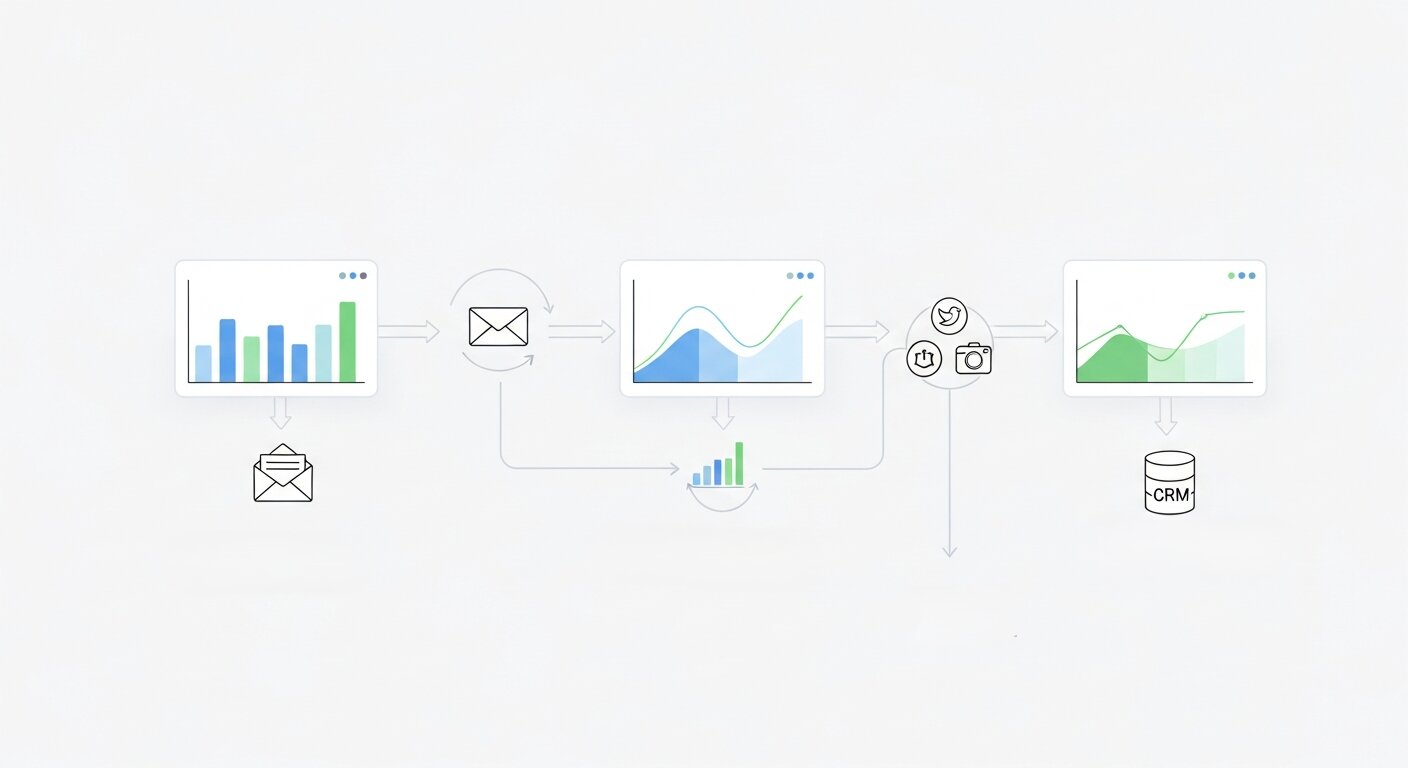
Define Your Goals
Identify what you want to achieve with marketing automation. Whether it’s increasing sales, nurturing leads, or retaining customers, clear goals will guide your strategy.
Gather and Organize Your Data
Ensure you have access to clean, structured data. Make use of customer relationship management (CRM) systems or data-management platforms (DMPs) to organize and track data effectively.
Use CRM or DMP platforms to centralize and clean your data. See our data-driven marketing analytics guide for best practices.
Segment Your Audience
Divide your audience based on the data you’ve collected. This could be by demographics, behavior, or purchase history. Segmentation allows for more targeted and meaningful communication.
Create Targeted Campaigns
Using your data, create campaigns tailored to the needs and preferences of different audience segments. For example, send product recommendations to returning customers or educational emails to new subscribers.
Choose the Right Tools
Select a marketing automation platform that aligns with your goals and integrates seamlessly with your existing tech stack (we’ll go into specific tools shortly).
Analyze and Optimize
Constantly monitor the performance of your campaigns. Use insights to tweak and optimize for better results.
Key Tools and Technologies for Data-Driven Marketing Automation
There’s no shortage of tools designed to enhance your marketing automation strategy. Here are a few to consider:
- HubSpot: A complete inbound marketing platform that offers email automation, lead management, and personalized marketing campaigns.
- Marketo: Known for sophisticated B2B and enterprise solutions, Market focuses on lead-scoring and email nurturing.
- Mailchimp: A popular choice for small-to-medium businesses, offering user-friendly features like basic automation workflows and analytics.
- ActiveCampaign: Focused on customer experience, this tool makes segmentation and behavioral automation seamless.
- Google Analytics: While not exclusively an automation tool, it’s still essential for tracking behavioral data and campaign performance.
Challenges in Data-Driven Marketing Automation (And How to Overcome Them)
While the opportunities are immense, implementing data-driven marketing automation comes with a few hurdles:
Data Privacy Concerns
In today’s data-driven marketing landscape, maintaining customer trust is critical. With stringent global regulations such as GDPR (General Data Protection Regulation) and CCPA (California Consumer Privacy Act), businesses must prioritize data privacy in every aspect of their Data-Driven Marketing Automation strategy. Collecting, storing, and using personal data without proper consent can result in hefty fines, reputational damage, and loss of customer trust.
The solution lies in transparency and accountability. Always obtain explicit consent from users before gathering their information, clearly communicate how the data will be used, and provide easy opt-out options. Automation platforms can help manage these consent preferences at scale, ensuring that marketing campaigns remain compliant while still leveraging data for personalization and engagement. By embedding privacy-conscious practices into your Data-Driven Marketing Automation workflows, you not only comply with regulations but also build stronger relationships with your customers.
Data Silos
One of the most common barriers to effective Data-Driven Marketing Automation is fragmented or siloed data. When customer information is spread across multiple systems—such as CRM platforms, email marketing tools, analytics software, or sales databases—it becomes difficult to gain a comprehensive view of your audience. These data silos can lead to inconsistent messaging, missed opportunities, and ineffective campaigns.
The solution is to centralize data into a unified platform. Modern CRM systems and marketing automation tools consolidate customer information, providing a single source of truth. By integrating behavioral, demographic, and transactional data, businesses can create more accurate audience segments, deliver highly targeted campaigns, and measure performance effectively. Eliminating data silos ensures your Data-Driven Marketing Automation strategy operates with intelligence, consistency, and maximum efficiency.
Resistance to Change
Implementing Data-Driven Marketing Automation often requires a shift in mindset, processes, and workflows. Teams may initially resist adopting new tools or hesitate to trust automation for critical marketing tasks. This resistance can slow adoption, reduce the effectiveness of campaigns, and prevent organizations from fully realizing the benefits of automation.
The key to overcoming resistance is education, training, and clear communication. Invest in training programs to familiarize your team with the automation platform, show real-world examples of successful campaigns, and emphasize the long-term benefits such as improved efficiency, personalization, and measurable ROI. By addressing concerns proactively, you can foster a culture of data-driven decision-making and ensure your Data-Driven Marketing Automation initiatives are embraced across the organization.
Success Stories of Data-Driven Marketing Automation
Here are two well-known examples of brands excelling in data-driven marketing automation:
Amazon
Amazon’s recommendation engine is a classic example of data-driven marketing. By analyzing customer purchase history, browsing patterns, and even Wishlist additions, Amazon delivers highly personalized recommendations–resulting in 35% of its revenue.
Spotify
Spotify’s “Discover Weekly” playlist collects and analyzes behavioral data, curating a personalized playlist for users. This data-driven feature has led to stronger user retention and engagement rates.
Future Trends in Data-Driven Marketing Automation

The future of data-driven marketing automation promises even more exciting developments:
AI Integration
Artificial intelligence is making automation smarter. Predictive analytics and advanced machine learning improve decision-making and campaign optimization.
Voice Search and AI Chatbots
With the growth of voice searches, marketing automation will evolve to include AI-driven conversations via chatbots and assistants like Alexa.
Omnichannel Automation
Future automation platforms will streamline messaging across multiple touchpoints, ensuring seamless interaction no matter where customers engage.
Optimize Your Marketing with Data and Automation
Data-driven marketing automation is no longer a luxury; it’s a necessity for any business looking to thrive in a competitive landscape. From personalized campaigns to workflow efficiency, the power of automation lies in putting your data to work.
Now that you’ve seen the potential, why not take the first step? Start integrating data-driven marketing automation into your strategy with the right tools, and unlock the full potential of what your brand can achieve.
Curious about the impact of cryptocurrencies on traditional finance? Our guide on how digital currency affects financial markets breaks down key trends and implications for investors.
Frequently Asked Questions (FAQ)
What are Real-Time Data Sync Tools in offline digital marketing?
Real-Time Data Sync Tools are technologies that instantly transfer and update data across multiple systems. In offline digital marketing, they capture interactions like QR scans, kiosk usage, and NFC taps, syncing this information immediately with CRM, analytics, and automation platforms to enable real-time marketing actions.
Why are Real-Time Data Sync Tools important for offline campaigns?
They allow businesses to react instantly to customer behavior. Instead of waiting hours or days, marketers can trigger personalized offers, follow-ups, or retargeting campaigns immediately after a physical interaction, improving engagement and conversions.
Can Real-Time Data Sync Tools improve personalization?
Yes. By syncing customer data instantly, these tools enable personalized experiences in physical environments, such as targeted digital screen content, customized offers, and tailored follow-up messages based on real-time customer activity.
How do Real-Time Data Sync Tools help measure offline marketing ROI?
They track and connect offline interactions with online outcomes in real time. This provides a clear view of how physical marketing activities influence website visits, app downloads, conversions, and customer journeys, making ROI measurement more accurate.
Are Real-Time Data Sync Tools secure and privacy-compliant?
Most modern tools are designed with strong security and compliance features. They help ensure accurate data handling, consent tracking, and secure transmission, supporting privacy regulations while enabling effective offline digital marketing.
How can Real-Time Data Sync Tools enhance customer engagement in offline marketing?
By instantly capturing interactions such as QR code scans, kiosk use, or NFC taps, Real-Time Data Sync Tools allow marketers to deliver immediate responses or rewards. This quick feedback loop keeps customers engaged and encourages repeat interactions with your brand.
Are Real-Time Data Sync Tools suitable for small businesses using offline campaigns?
Yes! Even small businesses can benefit from Real-Time Data Sync Tools. They help track customer interactions at events, in-store promotions, or pop-up shops without requiring massive infrastructure, making offline campaigns smarter and more measurable.
Can Real-Time Data Sync Tools integrate with existing marketing platforms?
Absolutely. Most Real-Time Data Sync Tools are designed to connect with CRMs, email marketing platforms, analytics dashboards, and automation systems. This seamless integration ensures offline interactions are captured and utilized alongside your online campaigns.
How do Real-Time Data Sync Tools support omni-channel marketing strategies?
Real-Time Data Sync Tools bridge the gap between offline and online touchpoints. By syncing in-store interactions with digital platforms, brands can provide a cohesive experience across websites, apps, emails, and social media, enhancing overall campaign performance.
What metrics can be tracked using Real-Time Data Sync Tools for offline marketing?
These tools allow tracking of metrics like QR code scans, NFC engagement, kiosk interactions, event participation, and in-store conversions. By combining this with online analytics, businesses can measure the full impact of offline campaigns in real time.



Leave a Reply