


In today’s digital landscape, the way brands connect with audiences is undergoing a radical shift. As marketers explore new frontiers, marketing in the metaverse has emerged as a powerful opportunity to engage consumers in fully immersive, three-dimensional environments. In 2026, savvy organizations recognize that conventional digital tactics—email blasts, banner ads, and social media posts—must evolve. To thrive in these virtual realms, marketing professionals need a data-driven mindset that can capture granular user behaviors, analyze spatial interactions, and adapt campaigns on the fly. This article offers an extensive roadmap for building a robust metaverse marketing strategy grounded in analytics. You’ll learn how to map the ecosystem, harness specialized tools, personalize experiences, create feedback loops, and respect privacy regulations. By the end, you’ll be equipped to design immersive journeys that resonate with avatars, drive conversions, and deliver measurable ROI across multiple metaverse platforms.
Understanding the Virtual Landscape
Before diving into complex analytics, it’s critical to comprehend the metaverse’s fragmented nature. Marketing in the metaverse doesn’t refer to a single platform but rather to a constellation of virtual worlds, augmented reality overlays, gaming universes, and social hubs. For instance, Decentraland emphasizes user-owned real estate and NFT commerce, while Roblox focuses on user-generated content and social experiences. Platforms like Spatial.io cater to enterprise collaboration and 3D conferencing. Each environment comes with its own audience demographics, interaction patterns, and technical capabilities.
Begin by mapping the environments where your target personas spend time. Analyze age ranges, geographic distribution, and in-world spending habits to prioritize platforms. Document the analytics APIs offered by each vendor—many support RESTful endpoints or SDKs that collect event streams such as avatar movements, chat messages, and asset transactions. Third-party tools like Snowplow and Segment can help centralize streaming data from multiple metaverse environments into a unified data warehouse.
Don’t overlook industry reports and academic research when painting this picture. Resources from research institutions such as the National Institute of Standards and Technology (NIST) and white papers published by leading universities provide insights into evolving user behaviors. Understanding the virtual terrain allows your team to allocate budgets wisely, choose the right partners, and set realistic KPIs for dwell time, session length, and conversion rates.
The Imperative of Data-Driven Tactics
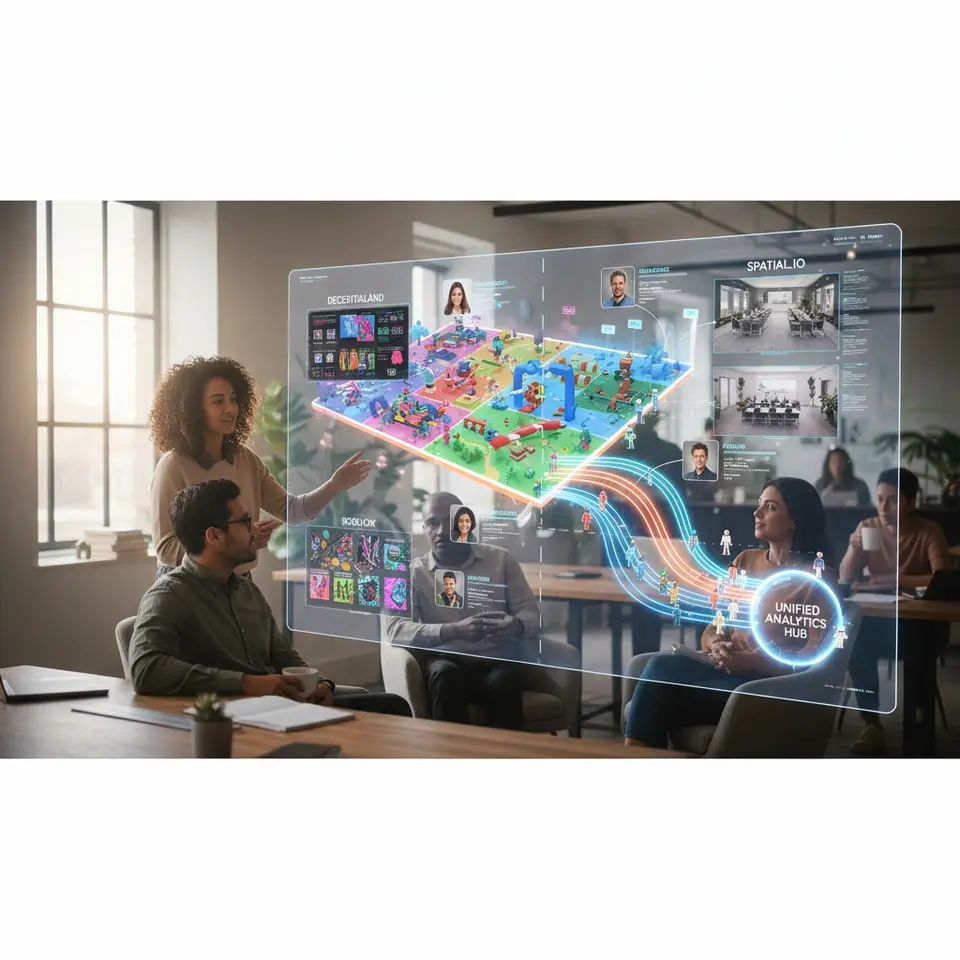
In today’s competitive environment, guesswork and gut feelings no longer suffice. Immersive platforms generate torrents of data—every gaze direction, hand gesture, voice chat, and virtual currency transaction can reveal valuable insights about user intent and preferences. Marketing in the metaverse demands a systematic approach to harness these signals and translate them into optimized campaigns.
First, define clear business objectives: Are you seeking brand awareness, lead generation, or direct sales? Each goal aligns with distinct metrics. For brand awareness, monitor unique visits, average dwell time in a branded zone, and social shares of immersive content. For e-commerce, track virtual product trials, cart additions, and completed purchases. By anchoring your strategy to data, you gain the ability to test hypotheses, measure impact, and iterate quickly.
Moreover, data-driven metaverse marketing enables dynamic adjustments. If heatmaps show avatars clustering in certain zones, you can shift ad placements or event activations to capitalize on high-traffic areas. If behavioral analytics reveal drop-offs at a virtual doorway, you can redesign entry flows or simplify onboarding. In 2026, brands that embrace this level of agility will outperform those relying on static, one-size-fits-all campaigns.
A strong feedback culture also supports cross-functional collaboration. Data scientists, XR developers, and creative teams can align around a shared dashboard, ensuring that every adjustment stems from a uniform, real-time view of performance indicators. By committing to a data-first philosophy, your metaverse marketing initiatives become more scalable, predictable, and ROI-focused.
Collecting and Analyzing Metaverse Interactions
Accurate data collection is the foundation of any effective metaverse marketing strategy. Given the 3D, event-driven nature of these platforms, you’ll need to blend traditional analytics with specialized instrumentation techniques.
1. SDK and API Integration
Most major metaverse platforms provide developer kits that allow you to log events like avatar movements, object interactions, and voice channel participation. Integrate these SDKs into your virtual spaces, and configure events for key actions—entering a branded zone, picking up a virtual product, or engaging with an NPC (non-player character). Consolidate these streams into a Customer Data Platform (CDP) or data lake for unified reporting.
2. Spatial and Biometric Telemetry
If your audience uses VR headsets or AR glasses, you can gather additional telemetry such as gaze tracking, hand controller gestures, and even biometric readings (with user consent). Eye-tracking heatmaps help you understand where attention is focused, while motion data can reveal friction points in your environment’s navigation. These insights enable you to refine layouts and interactive elements for optimal engagement.
3. Blockchain and On-Chain Analytics
Decentralized metaverse realms often rely on blockchain for digital asset ownership. By analyzing smart contract transactions—NFT mints, token transfers, marketplace sales—you can track purchasing behaviors and secondary-market activity. Tools like Dune Analytics or proprietary node queries allow you to filter and aggregate on-chain data related to your brand’s virtual assets.
4. Social Graph Mapping
Virtual worlds are inherently social. Harvest network data—friend relationships, group memberships, and voice chat logs—to identify high-value influencers and community leaders. By combining social graph metrics with engagement data, you can pinpoint micro-communities that drive viral growth.
Designing Personalized Immersive Journeys

Once you’re capturing comprehensive data streams, the next step in marketing in the metaverse is to deploy personalization strategies that respond in real time to individual user profiles and actions. Personalization goes beyond displaying a name on a billboard—it involves tailoring the entire environment to user preferences and histories.
Adaptive Virtual Environments
Use real-time triggers to adjust lighting, soundscapes, or NPC behaviors based on a visitor’s past interactions. For example, if a user spent time browsing virtual sports apparel last week, greet them in your store with a simulated stadium ambiance and highlight the latest shoe drop.
Avatar-Centric Offers
Analyze purchase records and style choices to serve branded wearables or limited-edition skins that align with each avatar’s taste. Personalized virtual items can foster deeper emotional connections and encourage repeat engagement.
Contextual Engagement Prompts
Set geofenced triggers that launch mini-games, interactive quests, or exclusive content when a user enters specific zones. These micro-experiences not only boost retention but also generate rich behavioral data—ideal for refining future campaigns.
Omnichannel Synchronization
Integrate real-world signals—e-commerce activity, email interactions, social media engagements—with metaverse touchpoints. By linking these channels, you create seamless journeys where a digital coupon received in an email can be redeemed in a virtual storefront or pop-up event.
Real-Time Analytics, Feedback Loops, and Ethical Practices
The hallmark of advanced marketing in the metaverse is the ability to adapt campaigns in real time, using feedback loops that automate adjustments based on performance thresholds.
Streaming Dashboards
Implement data pipelines that feed event streams into analytics platforms like Apache Kafka or Amazon Kinesis. Use visualization tools to track key metrics—avatar dwell time, conversion funnels, virtual spend—alongside predictive alerts that highlight anomalies or optimization opportunities.
Automated Campaign Adjustments
Set up rules that modify environmental variables when metrics cross predefined limits. For example, if the average session length in a branded lounge drops below a threshold, increase interactive elements or introduce time-limited incentives. If high-value avatars log in, trigger push notifications inviting them to special events.
Balancing Privacy and Personalization
As you collect detailed metaverse signals, adhere to ethical and legal guidelines. Use anonymized identifiers instead of personal data, secure telemetry in transit and at rest, and provide transparent opt-in consent flows in compliance with GDPR and CCPA. Refer to best practices outlined by agencies like the United Nations ICT Task Force (UN) for maintaining user trust.
Ensuring Accessibility and Inclusion
Design immersive experiences that accommodate diverse user needs—consider motion sickness options, text-to-speech support, and adjustable control schemes. Inclusive design not only expands your audience but also demonstrates brand responsibility in virtual spaces.
FAQ
What platforms should I prioritize for metaverse marketing?
Begin by analyzing where your target personas spend time—consider demographics, engagement habits, and in-world spending—to select platforms like Decentraland, Roblox, or Spatial.io that best align with your goals.
How can I measure ROI in immersive environments?
Anchor your objectives to clear metrics such as dwell time, session length, unique visits, cart additions, and completed purchases. Use centralized dashboards to correlate these indicators with real-world revenue and brand lift.
What ethical considerations apply to metaverse data collection?
Adhere to privacy regulations like GDPR and CCPA, use anonymized identifiers, ensure secure data transmission, and implement transparent consent flows to maintain user trust and comply with legal standards.
Conclusion
Marketing in the metaverse demands a comprehensive, data-centric approach tailored to immersive environments and three-dimensional interactions. By mapping the virtual landscape, deploying specialized data-collection tools, and weaving real-time analytics into campaign orchestration, you unlock new dimensions of personalization, engagement, and measurable results. In 2026, brands that invest in robust infrastructure, cultivate feedback-driven processes, and uphold privacy standards will stand out in an increasingly crowded metaverse. Begin your journey today: pilot small, learn quickly, and scale your initiatives as you gather actionable insights. Embrace the data-driven future of immersive engagement, and position your organization at the forefront of metaverse marketing success.



Leave a Reply