


Data-driven marketing has become the gold standard for modern businesses. Companies collect vast amounts of customer information, analyze purchasing patterns, and create highly targeted campaigns that promise better ROI and more personalized customer experiences. Yet behind the glossy success stories and impressive conversion metrics lies a different reality—one filled with unexpected obstacles that can derail even the most well-intentioned marketing strategies.
While the benefits of data-driven marketing are well-documented, the challenges often remain in the shadows until teams find themselves struggling with implementation. These hurdles can transform what seems like a straightforward approach into a complex puzzle that requires careful navigation and strategic thinking.
Understanding these challenges isn’t meant to discourage investment in data-driven approaches. Instead, recognizing potential pitfalls early allows marketing teams to build more robust strategies and set realistic expectations for their data initiatives.
The Data Quality Dilemma
The foundation of any successful data-driven marketing campaign rests on clean, accurate information. However, maintaining data quality proves more challenging than most organizations anticipate. Customer information arrives from multiple touchpoints—website forms, social media interactions, customer service calls, and third-party sources—each with varying levels of accuracy and completeness.
Duplicate entries plague many databases, with customers appearing multiple times under slightly different names or email addresses. Sarah Johnson might exist alongside S. Johnson and [email protected], creating fragmented customer profiles that skew analysis results. These inconsistencies multiply across large datasets, making it difficult to gain accurate insights about customer behavior.
Data decay presents another persistent challenge. Customer information becomes outdated rapidly—email addresses change, people move, job titles shift, and preferences evolve. Studies suggest that B2B data degrades at approximately 70% annually, meaning yesterday’s perfect customer profile might be largely irrelevant by next year.
Without proper data hygiene protocols, marketing teams find themselves making decisions based on flawed information, leading to misdirected campaigns and wasted resources.

Privacy Regulations and Compliance Complexity
The regulatory landscape surrounding customer data has become increasingly complex, with new laws emerging regularly across different jurisdictions. GDPR, CCPA, and similar regulations have transformed how businesses collect, store, and use customer information, adding layers of compliance requirements to every marketing initiative.
These regulations don’t just affect data collection—they impact the entire customer journey. Marketing teams must now navigate consent management, data retention policies, and customer rights requests while still delivering effective campaigns. The “right to be forgotten” means customer data might need to be removed from systems, potentially disrupting ongoing campaign analysis and segmentation efforts.
Compliance requires ongoing attention and resources. Legal teams must review marketing processes, IT departments need to implement new security measures, and marketing staff require training on privacy-compliant practices. This creates additional overhead that many organizations underestimate when planning their data-driven marketing initiatives.
The penalty for non-compliance extends beyond financial fines. Data breaches and privacy violations can severely damage brand reputation and customer trust, making consumers hesitant to share the information that powers data-driven strategies.
Skills Gap and Resource Allocation
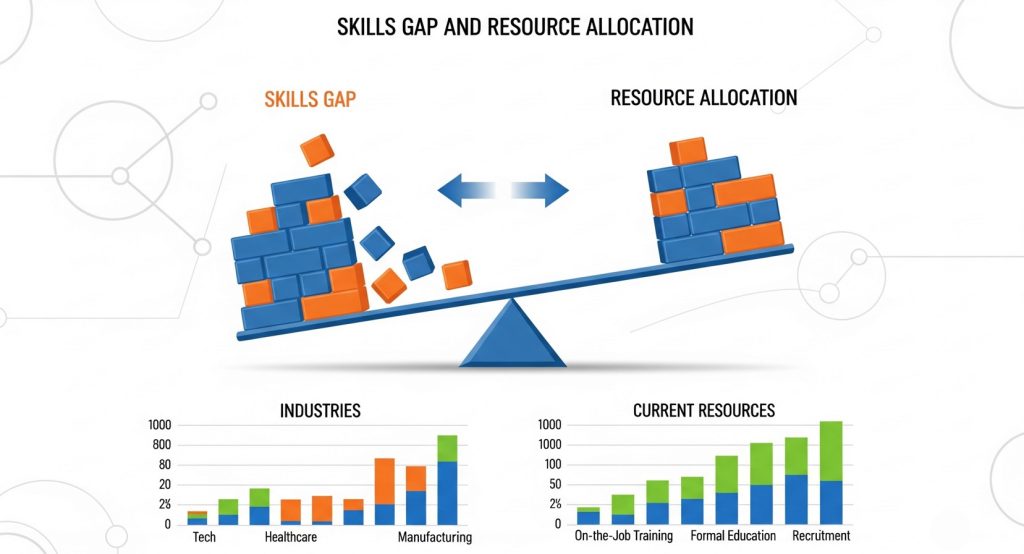
Effective data-driven marketing requires a unique combination of analytical skills, marketing expertise, and technical knowledge. However, many organizations struggle to find professionals who possess this diverse skill set. The demand for data-savvy marketers has outpaced supply, creating a competitive job market where qualified candidates command premium salaries.
Even when companies successfully recruit talented individuals, they often discover that data-driven marketing requires more resources than anticipated. Analyzing customer data, creating segments, testing campaigns, and measuring results takes significant time and effort. Marketing teams accustomed to traditional approaches may find themselves overwhelmed by the additional workload that comes with data analysis and interpretation.
Training existing staff presents its own challenges. Marketing professionals must develop statistical literacy, learn new tools and platforms, and understand how to translate data insights into actionable campaigns. This learning curve can slow campaign execution and create frustration among team members who feel unprepared for their expanded responsibilities.
Organizations frequently underestimate the ongoing nature of these resource requirements. Data-driven marketing isn’t a “set it and forget it” approach—it demands continuous analysis, optimization, and adaptation as market conditions and customer behavior evolve.
Effective data-driven marketing requires analytical thinking, technical fluency, and creative execution. Many organizations underestimate how difficult it is to build these capabilities internally. This challenge becomes even more pronounced as companies attempt to scale across channels or adopt advanced methods such as predictive analytics for customer value.
Training and upskilling are ongoing commitments, not one-time initiatives. Without them, teams struggle to translate insights into competitive advantage.
Technology Integration Headaches
Modern marketing teams work with an ever-expanding collection of tools and platforms. CRM systems, email marketing platforms, social media management tools, analytics software, and advertising networks all generate valuable customer data. However, connecting these disparate systems to create a unified view of customer behavior often proves more difficult than expected.
APIs don’t always communicate effectively, data formats vary between platforms, and integration projects can stretch for months while marketing teams wait for technical solutions. During these delays, valuable opportunities may be missed, and campaign effectiveness can suffer from incomplete customer insights.
Even when integration succeeds, maintaining these connections requires ongoing technical support. Software updates can break existing integrations, new tools may need to be added to the ecosystem, and data synchronization issues can emerge without warning. Marketing teams often find themselves dependent on IT support for tasks that seem straightforward but require technical expertise.
The complexity of managing multiple data sources can also create silos within marketing departments. Different team members may rely on different tools and datasets, leading to conflicting insights and decision-making based on incomplete information.
Marketing stacks continue to grow more complex. CRM platforms, analytics tools, ad networks, and content systems all generate valuable data—but integration remains a major pain point. This is especially problematic for organizations pursuing data-driven omnichannel marketing, where fragmented systems can break the customer experience.
The Analysis Paralysis Trap
Access to vast amounts of customer data can paradoxically make decision-making more difficult. When every customer interaction generates measurable data points, marketing teams can become overwhelmed by the sheer volume of available insights. The abundance of metrics—click-through rates, engagement scores, conversion percentages, lifetime value calculations—can create confusion about which indicators truly matter for business success.
This wealth of information often leads to analysis paralysis, where teams spend more time examining data than acting on insights. Marketers may find themselves constantly seeking additional data points or running more tests before feeling confident enough to make campaign decisions. The pursuit of perfect information can prevent teams from executing timely campaigns and responding quickly to market opportunities.
Different stakeholders may also interpret the same data differently, leading to debates about campaign direction and resource allocation. Without clear frameworks for prioritizing insights and making data-driven decisions, organizations can become stuck in endless analysis cycles that slow progress and frustrate team members.
The challenge becomes distinguishing between interesting data and actionable insights that drive meaningful business results.

Attribution and Measurement Complexities
Understanding which marketing efforts drive customer behavior has become increasingly complex as customer journeys span multiple channels and touchpoints. Customers might see a social media ad, visit a website, subscribe to an email newsletter, and eventually make a purchase weeks later through a different channel entirely. Determining which touchpoint deserves credit for the conversion creates ongoing attribution challenges.
Different attribution models—first-touch, last-touch, linear, or time-decay—can produce vastly different results for the same customer journey. Marketing teams may find themselves debating which model most accurately reflects their customer behavior, with different departments advocating for approaches that favor their contributions to the conversion process.
Cross-device tracking adds another layer of complexity. Customers switch between smartphones, tablets, laptops, and desktop computers throughout their journey, making it difficult to connect all touchpoints to individual customers. Privacy restrictions and cookie limitations further complicate these tracking efforts.
Without accurate attribution, marketing teams struggle to optimize budget allocation and campaign strategies. Channels that appear ineffective under one attribution model might reveal strong performance when analyzed differently, leading to suboptimal resource allocation decisions.
Multi-touch customer journeys make attribution one of the most challenging aspects of data-driven marketing. Different attribution models tell different stories, often leading to internal debates. Understanding how to evaluate performance realistically is critical, especially when measuring long-term ROI across channels. This challenge is closely tied to broader discussions around measuring data-driven marketing ROI.
The Cultural Resistance to Data-Driven Decision Making

One of the most underestimated challenges in data-driven marketing is organizational culture. Even when data is available and tools are in place, teams may resist letting data influence decisions. Senior leaders may rely on intuition shaped by years of experience, while creative teams may fear that data will restrict innovation and originality.
This resistance often creates tension between analytics-driven recommendations and traditional marketing instincts. When data contradicts long-held beliefs about what “works,” teams may selectively ignore insights or reinterpret results to fit existing narratives. Over time, this undermines the very purpose of data-driven marketing and limits its impact.
Overcoming cultural resistance requires more than dashboards and reports. It requires leadership buy-in, transparency in how insights are generated, and a shared understanding that data supports creativity rather than replacing it. Organizations that successfully integrate data into their culture treat insights as guidance, not commandments, and encourage experimentation rather than punishment when data-driven tests fail.
Data Fragmentation Across Customer Lifecycles
Many marketing teams focus heavily on acquisition data while neglecting insights from retention, loyalty, and post-purchase behavior. This fragmented view prevents organizations from understanding the full customer lifecycle and limits optimization opportunities.
When data from onboarding, customer support, renewals, and churn exists in separate systems, marketers lose visibility into what truly drives long-term value. This often leads to overinvestment in acquisition while underinvesting in retention strategies that could deliver higher returns.
Unified lifecycle analysis enables marketers to identify where customers drop off, what drives repeat purchases, and how engagement evolves over time. Without this holistic perspective, data-driven strategies remain incomplete.
The Challenge of Translating Insights into Action
Collecting and analyzing data is only half the battle. Many marketing teams struggle with turning insights into clear, executable actions. Dashboards may reveal patterns, correlations, and anomalies, but without proper interpretation, these insights remain abstract.
For example, identifying that a segment has a lower engagement rate does not automatically explain why that behavior occurs or what should be done next. Teams often lack structured processes to move from insight to hypothesis to action. This gap results in reports that are reviewed but not acted upon, diminishing the perceived value of data initiatives.
Successful organizations reduce friction between insight and action by eliminating manual bottlenecks. When workflows are streamlined through data entry automation that boosts digital efficiency, insights can be acted on faster and with greater confidence.
Strategies for Overcoming Data-Driven Marketing Challenges
Success with data-driven marketing requires acknowledging these challenges and developing strategies to address them proactively. Organizations can start by establishing clear data governance policies that define data quality standards, privacy compliance procedures, and access controls. Regular data audits help identify and correct quality issues before they impact campaign performance.
Investing in staff development proves crucial for long-term success. This might involve hiring specialists with data analysis skills, providing training for existing team members, or partnering with external consultants who can bridge knowledge gaps while internal capabilities develop.
Technology choices should prioritize integration capabilities and ease of use. Selecting platforms that work well together can reduce technical complexity and allow marketing teams to focus on strategy rather than troubleshooting data connections.
Finally, establishing clear success metrics and decision-making frameworks helps teams avoid analysis paralysis. By defining which data points matter most for specific campaign types and business objectives, organizations can streamline their analysis processes and make faster, more confident decisions.
Moving Forward with Realistic Expectations
Data-driven marketing offers significant opportunities for businesses willing to invest the necessary resources and navigate its inherent challenges. Success requires realistic planning, adequate resource allocation, and patience as teams develop new capabilities and processes.
Rather than expecting immediate transformation, organizations should view data-driven marketing as a gradual evolution that builds momentum over time. Starting with smaller, focused initiatives allows teams to learn and adapt while demonstrating value to stakeholders who may be skeptical about resource investments.
The most successful data-driven marketing organizations treat challenges as learning opportunities rather than obstacles. They invest in people, processes, and technology while maintaining focus on customer value and business results. By acknowledging the hidden complexities of data-driven marketing upfront, teams can better prepare for the journey ahead and build more resilient strategies that deliver sustainable results.
Frequently Asked Questions (FAQ)
Is data-driven marketing worth the effort despite these challenges?
Yes, but only when implemented thoughtfully. Data-driven marketing delivers significant value when organizations invest in people, processes, and governance alongside technology. Awareness of challenges increases the likelihood of long-term success.
Why do many data-driven marketing initiatives fail?
Most failures stem from unrealistic expectations, poor data quality, lack of skills, or weak organizational alignment. Technology alone cannot fix strategic or cultural issues.
How can small teams manage data-driven marketing effectively?
Small teams benefit by focusing on a few high-impact metrics and channels rather than trying to analyze everything. Simplicity and clarity often outperform complexity at smaller scales.
Can creativity coexist with data-driven marketing?
Absolutely. Data enhances creativity by revealing what resonates with audiences. The most effective campaigns combine emotional storytelling with evidence-based optimization.
How often should data-driven strategies be reviewed?
Regular review is essential. Monthly or quarterly evaluations allow teams to adapt to changing behavior, market conditions, and performance trends without overreacting to short-term fluctuations.
What’s the biggest misconception about data-driven marketing?
The biggest misconception is that data provides certainty. In reality, data reduces uncertainty—but strategic judgment, experimentation, and human insight remain critical.



Leave a Reply