


What is a Data-Driven Marketing Strategy (And Why Does It Matter)?
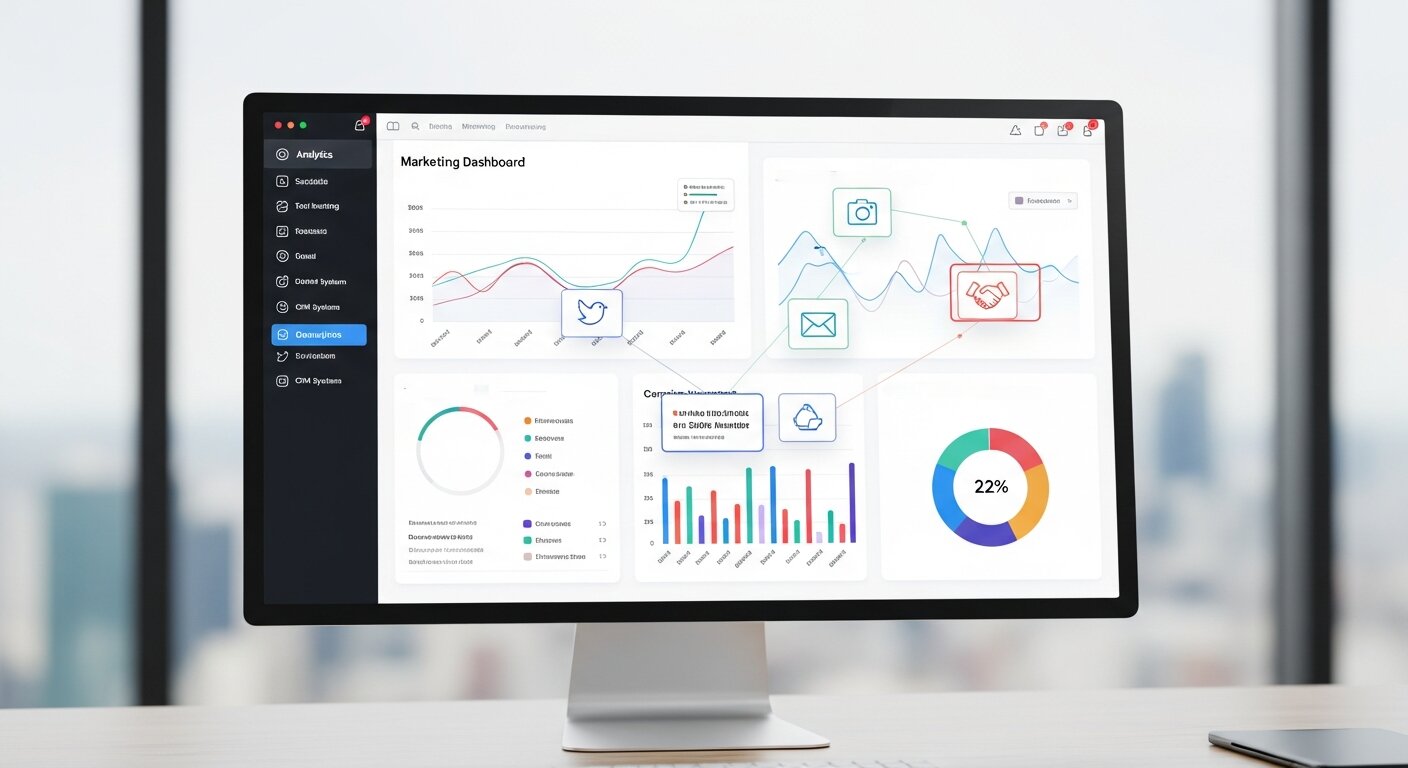 A Data-Driven Marketing Strategy is an approach that relies on collecting, analyzing, and applying customer data to guide marketing decisions at every stage of a campaign. Instead of relying on intuition, assumptions, or past practices alone, marketers use concrete data to understand customer behaviors, preferences, and pain points. This strategy allows businesses to identify which messages, channels, and offers are most effective for different audience segments, leading to higher engagement and better ROI. By systematically measuring results, spotting trends, and continuously refining campaigns, a Data-Driven Marketing Strategy ensures that marketing efforts are not only targeted and relevant but also efficient and results-oriented. It transforms marketing from a guessing game into a precise, measurable, and scalable process that can adapt in real time to changing customer behaviors.
Why it matters:
- Personalization for Customers: Personalize interactions for specific customers.
- Higher ROI: Ensure effective use of marketing budgets by directing campaigns where they perform best.
- Insight Generation: Anticipate trends and customer requirements.
“There are areas of decision making that need to be accurate, and areas that need to be fast.” — Rob LoCascio, Live Person.
Another benefit of integrated data is that it removes the guesswork, and decisions are made with facts.
A study by Forbes found that businesses using data-driven marketing are six times more likely to be profitable year over year than those that don’t. So, how do we harness the power of data?
Get the Right Data
Before you can analyze or take meaningful action, you need to start with raw data—but not just any data. The quality, relevance, and accuracy of the data you collect are critical to the success of a Data-Driven Marketing Strategy. Gathering the right data ensures that insights are actionable and that decisions are based on facts rather than assumptions. This includes understanding your audience’s demographics, behavior patterns, purchase history, and engagement across various channels. Efficient data collection can be achieved through multiple sources, such as website analytics, CRM systems, social media metrics, customer surveys, and even third-party market research. By focusing on collecting precise, high-quality data, you lay the foundation for a Data-Driven Marketing Strategy that can deliver measurable results, improve targeting, and drive smarter marketing decisions.
Methods for Collecting Data:
- Website Analytics Tools: Google Analytics and Heap are analytics tools that give you information about traffic, behaviors, and conversions.
- Customer Feedback Surveys: Platforms such as Typeform or Google Forms will let you collect qualitative data straight from your customers.
- Social Media Analytics: Tools such as Instagram Insights and Facebook Analytics let you know how you’re being engaged with. Use data-driven social media marketing tools to understand engagement
- CRM Databases: Employ CRM software such as HubSpot or Salesforce, which allows you to track customer behaviors in real time.
- Third-Party Data Platforms: SEMrush or Nielsen can offer external data on your competition and industry trends.
Types of Data to Focus On:
People: Not all data is equally useful. Some main categories to focus on:
- Background Information: Age, gender, household income, and so on.
- Behavior Data: What do they consume, how often do they shop, etc.
- Transactional Data: History of purchases, AOV, etc.
- Feedback Files: Direct comments or reviews for qualitative information.
Because, you know, privacy is important. Of course, always respect rules like GDPR or CCPA when processing user data.
Numbers to Insights
Raw data alone holds little value unless it is transformed into actionable insights. This is where data analysis becomes the backbone of a successful Data-Driven Marketing Strategy. By systematically examining collected data, marketers can identify patterns, trends, and potential weaknesses in campaigns or customer journeys. For example, analyzing traffic sources might reveal that a particular social media platform drives highly engaged users, while another channel results in high bounce rates. Similarly, purchase behavior analysis can uncover which products are most popular among specific segments or which offers encourage repeat purchases. Turning these numbers into insights allows businesses to make informed decisions, optimize marketing efforts, and allocate resources more effectively. In essence, rigorous data analysis bridges the gap between information and action, ensuring that every step of a Data-Driven Marketing Strategy is precise, targeted, and capable of producing measurable results.
For techniques on turning numbers into revenue, check our guide on how to master data-driven decision-making.
Analyzing Data for Insights:
- Segment your Audience: Categorize your customers into several groups who share similar behaviors, demographics, or other preferences.
-
-
Example: Repeat customers vs. first-time buyers.
-
- Embrace Visualization Tools: Present data in graphs and charts with tools like Tableau or Power BI to detect patterns.
- Explore KPIs: Track Key Performance Indicators such as:
-
Conversion Rates
-
Customer Lifetime Value (CLV)
-
Bounce Rates
-
Cost Per Acquisition (CPA)
-
The Impact of AI and Analytics Tools:
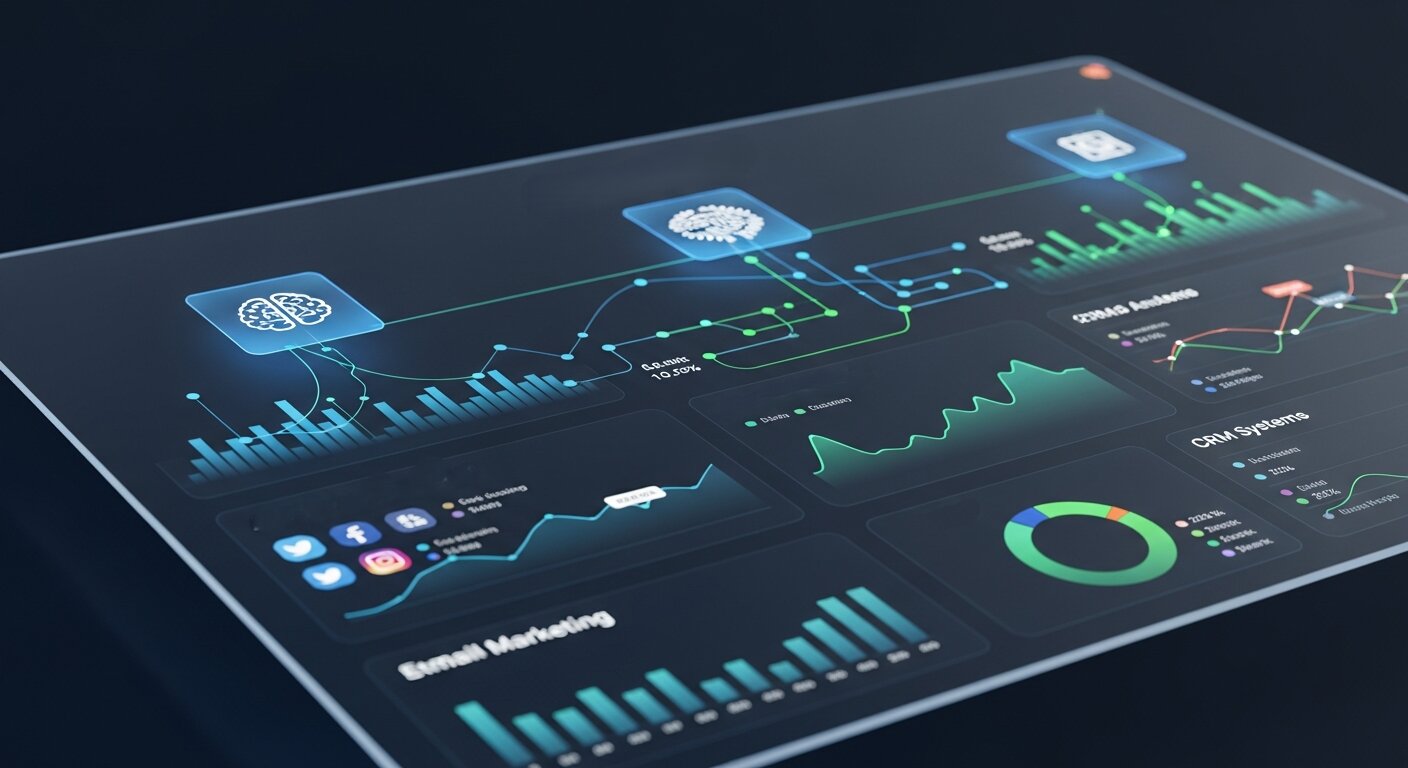 Artificial Intelligence (AI) is revolutionizing the way marketers analyze data, uncovering insights that were previously impossible to detect using traditional methods. AI-powered tools can process vast amounts of information in real time, identifying patterns, correlations, and trends that may be invisible to the human eye. For example, predictive analytics can forecast customer behavior, segment audiences dynamically, and even suggest optimal times to engage specific users. Advanced platforms such as SAS, Google BigQuery, and IBM Watson Analytics have become industry leaders, enabling businesses to turn raw data into actionable strategies that drive growth. By combining AI with robust analytics tools, marketers can make faster, more informed decisions, reduce errors, and uncover opportunities that would otherwise go unnoticed.
Executing Your Data-Driven Strategy
Once insights have been extracted from your data, the next step is execution—turning analysis into action. Creating and implementing a data-driven marketing plan involves aligning your campaigns with the insights you’ve gathered to maximize impact. This could include tailoring messaging to specific audience segments, adjusting marketing channels based on performance data, or optimizing content to better meet customer needs. Execution also requires clear objectives, measurable KPIs, and a structured approach to monitor results in real time. By continuously testing, refining, and iterating on campaigns, businesses can ensure that their marketing efforts remain effective, relevant, and aligned with evolving customer expectations. Effective execution transforms insights into tangible results, bridging the gap between strategy and measurable business outcomes.
Development and Progression of the Strategy:
- Set Clear Objectives: Have a quantifiable goal to which your efforts should lead in the first place – e.g., increasing site visits or lead conversions. Clarity is key.
- Tailor Campaigns to them. Personalize at scale: Utilize that segmentation data to work on campaigns of emails, ads, or an offer that speaks to each.
-
-
Example: Open email campaigns with personalized subject lines such as “Hi [Name], Here’s Your Personalized Summer Clothing Guide.”
-
- Pick the Right Channels: Concentrate on the platforms where your audience spends time. For an audience that is B2B-focused, LinkedIn ads may be more relevant than other social platforms.
- Test and Optimize: A/B test your way to which campaigns work the most and scale what is working.
- Automate Your Campaigns: Tools like Active Campaign or Mailchimp can help automate your campaigns and reduce friction.
Real-World Case Studies
Sometimes, the best way to understand the power of a Data-Driven Marketing Strategy is to see it in action. Real-world examples illustrate how companies leverage customer insights, analytics, and data-informed decision-making to achieve remarkable results. By studying these successes, marketers can gain practical ideas for applying similar approaches to their own campaigns. Below are two companies that exemplify the impact of data-driven strategies, showing how deep insights and precise execution can transform marketing outcomes.
Netflix:
Netflix monitors user activity to recommend content that matches individual preferences, influencing over 80% of what subscribers watch. Their approach combines personalization, predictive analytics, and audience insights—an excellent example of a data-driven marketing strategy in action. Beyond recommendations, Netflix also uses data to inform content production decisions, identifying which types of shows or films are likely to succeed with specific audience segments. This combination of personalization, predictive analytics, and audience insights exemplifies how a well-executed Data-Driven Marketing Strategy can enhance user engagement, retention, and overall business growth.
Coca-Cola:
Coca-Cola’s “Share a Coke” campaign demonstrates the power of personalization and data-informed marketing on a global scale. The company replaced its iconic logo with popular first names on bottles, allowing consumers to find products that felt uniquely theirs. Data was central to the campaign’s success: Coca-Cola analyzed name popularity by region and demographic to ensure availability and relevance. The personalized approach created an emotional connection with consumers, turning an ordinary purchase into a memorable experience. The campaign’s impact was staggering—world sales of soft drinks reportedly increased by 2 billion servings during the promotion. This case illustrates how insights derived from data can be applied creatively to drive consumer engagement and massive business results.
The Future (and Fits) of Data-Driven Marketing
 The revolution in data-driven marketing is far from over, and the pace of change is only accelerating. Emerging trends such as predictive analytics, real-time personalization, and AI-powered insights are reshaping how businesses understand and engage with their audiences. Predictive analytics enables marketers to anticipate customer behaviors before they occur, allowing campaigns to be more proactive rather than reactive. Real-time personalization ensures that every customer interaction—whether on a website, app, or email—is tailored to individual preferences, increasing engagement and conversions. At the same time, AI-driven insights uncover hidden patterns in massive datasets that would be impossible for humans to detect manually, revealing opportunities for optimization and growth. To remain competitive, businesses will need to invest time, resources, and strategic planning into integrating these technologies effectively. Companies that embrace this evolution early can gain a significant edge by delivering more relevant, timely, and data-informed experiences to their customers, ensuring their marketing efforts remain both efficient and impactful in an increasingly complex landscape.
Key Benefits Recap:
- Meaningful personalization to increase loyalty.
- Better budgeting and fine-tuning the strategy.
- Improved campaign performance, in sync with audience expectations.
By doing so, companies not only gain higher productivity but can also get insightful information that is crucial for staying ahead in a competitive market.
It’s Time to Get Started
 A well-structured, Data-Driven Marketing Strategy can completely transform the way you connect with your target audience. By leveraging data to understand customer behaviors, preferences, and pain points, you can craft campaigns that resonate on a personal level and drive measurable results. Getting started doesn’t have to be overwhelming—begin with small, actionable steps, such as analyzing existing website traffic, segmenting your audience, or testing one personalized campaign. As you collect insights and learn from the outcomes, refine your approach, scale what works, and continuously optimize your strategy. Over time, these incremental improvements compound, enabling you to execute a truly effective Data-Driven Marketing Strategy that maximizes ROI, enhances engagement, and positions your business ahead of the competition.
Manual data input often leads to errors, duplication, and lost time. Automating CRM data entry helps ensure data accuracy while boosting team productivity.
Frequently Asked Questions (FAQ)
1. What is a Data-Driven Marketing Strategy?
A Data-Driven Marketing Strategy is an approach where decisions are based on the analysis of customer data rather than intuition. It involves collecting information on audience behaviors and preferences to create personalized campaigns, optimize spending, and ultimately achieve better business results by meeting customer needs more precisely.
2. Why is customer data so important for this strategy?
Customer data is the foundation of any Data-Driven Marketing Strategy because it provides authentic insights into who your audience is and what they want. By analyzing this information, you can move beyond guesswork to understand purchase patterns, engagement levels, and preferences, allowing for highly targeted and effective marketing.
3. How can a small business implement a Data-Driven Marketing Strategy?
Small businesses can start by using free tools like Google Analytics to understand website traffic and user behavior. Collecting feedback through simple customer surveys and analyzing social media engagement are also cost-effective ways to gather valuable data, create audience segments, and begin personalizing marketing messages.
4. What is the difference between data and analytics in marketing?
Data refers to the raw, unorganized facts and figures you collect, such as website clicks, purchase histories, or demographic details. Analytics is the process of examining, interpreting, and transforming that raw data into meaningful insights that can be used to inform your Data-Driven Marketing Strategy and guide business decisions.
5. How do I measure the ROI of a Data-Driven Marketing Strategy?
You can measure ROI by tracking key performance indicators (KPIs) directly tied to your goals. These include conversion rates from specific campaigns, customer acquisition cost (CAC), customer lifetime value (CLV), and overall revenue growth. Comparing these metrics before and after implementing your strategy demonstrates its financial impact.
6. What are the best tools for collecting customer data?
Effective tools for gathering customer data include website analytics platforms like Google Analytics, CRM systems such as HubSpot or Salesforce for tracking interactions, survey tools like SurveyMonkey for direct feedback, and social media insight features that provide engagement metrics. A combination of these provides a holistic view.
7. How does a Data-Driven Marketing Strategy enhance personalization?
This strategy allows you to segment your audience based on their unique behaviors, demographics, and past interactions with your brand. With these detailed segments, you can tailor messaging, product recommendations, and offers directly to the interests of each group, making your marketing feel more personal and relevant.
8. What are some common challenges when implementing this strategy?
Common hurdles include collecting poor-quality or irrelevant data, a lack of the right tools or skills to perform meaningful analytics, and ensuring data privacy compliance. Overcoming these challenges requires a clear plan for data collection, investment in training, and a strong understanding of regulations like GDPR.
9. Can data-driven marketing be used for B2B companies?
Absolutely. B2B marketers can use a Data-Driven Marketing Strategy to identify high-value leads, understand the business needs of their clients, and personalize content for different stakeholders within a company. Analyzing engagement with case studies, webinars, and whitepapers helps refine outreach and improve conversion rates.
10. How often should I analyze my marketing data?
The frequency of analysis depends on the campaign and your goals. Key metrics like ad performance should be monitored daily or weekly to allow for quick adjustments. Broader trends in customer behavior and overall strategy effectiveness should be reviewed on a monthly or quarterly basis to inform long-term planning.



Leave a Reply