

Data-driven marketing uses customer data to create targeted campaigns, improve ROI, and enhance the customer experience. By analyzing behavior and preferences, businesses can personalize messaging, optimize strategies, and make smarter marketing decisions.
Marketing used to rely heavily on gut instincts and broad demographic assumptions. Marketers would create campaigns based on what they thought customers wanted, then cross their fingers and hope for the best. Those days are long gone.
Today’s most successful marketers base their decisions on concrete data rather than hunches. This approach, known as data-driven marketing, transforms how businesses understand their customers, create campaigns, and measure success.
But what exactly does data-driven marketing mean? How can you implement it in your business? This comprehensive guide will walk you through everything you need to know about leveraging data to create more effective, targeted marketing campaigns.
Understanding Data-Driven Marketing
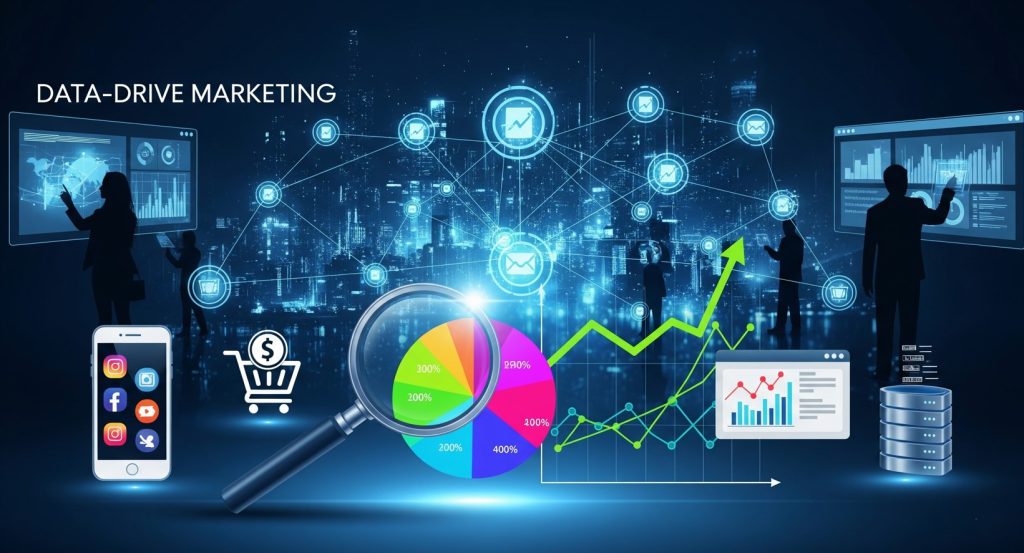
Data-driven marketing is the practice of using customer data and analytics to guide marketing decisions, optimize campaigns, and improve customer experiences. Instead of making assumptions about what customers want, marketers collect and analyze real information about customer behavior, preferences, and interactions with their brand.
This approach involves gathering data from multiple sources—website analytics, social media metrics, email campaign performance, customer surveys, and purchase history. Marketers then use this information to create personalized experiences, target the right audiences, and allocate marketing budgets more effectively.
The shift toward data-driven approaches represents a fundamental change in how marketing operates. Rather than casting a wide net and hoping to catch some fish, marketers can now use precise targeting to reach exactly the right people with the right message at the right time.
Key Components of Data-Driven Marketing
Customer Data Collection
Effective data-driven marketing starts with comprehensive data collection. This includes first-party data (information you collect directly from customers), second-party data (shared data from partners), and third-party data (purchased from external sources). For businesses interested in e-commerce, data-driven e-commerce marketing offers actionable examples of customer data in action.
First-party data proves most valuable because it comes directly from your customers. This might include website behavior, purchase history, email engagement, and survey responses. Second-party data involves partnerships with other companies to share customer insights. Third-party data, while useful for broader market understanding, often provides less targeted insights.
Analytics and Insights
Raw data means nothing without proper analysis. Modern marketing teams use analytics platforms to identify patterns, trends, and opportunities within their data. These tools help marketers understand which campaigns drive the most conversions, which customer segments prove most profitable, and where to focus future efforts. Learn more about the importance of customer data platforms in this context.
Analytics can reveal surprising insights about customer behavior. You might discover that customers who engage with your email campaigns are three times more likely to make repeat purchases, or that mobile users convert better on weekends than weekdays.
Personalization and Targeting
Data enables marketers to create highly personalized experiences for different customer segments. Instead of sending the same message to everyone, you can tailor content, offers, and timing based on individual preferences and behaviors.
This personalization extends across all marketing channels. Email campaigns can feature product recommendations based on browsing history. Website visitors can see content customized to their interests. Social media ads can target users based on their past interactions with your brand.
Performance Measurement
Data-driven marketing emphasizes continuous measurement and optimization. Marketers track key performance indicators (KPIs) in real-time, allowing them to adjust campaigns quickly when something isn’t working or double down on successful strategies.
This measurement goes beyond vanity metrics like likes and shares. Effective data-driven marketers focus on metrics that directly impact business goals—conversion rates, customer acquisition costs, lifetime value, and return on ad spend.
Benefits of Data-Driven Marketing
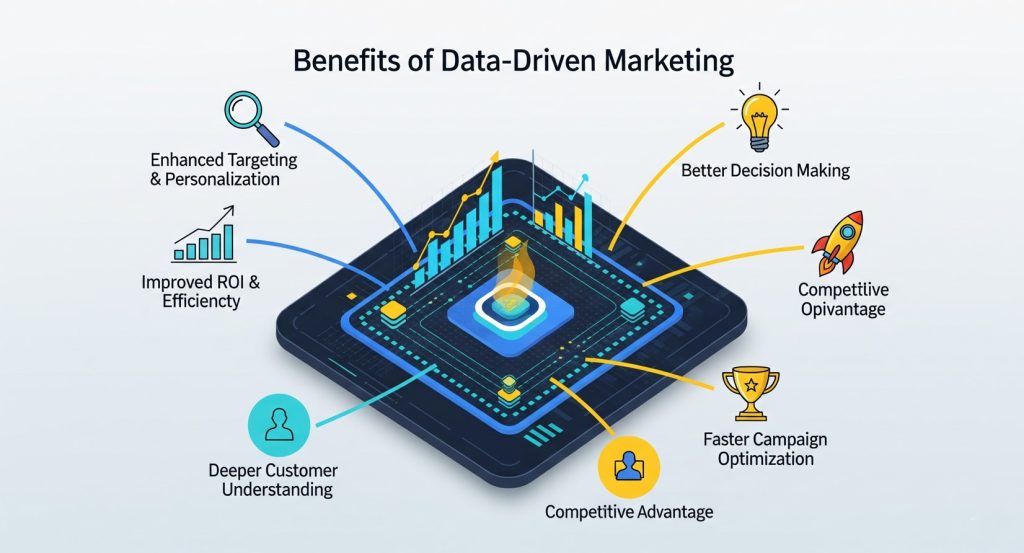
Improved ROI and Efficiency
When you know which campaigns generate the best results, you can allocate your marketing budget more effectively. Data-driven marketers typically see higher returns on their marketing investments because they eliminate guesswork and focus resources on proven strategies. Learn more in why data-driven marketing is your secret weapon.
This efficiency extends to time management as well. Instead of testing random campaign ideas, marketers can use data to identify the most promising opportunities and prioritize their efforts accordingly.
Enhanced Customer Experience
Data helps you understand what your customers actually want rather than what you think they want. This leads to more relevant messaging, better product recommendations, and smoother customer journeys.
Customers appreciate personalized experiences. When you use data to deliver relevant content and offers, customers feel understood and valued, leading to increased loyalty and higher conversion rates.
Better Decision Making
Data provides objective insights that remove emotion and bias from marketing decisions. When stakeholders disagree about campaign directions, data can provide clarity and help teams make confident choices.
This objective approach also helps marketers identify and address problems quickly. If a campaign isn’t performing well, data can reveal exactly where the issue lies—whether it’s the targeting, messaging, timing, or channel selection.
Competitive Advantage
Companies that effectively use data-driven marketing often outperform competitors who rely on traditional approaches. They can respond faster to market changes, identify new opportunities, and optimize their marketing mix for maximum impact. Check data-driven agencies outperform traditional firms for industry insights.
Implementing Data-Driven Marketing
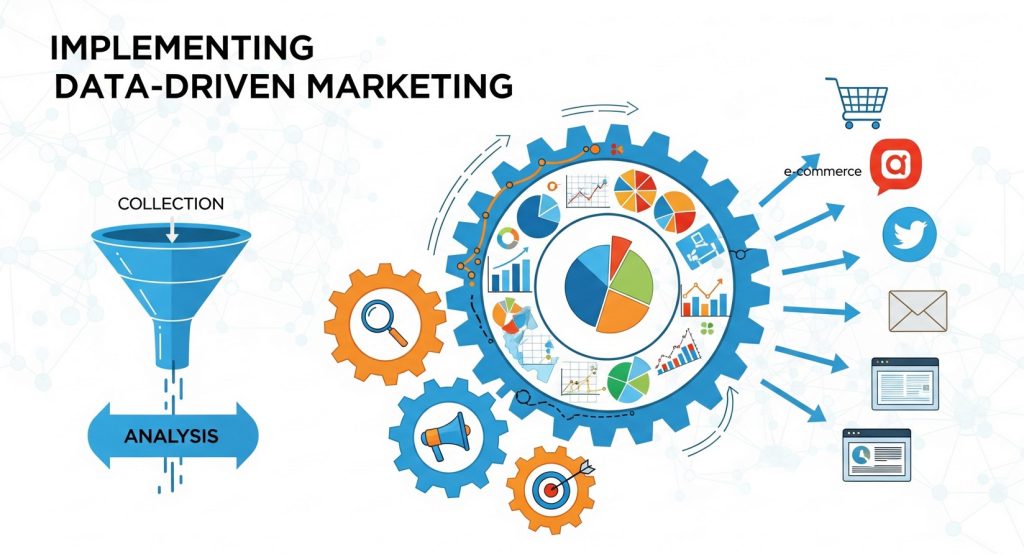
Start with Clear Goals
Before diving into data collection, establish clear marketing goals that align with your business objectives. Are you trying to increase brand awareness, generate leads, boost sales, or improve customer retention? Your goals will determine which data to collect and how to measure success.
Make sure your goals are specific, measurable, achievable, relevant, and time-bound (SMART). Instead of “increase website traffic,” aim for “increase organic website traffic by 25% within six months.”
Invest in the Right Tools
Successful data-driven marketing requires robust analytics and marketing automation tools. Google Analytics provides essential website insights, while customer relationship management (CRM) systems help track customer interactions across touchpoints.
Marketing automation platforms can help you collect, analyze, and act on customer data at scale. These tools enable automated email campaigns, personalized website experiences, and targeted advertising based on customer behavior.
Build a Data-Driven Culture
Technology alone won’t make your marketing data-driven. You need to build a culture where team members understand the importance of data and feel comfortable using it to make decisions.
This might involve training sessions on analytics platforms, regular data review meetings, or establishing processes for testing and optimizing campaigns. Encourage team members to ask questions about the data and challenge assumptions based on evidence rather than opinions.
Test and Optimize Continuously
Data-driven marketing is an ongoing process of testing, learning, and improving. Use A/B testing to compare different versions of campaigns, landing pages, and messaging. Even small improvements can compound over time to deliver significant results.
Document your tests and findings to build institutional knowledge. What works for one campaign might inform future efforts, and understanding why certain approaches fail can be just as valuable as knowing what succeeds.
Common Challenges and Solutions
Data Quality Issues
Poor data quality can undermine even the most sophisticated marketing efforts. Common issues include duplicate records, outdated information, and inconsistent data formats across different systems.
Address these challenges by implementing data validation processes, regularly cleaning your databases, and establishing consistent data entry standards. Consider investing in data management platforms that can help maintain data quality automatically.
Privacy and Compliance Concerns
Increasing privacy regulations like GDPR and CCPA require marketers to be more careful about how they collect and use customer data. Ensure you have proper consent mechanisms in place and clearly communicate how you use customer information.
Focus on building trust with customers by being transparent about data collection and providing value in exchange for their information. Customers are more willing to share data when they understand the benefits.
Overwhelming Amount of Data
Many marketers struggle with having too much data rather than too little. The key is focusing on metrics that directly impact your business goals rather than trying to track everything.
Identify your most important KPIs and create dashboards that highlight these metrics. This helps you stay focused on what matters most while avoiding analysis paralysis.
Aligning Data-Driven Marketing With the Customer Journey
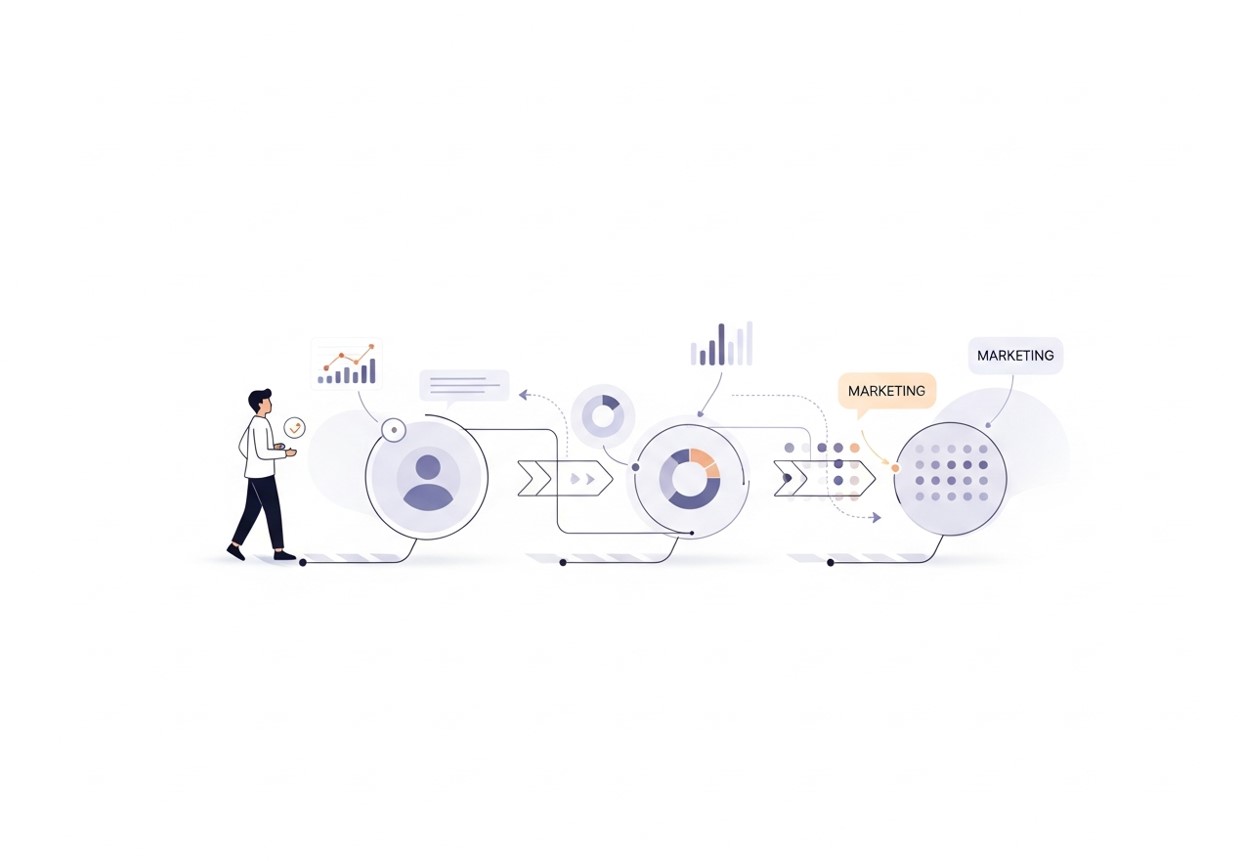
Effective data-driven marketing maps insights to every stage of the customer journey. Awareness, consideration, conversion, and retention each require different data signals and different responses. Treating all customers the same regardless of intent often leads to missed opportunities and wasted spend.
Early-stage data such as content engagement and traffic sources helps marketers understand what attracts attention and builds interest. Mid-funnel behaviors like email clicks, product views, and time on site reveal evaluation patterns and objections. Conversion-stage data highlights friction points that prevent purchases, while post-purchase behavior informs retention and loyalty strategies.
When data is analyzed through the lens of the customer journey, marketers can design campaigns that feel timely and relevant rather than intrusive. This alignment ensures that customers receive the right message at the right moment, increasing both trust and conversion likelihood.
Breaking Down Data Silos Between Marketing Channels
One of the biggest obstacles to data-driven marketing is fragmented data across platforms. Website analytics, email tools, social media dashboards, and advertising platforms often operate in isolation, making it difficult to see the full picture of customer behavior.
True data-driven marketing requires connecting these touchpoints into a unified view. When data flows between systems, marketers can understand how channels influence one another. A customer might discover a brand through social media, engage with an email campaign, and finally convert through a paid search ad. Without integrated data, these connections remain invisible.
By breaking down silos, marketing teams can optimize the entire ecosystem rather than individual channels. This leads to smarter budget allocation, more consistent messaging, and a clearer understanding of what actually drives results.
The Role of Predictive Analytics in Modern Marketing
Predictive analytics takes data-driven marketing beyond reporting and into anticipation. Instead of analyzing what has already happened, predictive models estimate what is likely to happen next based on historical patterns and behavioral signals.
Marketers can use predictive insights to identify customers most likely to convert, churn, or respond to specific offers. This allows for proactive engagement rather than reactive outreach. Campaigns become more efficient because resources are focused on high-probability opportunities.
As predictive capabilities improve, marketers gain the ability to plan campaigns with greater confidence. Forecasting demand, optimizing inventory-driven promotions, and timing outreach based on predicted behavior all become more achievable through advanced data analysis.
Ethical Data Use and Long-Term Brand Trust
As data becomes more powerful, ethical considerations become more important. Data-driven marketing is not just about what is possible, but about what is appropriate. Customers increasingly expect brands to respect their privacy and use data responsibly.
Ethical data practices involve collecting only what is necessary, securing it properly, and using it in ways that genuinely benefit the customer. When personalization crosses into intrusion, trust erodes quickly. Data-driven marketing should enhance relevance, not create discomfort.
Brands that prioritize ethical data use often gain a long-term advantage. Transparency builds trust, and trust strengthens customer relationships. In a world where consumers have endless choices, brands that respect data boundaries stand out for the right reasons.
The Future of Data-Driven Marketing
Data-driven marketing continues to evolve rapidly. Artificial intelligence and machine learning are making it easier to analyze large datasets and identify patterns that humans might miss. Predictive analytics helps marketers anticipate customer behavior and optimize campaigns proactively.
Privacy-first marketing approaches are becoming more important as third-party cookies disappear and consumers demand greater control over their data. Successful marketers will need to balance personalization with privacy protection.
Real-time personalization capabilities are expanding, allowing marketers to adjust content and offers instantaneously based on customer behavior. This creates opportunities for more dynamic, responsive marketing experiences.
Taking Your First Steps Toward Data-Driven Success
Data-driven marketing represents the future of effective customer engagement. By basing decisions on concrete insights rather than assumptions, marketers can create more targeted campaigns, improve customer experiences, and achieve better results with their marketing budgets.
Start small by identifying one or two key metrics to track and optimize. Gradually expand your data collection and analysis capabilities as you become more comfortable with the approach. Remember that becoming truly data-driven is a journey, not a destination.
The companies that embrace data-driven marketing today will have significant advantages over competitors who continue relying on outdated approaches. Begin building your data-driven marketing foundation now, and watch as your campaigns become more effective, efficient, and profitable.
Frequently Asked Questions (FAQ)
What types of businesses benefit most from data-driven marketing?
Any business that interacts with customers can benefit from data-driven marketing. E-commerce brands, SaaS companies, service providers, and even local businesses can use data to better understand customer behavior and improve targeting.
How much data do you need to get started?
You do not need massive datasets to begin. Even basic website analytics, email engagement data, and sales records provide valuable insights. The key is using available data consistently rather than waiting for perfect datasets.
Is data-driven marketing expensive to implement?
Costs vary depending on tools and scale, but many data-driven practices can start with free or low-cost platforms. The return on investment often outweighs the initial expense because data helps eliminate inefficient spending.
How do you balance personalization with privacy?
The balance comes from transparency and consent. Customers should understand what data is collected and how it benefits them. Personalization should feel helpful and relevant, not invasive.
Can small marketing teams manage data-driven strategies?
Yes, especially with modern tools that automate data collection and reporting. Small teams often move faster and can adapt insights quickly, making data-driven marketing highly effective even without large resources.
How long does it take to see results?
Some improvements, such as better targeting and campaign optimization, can show results within weeks. More advanced strategies like predictive analytics and lifecycle personalization deliver increasing returns over time.



Leave a Reply