

Consumer data is the cornerstone of data-driven marketing, enabling personalized campaigns, predictive analytics, and better customer experiences. By leveraging demographic, behavioral, psychographic, and transactional data, businesses can enhance targeting, boost ROI, and build loyalty. Data-driven marketing strategies empower marketers to stay competitive by creating impactful, tailored solutions that resonate with their audience. Despite challenges like privacy concerns, the ability to harness consumer data effectively ensures that businesses can adapt to changing market dynamics and deliver exceptional results.
Why Data is the Heart of Marketing
Consumer data is no longer a “nice to have.” It now serves as the cornerstone for marketing in the modern age. Nowadays, they don’t just trust their guts, intuition, or broad trends. They leverage data to better know their customers, fuel targeted campaigns, and remain agile amid stiff competition.
This is what the five-part series of blog posts aims to guide you through, the basics of how consumer data is leveraged in marketing, sharing insights into what data is, why it is helpful, when it is challenging, what it means to you (the reader) and the reader’s real-life world, and where is it all going. And whether you’re in marketing or an entrepreneur, knowing these things will be more important than ever in making smart decisions with a big impact.
Understanding Consumer Data
 To effectively leverage data in marketing, it’s essential to first understand what consumer data is, where it comes from, and how it can be used. Consumer data serves as the foundation for creating personalized, targeted, and impactful marketing strategies.
What is Consumer Data?
Consumer data refers to the information businesses collect about their customers to better understand their preferences, behaviors, and needs. This data provides valuable insights into who the customers are, what they want, and how they interact with a brand. By analyzing this data, businesses can make informed decisions, improve customer experiences, and drive better results.
Types of Consumer Data
There are four main types of consumer data, each offering unique insights:
- Demographic Data: This includes basic information such as age, gender, income, education, and location. It helps businesses identify who their customers are and segment them into meaningful groups.
- Behavioral Data: This tracks customer actions, such as website visits, clicks, purchases, and app usage. It reveals what customers do and how they interact with a brand.
- Psychographic Data: This focuses on customer preferences, values, interests, and lifestyles. It helps businesses understand why customers make certain decisions.
- Transactional Data: This includes purchase history, payment methods, and transaction sizes. It provides insights into customers’ monetary behavior and buying patterns.
Sources of Consumer Data
Consumer data can be collected from various sources, including:
- Web Analytics: Tracks user behavior on websites and e-commerce platforms.
- Social Media Engagement: Monitors likes, shares, comments, and interactions.
- Surveys and Feedback: Gathers direct input from customers.
- CRM Systems: Stores customer information and tracks interactions.
- Third-Party Providers: Offers aggregated consumer data for broader insights.
By understanding these types and sources of consumer data, businesses can create more effective marketing strategies that resonate with their audience and drive meaningful results.
How Does Consumer Data Work?
Consumer data is the backbone of modern marketing, but understanding how it works is key to unlocking its full potential. By collecting, analyzing, and applying data effectively, businesses can create targeted campaigns, improve customer experiences, and drive better results.
How is Consumer Data Collected?
Consumer data is gathered from a variety of sources, each offering unique insights into customer behavior and preferences. Some of the most common methods include:
- Web Analytics: Tools like Google Analytics track user behavior on websites, such as page views, time spent, and conversion rates.
- Social Media Engagement: Platforms like Facebook, Instagram, and LinkedIn provide data on likes, shares, comments, and follower demographics.
- Surveys and Feedback: Direct input from customers through surveys, polls, and reviews helps businesses understand customer opinions and needs.
- CRM Systems: Customer Relationship Management (CRM) tools store and organize customer data, tracking interactions, purchase history, and preferences.
- Third-Party Data Providers: These companies aggregate consumer data from multiple sources, offering businesses a broader view of their target audience.
How is Consumer Data Analyzed?
Once collected, consumer data is analyzed to uncover patterns, trends, and actionable insights. Businesses use tools like data visualization software, machine learning algorithms, and predictive analytics to make sense of the data. For example, combining demographic and behavioral data can help identify high-value customer segments, while psychographic data can reveal motivations behind purchasing decisions.
How is Consumer Data Applied?
When analyzed effectively, consumer data becomes actionable. Businesses can use it to:
- Segment Audiences: Group customers based on shared characteristics for targeted campaigns.
- Personalize Experiences: Tailor content, offers, and recommendations to individual preferences.
- Optimize Campaigns: Adjust strategies in real time based on data insights.
By understanding how consumer data works, businesses can transform raw information into powerful marketing strategies that drive growth and customer satisfaction.
Marketing Strategies Based on Data
With consumer data in hand, the question becomes how to use it effectively to enhance marketing efforts. A data-driven marketing strategy ensures that every decision is informed by insights, leading to more impactful campaigns. Here’s how it plays out:
Segmented Targeting
The days of one-size-fits-all marketing are over. Using customer data, you can break down your audience into distinct groups based on demographic characteristics, behavior, or psychographics. For example, an athletic brand might create separate campaigns for a young professional exploring home workouts versus a seasoned runner shopping for marathon gear. This segmentation is a key component of any data-driven marketing guide, helping businesses deliver relevant messages to the right audience.
Personalization
One of the greatest benefits of leveraging consumer data is personalization. Research shows that 80% of consumers are more likely to buy from companies offering personalized experiences. These could range from polite emails addressing customers by name to product recommendations based on browsing history. Personalization is a cornerstone of a successful data-driven marketing strategy, fostering stronger customer relationships and loyalty.
Marketing Automation
Automation tools powered by consumer data allow businesses to create highly targeted campaigns with minimal manual effort. For instance, data can trigger abandoned cart emails, birthday discounts, or subscription renewal reminders. This automation not only saves time but also ensures that campaigns are timely and relevant.
Predictive Analytics
Predictive tools analyze historical consumer data to forecast future behavior. A common use case is identifying customers likely to churn and launching targeted retention campaigns to keep them engaged. Predictive analytics is an essential element of any data-driven marketing guide, enabling businesses to stay proactive and competitive.
The Role of First-Party Data in Marketing
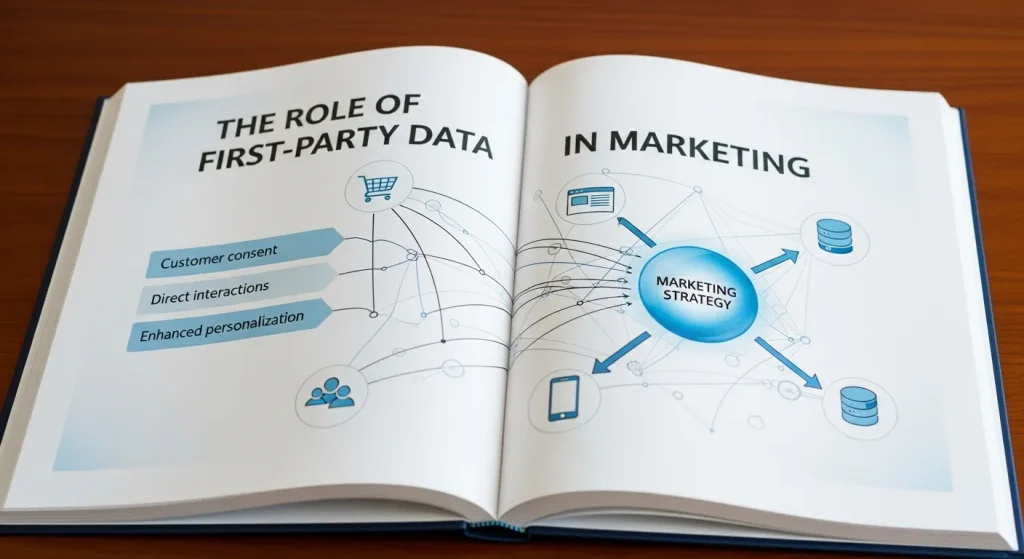
Why First-Party Data Matters
With the decline of third-party cookies, first-party data has become a critical asset for businesses. It provides direct insights into customer behavior and preferences, ensuring compliance with privacy regulations.
Benefits of First-Party Data
- Accuracy: Data collected directly from customers is more reliable.
- Privacy Compliance: Reduces reliance on third-party data, aligning with GDPR and CCPA.
- Customer Trust: Builds stronger relationships by being transparent about data usage.
Comparison of First-Party vs. Third-Party Data
| Aspect | First-Party Data | Third-Party Data |
|---|---|---|
| Source | Directly from customers | Aggregated from external sources |
| Accuracy | High | Varies |
| Privacy Compliance | Easier to comply | Challenging |
| Cost | Low (collected in-house) | High (purchased from providers) |
| Customer Trust | Builds trust | May erode trust |
Advantages of Data-Driven Marketing
Differentiate Through Personalization
With countless digital brands facing off against one another, personalization is a competitive differentiator. Customers are made to feel appreciated and they’re understood, which in turn makes them want to be loyal for a long time.
Higher ROI
Being able to know exactly who you’re going after can help allocate resources better. Instead of spraying ad spend across everyone, accurate data points to the users who are most likely to make a purchase, resulting in greater ROI.
Better Customer Experiences
There’s nothing better than making sure your customers have a great experience at every step of the game! The insights you get can help with any number of common pain points — from polishing your UI on your website to building better post-purchase support systems.
Overcoming Challenges in Data-Driven Marketing
Common Challenges
- Privacy Concerns: Navigating regulations like GDPR and CCPA.
- Data Security: Protecting sensitive customer information from breaches.
- Data Overload: Managing and analyzing vast amounts of data effectively.
Strategies to Overcome Challenges
- Invest in Security: Use encryption and secure storage solutions.
- Hire Experts: Employ data scientists and analysts to interpret data.
- Adopt AI Tools: Leverage AI for real-time insights and predictive analytics.
Challenges and Solutions in Data-Driven Marketing
| Challenge | Solution |
|---|---|
| Privacy Concerns | Adhere to GDPR, CCPA, and obtain consent |
| Data Security | Implement encryption and firewalls |
| Data Overload | Use AI and machine learning tools |
| Lack of Expertise | Hire skilled data professionals |
| Customer Trust Issues | Be transparent about data usage |
The Pitfalls of Data-Driven Marketing
While data-driven marketing offers immense potential, it is not without its challenges. Businesses must navigate several pitfalls to ensure their strategies are effective, ethical, and sustainable.
Privacy Concerns
One of the most significant challenges in data-driven marketing is addressing privacy concerns. Consumers are increasingly aware of how their data is collected and used, leading to heightened scrutiny of marketing practices. Regulations like GDPR (General Data Protection Regulation) and CCPA (California Consumer Privacy Act) have been introduced to protect consumer rights, requiring businesses to obtain explicit consent for data collection and ensure transparency. Failure to comply with these regulations can result in hefty fines and damage to a brand’s reputation. Marketers must strike a balance between leveraging data for personalization and respecting consumer privacy.
Data Security
Holding sensitive customer data makes businesses a prime target for cyberattacks. Data breaches can expose personal information, leading to financial losses, legal consequences, and a loss of customer trust. Companies must invest in robust security measures, such as encryption, firewalls, and regular security audits, to safeguard their data. Additionally, having a clear data breach response plan is essential to mitigate potential damage.
The Data Analysis Black Box
The sheer volume of data available today can be overwhelming. Without the right tools and expertise, businesses may struggle to make sense of it all. Big data requires skilled professionals, such as data scientists and analysts, to extract actionable insights. Moreover, over-reliance on automated tools without human oversight can lead to misinterpretations or biased conclusions. Companies must invest in both technology and talent to unlock the full potential of their data.
By addressing these pitfalls proactively, businesses can harness the power of data-driven marketing while maintaining ethical standards, ensuring security, and building long-term customer trust.
What Comes After Data in Marketing
 As the marketing landscape evolves, the role of data continues to expand, paving the way for new technologies and strategies. The future of marketing will be shaped by advancements in artificial intelligence, the shift to cookie-less tracking, and the ability to harness real-time insights.
Better AI and Machine Learning
Artificial intelligence (AI) and machine learning (ML) are set to revolutionize data-driven marketing. These technologies enable marketers to analyze vast amounts of data quickly and accurately, uncovering patterns and trends that would be impossible to detect manually. AI-powered tools can create hyper-personalized customer journeys, delivering tailored content, product recommendations, and offers at the right time. For example, chatbots and virtual assistants powered by AI can provide real-time customer support, while predictive analytics can forecast customer behavior, helping businesses stay one step ahead. As AI continues to advance, marketers will gain even more sophisticated tools to enhance targeting and engagement.
Cookie-less Tracking
With major browsers phasing out third-party cookies, marketers are at a crossroads. This shift has prompted a greater focus on first-party data collection methods, such as email opt-ins, loyalty programs, and mobile app interactions. These approaches not only ensure compliance with privacy regulations but also foster stronger customer relationships by prioritizing transparency and trust. Businesses that adapt to this new reality will be better positioned to thrive in a privacy-conscious world.
Real-Time Insights
The ability to analyze data in real time is becoming a game-changer for marketers. Real-time insights allow businesses to respond instantly to changing customer behaviors and market conditions. For instance, brands can adjust social media ads during a holiday rush or optimize pricing during a sudden demand spike. This agility ensures that marketing efforts remain relevant and impactful.
By embracing these advancements, businesses can stay competitive and deliver exceptional customer experiences in the ever-evolving marketing landscape.
Here’s How to Realize the Full Capacity of Marketing with Data
No other time in history has consumer data had more power to create meaningful, engaging, and relevant marketing. Privacy and data security challenges can’t be ignored, but the rewards dwarf the challenges for forward-thinking marketers.
Today is the day for businesses to take a data-driven approach to lock in customer loyalty, fine-tune their campaigns, and be proactive in an ever more competitive space. If you want to make the most of consumer data but aren’t sure where to start, now is a great time to learn more about these tools and strategies.
Frequently Asked Questions (FAQs)
1. What is data-driven marketing?
Data-driven marketing is the strategic use of consumer data to design personalized campaigns, improve targeting, and enhance customer experiences. It enables businesses to make informed decisions and achieve better marketing outcomes.
2. Why is data-driven marketing important?
Data-driven marketing is crucial because it allows businesses to understand their audience deeply, improve ROI, and foster customer loyalty. By leveraging data insights, companies can create impactful, tailored marketing strategies.
3. How do companies collect consumer data?
Companies gather consumer data through various channels, including website analytics, social media interactions, customer surveys, CRM systems, and third-party providers. These sources provide valuable insights into customer behavior and preferences.
4. What are the main types of consumer data?
The main types of consumer data include demographic data (age, gender, income), behavioral data (actions taken), psychographic data (values, interests), and transactional data (purchase history, payment methods, and frequency).
5. How does data-driven marketing improve ROI?
Data-driven marketing improves ROI by enabling businesses to target the right audience with personalized campaigns. This reduces wasted resources, increases conversions, and ensures marketing efforts are more cost-effective and impactful.
6. What tools are used in data-driven marketing?
Common tools include CRM systems for managing customer relationships, marketing automation platforms for targeted campaigns, web analytics tools for tracking behavior, and predictive analytics software for forecasting future trends and actions.
7. What are the challenges of data-driven marketing?
Challenges include navigating privacy regulations like GDPR, ensuring robust data security to prevent breaches, and managing the complexity of analyzing large datasets, which often requires specialized skills and tools.
8. How can businesses ensure data privacy compliance?
Businesses can ensure compliance by adhering to regulations like GDPR and CCPA, implementing strong encryption protocols, obtaining explicit customer consent, and being transparent about how they collect, store, and use data.
9. What is predictive analytics in marketing?
Predictive analytics uses historical data and machine learning to forecast future customer behavior. It helps businesses anticipate needs, reduce churn, and create proactive strategies for better customer engagement and retention.
10. What is the future of data-driven marketing?
The future of data-driven marketing includes advancements in AI for hyper-personalization, cookie-less tracking for privacy compliance, real-time insights for instant decision-making, and a stronger focus on first-party data collection.



Leave a Reply