


In an era where patient expectations are higher than ever, healthcare organizations must embrace innovative strategies to connect meaningfully with their audience. Today, consumers seek tailored experiences that acknowledge their unique health journeys and preferences. As a result, data-driven healthcare marketing has emerged as a cornerstone for institutions aiming to foster trust, enhance engagement, and improve outcomes. By capturing and interpreting diverse data sets—from clinical records to digital interactions—marketers can deliver timely, relevant messaging that resonates at the individual level.
Currently, the volume of information generated across medical systems, wearable trackers, and patient feedback portals continues to grow exponentially. This year (2026), healthcare providers who effectively consolidate and analyze these insights gain a competitive edge, driving patient satisfaction while optimizing resource allocation. In today’s digital landscape, leveraging analytics, segmentation, and automation tools enables organizations to craft campaigns that nurture long-term relationships and encourage proactive health management.
In the sections that follow, we’ll explore foundational principles of data-driven healthcare marketing, dive into key data sources, discuss methods to unify patient information, outline strategies for customization, review omnichannel tactics, and offer conclusions on implementing these approaches responsibly and effectively.
Understanding the Importance of Data in Patient Outreach
Healthcare has always been data-rich, from electronic health records (EHRs) documenting medical histories to laboratory results and appointment logs. Yet, until recently, much of this information remained underutilized for marketing and engagement purposes. By adopting a data-driven healthcare marketing mindset, organizations can transform disparate datasets into actionable insights that inform tailored outreach and educational initiatives.
Analyzing patient behavior patterns—such as appointment attendance, medication refill rates, and treatment adherence—allows marketers to identify barriers to care and design targeted interventions. For instance, patients who frequently miss follow-up visits might benefit from automated reminders or simplified scheduling tools. Those tracking their daily steps via wearables could receive motivational wellness tips to sustain physical activity goals.
Moreover, leveraging real-time analytics offers a dynamic view of audience engagement. Monitoring which articles, videos, or interactive modules generate the most interaction highlights topics of high relevance. Institutions can then scale successful content formats while phasing out underperforming assets. This iterative approach ensures the deployment of resources toward the most impactful campaigns.
Beyond operational advantages, data-informed strategies cultivate deeper trust by acknowledging individual needs. When patients recognize that communications reflect their circumstances—whether addressing chronic conditions, preventative screenings, or mental health support—they are more likely to engage with recommended services. Ultimately, harnessing data not only improves marketing ROI but also contributes to better health outcomes and stronger patient-provider relationships.
Key Patient Data Streams Fueling Personalization
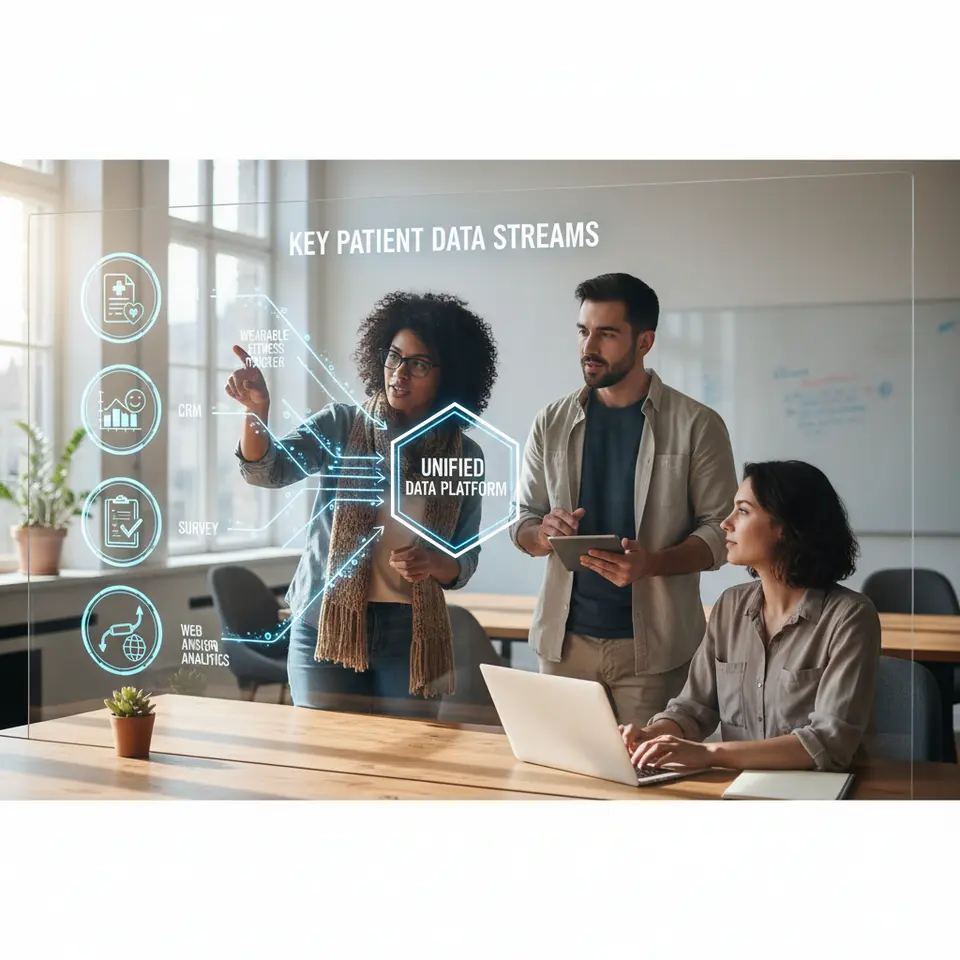
Effective data-driven healthcare marketing hinges on tapping into multiple information sources. Each channel offers unique perspectives on patient motivations and behaviors:
EHR and CRM Systems
Electronic health records and customer relationship management platforms serve as foundational repositories, storing demographics, treatment histories, and communication preferences. Integrating these systems ensures your marketing efforts align with clinical realities—avoiding generic outreach and enhancing relevance.
Patient Surveys and Feedback
Soliciting direct feedback via satisfaction surveys and post-appointment questionnaires yields qualitative sentiment data. These insights highlight service gaps, uncover UX pain points, and reveal opportunities for process improvements. Consistent pulse checks empower marketers to adapt messaging and optimize experience design promptly.
Wearables and IoT Devices
Connected devices—such as smartwatches, fitness trackers, and home health monitors—offer continuous streams of physiological metrics. By analyzing patterns in heart rate variability, sleep quality, or glucose levels, teams can send highly relevant tips or reminders. For example, a user exhibiting irregular sleep may receive personalized strategies to enhance rest, demonstrating proactive care.
Digital Engagement Analytics
Web and mobile analytics track how users navigate your online resources—identifying popular pages, click-through rates, and drop-off points. This behavioral data informs content optimization and user journey mapping, ensuring your digital touchpoints guide patients smoothly from awareness to action.
By triangulating these diverse data streams, healthcare marketers can piece together a nuanced portrait of each individual. The richer the dataset, the more precise the messaging and the higher the likelihood of meaningful engagement.
Building a Unified Patient Profile
Fragmented data silos impede comprehensive understanding. To overcome this, institutions must centralize information into a unified patient profile accessible across marketing, clinical, and administrative teams. This integration facilitates coordinated efforts and prevents disjointed communications.
Centralized Data Platforms
Adopting a robust data platform unites inputs from EHRs, CRMs, digital analytics, and external sources. Such platforms often feature interoperable architectures and standardized data models, enabling seamless data flow. When teams operate from a single source of truth, they avoid redundant outreach and ensure consistency across channels.
Data Governance and Quality
Maintaining data accuracy and integrity is paramount. Establishing governance policies—covering data entry standards, validation protocols, and periodic audits—protects against errors that could undermine patient trust. Regularly cleaning and deduplicating records ensures that communications reach the correct recipients.
Ensuring Privacy and Compliance
Confidentiality and regulatory adherence are non-negotiable. Implementing secure encryption, role-based access controls, and comprehensive consent management safeguards patient information in alignment with HIPAA and GDPR mandates. Transparently communicating privacy practices via policy pages and consent forms reinforces trust and legal compliance.
Integrating data responsibly not only boosts operational efficiency but also upholds ethical standards, ensuring that each outreach effort respects patient autonomy and privacy.
Segmenting Audiences and Delivering Personalized Experiences

One-size-fits-all communication no longer resonates in healthcare. Audience segmentation—driven by demographic, clinical, and behavioral criteria—enables marketers to tailor content that meets individuals where they are on their health journeys.
Demographic and Clinical Segmentation
Splitting audiences by age, gender, condition type, or risk level allows for highly relevant messaging. For instance, women aged 40–55 might receive targeted reminders about mammograms, while individuals with diabetes could be enrolled in ongoing educational series on glucose management.
Behavioral Triggers and Dynamic Workflows
Automated triggers activate when patients meet specific criteria—such as missing a medication refill or engaging with a particular resource. These triggers can initiate tailored drip campaigns via email, SMS, or in-app notifications, guiding patients toward next steps like scheduling appointments or accessing support materials.
Content Personalization Techniques
Personalized content extends beyond using a patient’s name. Dynamic content blocks within emails or web pages can surface relevant articles, videos, and tools based on individual health profiles. For example, a patient recovering from orthopedic surgery might see rehabilitation exercise tutorials embedded directly in their patient portal.
Leveraging predictive analytics further refines personalization by anticipating future needs. By modeling risk factors and behavioral patterns, organizations can proactively offer preventative care recommendations—such as vaccination reminders or nutrition counseling—before patients even realize they require assistance.
Implementing Omni-Channel Engagement Strategies
Patients interact through a multitude of channels—websites, mobile apps, social media, email, SMS, chatbots, and in-person visits. A successful data-driven healthcare marketing approach delivers cohesive messaging across each touchpoint, creating a seamless experience.
Email and SMS Campaigns
Email remains a workhorse for patient communication, while SMS delivers immediacy. Combining these channels in coordinated campaigns—such as appointment reminders followed by educational resources—reinforces key messages. For example, after clicking an email about heart health, a patient may receive an SMS link to a heart-healthy recipe curated for their dietary preferences.
Social Media and Online Advertising
Social platforms can target micro-segments based on interests and demographics. By syncing your CRM with ad platforms, you can serve sponsored content to patients who have previously engaged with your site, reinforcing your brand and driving further interaction.
Interactive Chatbots and Virtual Assistants
AI-powered chatbots on websites or within patient portals can answer common queries, schedule appointments, and direct users to relevant educational materials. Integrating these bots with your data platform ensures they provide personalized responses that reflect the patient’s history and preferences.
In-Person and Telehealth Integration
Even as digital channels expand, in-person visits and virtual consultations remain core components. Ensuring that digital communications complement clinical interactions—by reinforcing care plans or prompting follow-up—creates a unified continuum of engagement.
By orchestrating these channels through a centralized marketing automation system, organizations can maintain consistent branding, tone, and messaging, while dynamically adapting to each patient’s interactions in real time.
Frequently Asked Questions
What is data-driven healthcare marketing?
Data-driven healthcare marketing is the practice of leveraging patient data—such as EHRs, digital behavior, and wearable metrics—to tailor communications and improve engagement, satisfaction, and health outcomes.
How can I ensure patient data privacy?
Implement robust data governance, encryption, role-based access controls, and transparent consent management to comply with HIPAA, GDPR, and other regulations, ensuring patient trust and legal adherence.
Which channels are most effective for patient outreach?
A multi-channel approach—combining email, SMS, social media, chatbots, and in-person or telehealth interactions—ensures consistent messaging and meets patients where they prefer to engage.
Conclusion
Data-driven healthcare marketing represents a transformative approach to patient engagement. By intelligently collecting and analyzing information from EHRs, wearable devices, patient surveys, and digital platforms, organizations can craft deeply personalized experiences that resonate in today’s healthcare environment. Centralizing data into unified profiles ensures coordinated outreach, while robust segmentation and automation create highly relevant campaigns that improve adherence and satisfaction.
Implementing an omni-channel framework—spanning email, SMS, social media, chatbots, and in-person encounters—further amplifies impact, delivering consistent messaging wherever patients engage. Adhering to stringent privacy and compliance standards safeguards trust and upholds ethical obligations.
As healthcare continues to evolve digitally, providers that harness data-driven healthcare marketing will be best positioned to foster loyalty, drive positive health outcomes, and achieve sustainable growth. By investing in advanced analytics, integrated platforms, and personalized communication strategies, organizations can establish stronger connections with patients and pave the way for more proactive, patient-centric care.
External Resources:



Leave a Reply