

The Changing Marketing for Higher Education
The field of marketing in higher education has undergone a significant transformation over the past decade. Traditional methods like print brochures, campus tours, and college fairs are still valuable for engaging prospective students, but they no longer provide the comprehensive reach and measurable results that institutions need in today’s competitive landscape.
Modern students conduct extensive research online before making enrollment decisions. They compare programs, read reviews, explore rankings, and interact with schools across multiple digital platforms and devices. This shift demands a more sophisticated and strategic approach, where decisions are guided by data rather than intuition alone. Institutions are increasingly adopting Data-Driven Higher Ed Marketing strategies to analyze student behavior, track engagement, and deliver personalized content that resonates with potential applicants. By leveraging analytics, schools can optimize campaigns, improve recruitment outcomes, and stay ahead in a rapidly evolving educational market.
Educational organizations that adopt data-driven higher ed marketing practices experience positive results in the following metrics:
- More Leads Campaigns with focused qualified leads.
- Increased rates of conversion from enquiry to enrollment
- Improved ROI on marketing investments
- Increase student retention with better fit
- Enhanced reputation through strategic positioning
Fundamental Elements of Data-Driven Higher Ed Marketing

Student Journey Analytics
Gaining complete visibility into the student journey is crucial for marketing higher education effectively. Today’s prospective students interact with institutions through a variety of channels—social media, websites, email campaigns, virtual tours, webinars, and in-person events—creating a complex web of touchpoints throughout the enrollment process. Understanding how students move through these stages, from initial research to application and eventual enrollment, allows institutions to identify opportunities for engagement and address potential drop-offs. By leveraging Data-Driven Higher Ed Marketing strategies, schools can analyze behavior across channels, track engagement metrics, and deliver personalized content that guides each student along their unique journey, ultimately improving recruitment outcomes and retention rates.
Institutions can track the following using robust analytics platforms:
- Discovery via search, social and your network
- Activities in the Consideration phase such as website visits and program research
- Application touch and submission rates
- Enrollment decision factors and timeline
- Post-enrollment satisfaction and retention indicators
Google Analytics 4 provides insights into patterns of behavior typical of a student users experience, while dedicated higher ed CRM platforms tightly integrate with your admissions process.
Conversion Rate Optimization at Higher Ed Categories
Conversion rate optimization (CRO) is a critical component of modern higher education marketing, turning every digital touchpoint into a potential enrollment opportunity. Just as e-commerce businesses optimize their websites to maximize sales, higher education institutions can optimize their online presence to drive applications, campus visits, and student enrollments. This involves analyzing how prospective students interact with websites, landing pages, email campaigns, and social media content to identify friction points or opportunities for engagement. By leveraging Data-Driven Higher Ed Marketing strategies, schools can test and refine messaging, streamline application processes, and personalize content for different student segments. The result is a more efficient recruitment funnel, higher engagement rates, and ultimately, an increase in qualified student enrollments.
Key optimization areas include:
Website Performance
A school’s website often serves as the first digital touchpoint for prospective students, making it a critical component of any recruitment strategy. Through Data-Driven Higher Ed Marketing, institutions can analyze visitor behavior, track engagement metrics, and identify which pages or content resonate most with potential applicants. A/B testing different page templates, content layouts, and calls-to-action can reveal what drives the highest engagement and encourages students to take the next step—whether that’s requesting information, scheduling a campus visit, or submitting an application. By continuously optimizing the website using data insights, schools can dramatically improve conversions and create a smoother, more compelling experience for prospective students.
Application Process Optimization
The application process is a make-or-break stage in the student enrollment journey. Simplifying this process reduces drop-offs and ensures more applicants complete their submissions. Tools like Typeform and other interactive forms make applications more engaging, while analytics track where prospective students may hesitate or abandon the process. Leveraging Data-Driven Higher Ed Marketing allows institutions to pinpoint these friction points and implement solutions—like clearer instructions, fewer steps, or personalized follow-ups—that improve completion rates. By continuously refining the application workflow based on real data, schools can maximize enrollments while delivering a seamless experience for students.
Landing Page Effectiveness
Specialized landing pages tailored for specific programs or target student groups often outperform generic pages when it comes to engagement and conversions. By leveraging Data-Driven Higher Ed Marketing, institutions can analyze which messages, visuals, and calls-to-action resonate most with different audiences. Tools like Unbounce make it easy to create, test, and iterate on these targeted landing pages, allowing schools to quickly determine what works at scale. Continuous testing and optimization of landing pages ensure that prospective students receive relevant, personalized content, which significantly boosts application submissions and overall enrollment rates.
Behavioral Targeting and Personalization
With higher ed marketing based on data analysis, higher ed marketers can engage in subtle and sophisticated personalization that really reaches students where they are. Machine learning algorithms look at behaviors to serve content at the optimal time.
Personalization strategies include:
- Academic interest-specific curriculum based on the program
- Geographic focus for local needs and preferences
- Demographic tailoring across student populations
- Engagement based trigger centric acerbity parasites.
- Dynamic content based on single user profiles
Necessary Data-Driven Higher Education Marketing Tools
Analytics and Tracking Platforms
Google Analytics 4
The free service offers detailed information about the performance of a website, user actions and conversion tracking. Custom goals can be established for applications, request for information and campus visit signup by the higher education institution.
Adobe Analytics
Large organizations benefit from Adobe Analytics’ sophisticated segmentation and real time processing capabilities. The platform is also great at ingesting huge amounts of disparate data.
Specialized Higher Ed CRM Systems
Systems such as Salesforce Education Cloud or Ellucian CRM Recruit connect marketing analytics with admissions processes to give you full visibility of the student journey.
A/B Testing and Optimization Tools
Optimize
The tool is used by institutions to test multiple iterations of web pages, email campaigns and application processes. Reliable results are given through calculation of statistical significance.
VWO (Visual Website Optimizer)
VWO is an easy to use platform that is easily handled by a marketing team with no technical background. The platform also provides multivariate testing functionality to handle advanced optimizations.
Google Optimize
The free variant is discontinued but Google Optimize 360 is still up and running, aims at enterprise customers with tight Google Analytics integration.
User Experience Analysis Tools
Hotjar
Potential students behave on your site with heatmaps and session recordings. This is useful to understand how different parts of your website are interacting and how end users can experience your website.
Crazy Egg
Heatmaps in Hotjar Heatmaps from your website provide you with an instant visual representation of your visitors’ clicks, taps and scrolling behavior on your pages, identifying the areas on your page that get the most attention or see the most activity.
Communication and Engagement Tools
Intercom
Live chat and messaging tools allow for interaction with potential students in the moment. Enrollment decisions can be influenced by how quickly questions are answered.
Zendesk Chat
Customer support features work wonders to resolve objections and concerns before they kill apps or sign ups.
Implementing Data-Driven Marketing Strategies
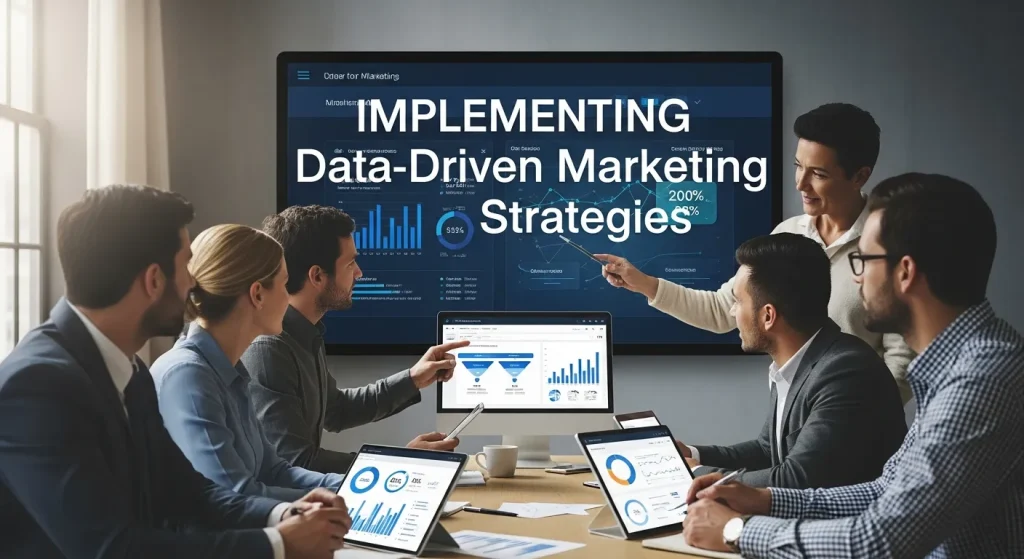
Setting Up Proper Analytics Infrastructure
Set up clean tracking throughout all marketing channels prior to beginning to optimize. This includes:
- Goal Configuration
Set specific conversion goals such as complete application, campus visit and information request. You should have clear tracking on each goal. - UTM Parameter Strategy
Use standardized UTM parameters for all campaigns and track your traffic sources and campaign performance properly. - Cross-Device Tracking
21st Century learners SEARCH on multiple devices. Make sure your analytics implementation falls within the user’s entire journey across devices.
Identifying High-Impact Optimization Opportunities
Concentrate efforts on the most impactful things:
- High-Traffic, Low-Conversion Pages
- Application Process Bottlenecks
- Mobile Experience
Creating Targeted Campaign Strategies
Data-driven insights result in super-targeted marketing programs:
- Audience Segmentation
- Content Personalization
- Channel Optimization
Measuring Success and ROI
Monitor performance measures that are directly associated with the enrollment result:
Conversion Rate Metrics
- Visitor to enquiry ratio (Conversion rate)
- Inquiry to application conversion rate
- Application to enrollment conversion rate
- Cost per qualified lead
- Cost per enrollment
Engagement Metrics
- Time spent on program pages
- Email open and click rates
- Social media engagement
- Content consumption patterns
- Campus visit booking rates
Revenue Impact
- Marketing contribution to enrollment revenue
- Return on marketing investment
- Retention rates by an acquisition channel
Attribution Modeling
Knowing the most effective marketing touchpoints that drive enrollment informs budget utilization. Multi-touch attribution is smarter than last-click attribution.
Consider implementing:
- First-Touch Attribution
- Multi-Touch Attribution
- Time-Decay Attribution
Overcoming Common Challenges
Privacy and Compliance Considerations
- FERPA Compliance
- GDPR and CCPA
- Data Security
Budget Constraints and Resource Allocation
- Starting with Free Tools
- Focusing on High-Impact Areas
- Gradual Tool Implementation
Organizational Change Management
- Staff Training
- Cross-Department Collaboration
- Executive Buy-In
Next-Level Strategies for Higher Ed Marketing
Predictive Analytics and Machine Learning
- Spot high propensity applicants
- Optimize timing of communications
- Predict enrollment likelihood
- Tailor support based on enrollment probability
Marketing Automation Integration
- Behavioral Trigger Campaigns
- Nurture Sequences
- Personalized Content Delivery
Cross-Channel Integration
- Unified Data Collection
- Coordinated Messaging
- Omnichannel Experience
Building Your Data-Driven Marketing Foundation
Transitioning to data-driven higher ed marketing won’t happen overnight—it requires careful planning and execution. First, ensure your analytics infrastructure is properly set up and prioritize the optimization activities that will have the greatest impact on your bottom line.
Dig Deep in for more data-driven growth marketing guide.
But technology is only part of the story: get there depends on organizational buy-in to data-driven decision making. Invest in training, ensure robust process and nurture a culture of testing and improvement.
Don’t forget that data-driven marketing is a journey and not a destination. The top institutions are in a never-ending process of evaluation and testing of new tactics and refining based on performance.
Embark on your journey of marketing through the numbers by auditing your existing analytics setup and learning where you are in the optimization spectrum. The investment in the right tools and processes will translate into better enrollment results and more efficient marketing.
The future of your institution will hang on its ability to reach students in an environment that is more competitive than ever. Higher ed marketing that’s data-driven gives you the insights and tools to do that, to build those connections, and to ensure enrollment growth is sustainable.
In today’s competitive education landscape, using analytics to understand student behavior and personalize outreach is more important than ever. But increasing engagement doesn’t stop with awareness—it continues through the enrollment funnel. To explore how optimization tactics can boost conversions at every stage, see our guide on What Are CRO Strategies and How Can They Transform Your Business?.
Frequently Asked Questions (FAQ)
What is Data-Driven Higher Ed Marketing?
It is a marketing approach for colleges and universities that leverages analytics, data insights, and technology to optimize recruitment, engagement, and retention strategies.
Why is data-driven marketing important for higher education?
Traditional methods no longer suffice. Prospective students research online extensively, making personalized campaigns essential (Data-Driven Marketing Analytics Guide).
Which tools are essential for data-driven higher ed marketing?
Key tools include analytics platforms (Google Analytics 4, Adobe Analytics), higher ed CRM systems (Salesforce Education Cloud, Ellucian), A/B testing tools (VWO, Optimize), and communication platforms (Intercom, Zendesk).
Can small colleges use data-driven marketing effectively?
Absolutely. Even smaller institutions can start with scalable tools and free analytics, gradually implementing more advanced solutions as resources allow.
How does data-driven marketing improve student retention?
By tracking engagement and behavioral patterns post-enrollment, institutions can identify students at risk and intervene proactively with personalized support.
How do colleges measure ROI for data-driven campaigns?
Through metrics like cost per qualified lead, conversion rates from inquiry to enrollment, engagement rates, application completion rates, and overall contribution to enrollment revenue.



Leave a Reply