

Want to connect with your audience on a more personal level? Data-driven marketing could be the answer that you’re looking for. The power of marketing, by using data to drive insights, businesses of all sizes can create campaigns that are appealing to their target customers in order to make better decisions and measure results.
Throughout this blog, I will discuss what data-driven marketing is and why, in our marketing world today, it’s essential to have as part of your strategy. And we’ll explain what’s in it for you, why it’s better, and why you should buy it.
Data-Driven Marketing Explained
What Is Data-Driven Marketing?
Data-driven marketing is the practice of using data to inform strategic marketing decisions and campaigns. With an understanding of their customer’s behavior, preferences and trends, marketers can design the most impactful and relevant strategy focusing on delivering the right message to the right person, at the right time.
Why is it so important? A lot of traditional marketing was educated guessing, at best. Data driven strategies allow companies to do away with hunches and guesses and swap them for facts and lessons learnt, reducing waste and increasing the influence of their marketing campaigns. Digital marketing has been disaggregated since then and we have a whole host of digital tools and technologies that are available to manage analytics, AI and so forth that allows us to collect, process and apply large volumes of data quickly and efficiently.
But what exactly are the advantages of data-driven marketing? Keep reading to find out.
Better Targeting and Personalization
How It Works
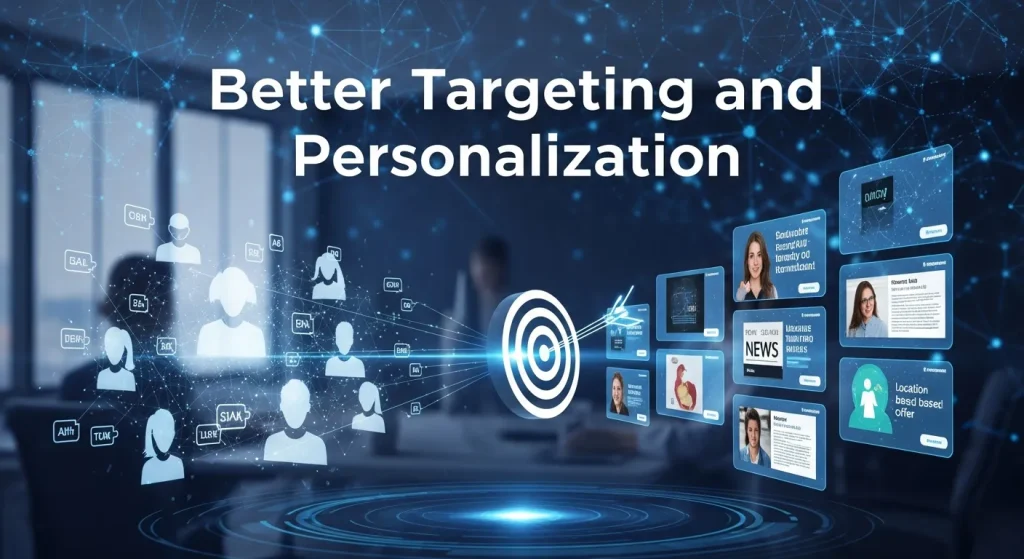
Through the study of customer data, including browsing behavior, buyer tendencies, and demographic data, businesses are able to divide their audience into niche groups. Marketers can use this segmentation to send resonating messages that strike within personal preference levels.
Real-World Example
For instance, a fashion eCommerce brand can then see that one set of its customers likes active wear and another loves evening wear thanks to the data. Rather than blast both groups with the same generic email, they can send one about active wear to people on the weight loss plan and one about evening wear to the other. This can generate more engagement, but also more sales.
Pro Tip
SEO services of the next level are capable of using data to deliver personalized search engine results. By understanding search intent and how users behave, you can naturally focus your brand on the right keywords that most appeal to your audience needs.
Improved Decision-Making
How It Works
Analytics platforms such as Google Analytics or Adobe Analytics can track user behavior on your site. These insights help you identify which tactics are working, which aren’t, and what you can improve. Metrics like conversion rate, bounce rate, and time on page are all telling companies something for a reason.
Real-World Example
Imagine a social media ad campaign with a much higher-than-expected click-through rate. Through analyzing this data, a marketer might determine that a particular ad image or type of message connected with that audience. A discovery that hopefully future campaigns can use to continue to capture that lightning in a bottle.
Pro Tip
Advanced SEO services well and truly make the most out of data when it comes to smarter research as well as smarter implementation. For example, knowing which keywords drive traffic can also inform the optimization of new blog posts and pages.
Increased ROI
How It Works
The data you collect with analytics tools points you to the marketing channels and methods that are driving the most conversions. Underperforming channels can either be fine-tuned or eliminated, and resources can instead be allocated more effectively.
Real-World Example
A subscription box service discovers that its paid social ads are driving more conversions than its email marketing campaigns. When they reallocate their budget to higher ROAS social ads, they’re able to generate more sales at a lower wasted spend rate.
Furthermore, top of the line SEO offerings can boost return on investment (ROI) simply by choosing the most lucrative keywords and focusing on your on-site content. Higher search rankings mean more organic traffic, which generally corresponds to high conversion potential.
Pro Tip
Utilize A/B testing to test a variety of marketing methods and compare which generates the best ROI.
Better Customer Understanding
How It Works
By capturing customer data through surveys, purchase histories, and social media connections, you can get a clearer view of what your audience cares about. This allows businesses to anticipate future needs, solve pain points, and create customer loyalty over time.
Real-World Example
A subscription coffee service crunches numbers and sees that its customers order more often in the winter. With that knowledge, they jump into a winter campaign with new flavors and a special offer to order more for less. The result? More sales and better customer relationships.
A more complex SEO service may also show customer interest with changing search patterns and searching trends. For example, if you see a sudden increase in searches for “sustainable coffee,” that could be a hint that your audience is showing more interest in eco-friendly products.
Pro Tip
Keep on top of customer feedback and online reviews to pinpoint pain points and better address customer expectations.
Realize New Possibilities with Insight on Data

It’s evident that data-driven marketing presents huge opportunities for companies who want to remain competitive in an increasingly dynamic world. Whether that’s better targeting and personalization, higher ROI, or deeper customer insights, data gives marketers the power to add value at every stage along the way.
If you’re not already data driven in your marketing efforts, now is the time to get rolling. Leverage analytics tools, test customized campaigns, and partner with expert SEO services to take your results to the next level.
Ready to level up your marketing? Unlock data to start with. Start laying the foundation for long-term success for your business today.
Building a Data-Driven Marketing Strategy
A successful data-driven marketing strategy doesn’t happen by chance. It requires a clear framework that outlines your goals, the data you’ll need, the tools you’ll use, and how you’ll measure success. The first step is to define what you want to achieve. Are you looking to increase customer retention, generate more qualified leads, or boost online sales? Your objectives will guide the entire process, ensuring every action you take is purposeful and aligned with your broader business goals. Once your goals are set, you can begin to identify the key performance indicators (KPIs) that will help you track progress.
Building your strategy involves several key stages:
- Define Objectives: Start with specific, measurable, achievable, relevant, and time-bound (SMART) goals. This provides a clear direction for your data collection and analysis efforts.
- Identify Data Sources: Determine where you will get your data. This can include first-party data (website analytics, CRM), second-party data (from a trusted partner), and third-party data (from data aggregators).
- Select Technology Stack: Choose the right tools for data collection, storage, analysis, and activation. This stack might include a CRM, a Data Management Platform (DMP), analytics software, and marketing automation tools.
- Analyze and Segment: Use your tools to process the data, identify patterns, and segment your audience into distinct groups based on behavior, demographics, or purchase history.
- Activate and Personalize: Develop and execute campaigns tailored to each segment. Use your insights to personalize messaging, offers, and timing across different channels.
- Measure and Optimize: Continuously monitor campaign performance against your KPIs. Use A/B testing and other methods to refine your approach and improve your results over time.
A well-structured strategy ensures that your efforts are focused and effective. Below is a sample framework outlining the key components of a data-driven marketing plan.
|
Strategy Component |
Description |
Key Metrics to Track |
|---|---|---|
|
Goal Setting |
Establishing clear business objectives for your marketing efforts. |
Conversion Rate, Customer Lifetime Value (CLV), Lead Generation Volume |
|
Data Collection |
Aggregating customer information from various touchpoints. |
Website Traffic, Email Open Rates, Social Media Engagement, Form Submissions |
|
Audience Segmentation |
Grouping customers based on shared characteristics or behaviors. |
Segment Size, Engagement by Segment, Conversion Rate by Segment |
|
Campaign Execution |
Launching targeted marketing initiatives based on data insights. |
Click-Through Rate (CTR), Return on Ad Spend (ROAS), Cost Per Acquisition (CPA) |
|
Performance Analysis |
Evaluating the effectiveness of campaigns and making adjustments. |
ROI, A/B Test Results, Attribution Reports, Customer Retention Rate |
Data-Driven Marketing in a B2B Context
While the principles of data-driven marketing are universal, their application in a business-to-business (B2B) context has unique characteristics. B2B sales cycles are often longer and involve multiple decision-makers within a company. Therefore, a B2B data-driven marketing strategy must focus on building relationships, nurturing leads over time, and providing value at each stage of the buyer’s journey. Instead of focusing solely on individual consumer behavior, B2B marketers use data to understand firmographics (company size, industry, revenue) and the professional roles and pain points of key contacts within a target account.
The goal is to move an entire account, not just an individual, through the sales funnel. This requires a coordinated approach known as Account-Based Marketing (ABM), which is heavily reliant on data.
- Identify High-Value Accounts: Use data to create an Ideal Customer Profile (ICP) and identify companies that fit this profile.
- Understand the Buying Committee: Map out the key decision-makers and influencers within a target account and gather data on their specific needs and challenges.
- Personalize Content at Scale: Create content—such as whitepapers, case studies, and webinars—that addresses the specific pain points of the target account and its key stakeholders.
- Coordinate Sales and Marketing: Share data and insights between sales and marketing teams to ensure a unified and consistent experience for the prospect.
- Track Account-Level Engagement: Measure engagement across the entire account rather than just individual lead metrics to gauge overall interest and purchase intent.
The table below contrasts how data-driven techniques are applied in B2B versus B2C environments, highlighting the different focuses and tactics used in each.
|
Feature |
B2B Data-Driven Marketing |
B2C Data-Driven Marketing |
|---|---|---|
|
Primary Goal |
Lead generation and nurturing, building long-term relationships. |
Driving direct sales, brand awareness, and customer loyalty. |
|
Audience |
Niche and specific (buying committees, specific job titles). |
Broad and diverse (mass market segments). |
|
Sales Cycle |
Long and complex, involving multiple touchpoints and decision-makers. |
Short and simple, often involving impulse or quick decisions. |
|
Key Data Points |
Firmographics, job titles, company pain points, engagement level. |
Demographics, purchase history, browsing behavior, personal interests. |
|
Common Tactics |
Account-Based Marketing (ABM), content marketing (webinars, whitepapers). |
Personalized email offers, social media ads, influencer marketing. |
Frequently Asked Questions (FAQs)
1. What is the first step in creating a data-driven marketing strategy?
The first and most crucial step is to clearly define your business objectives. You need to know what you want to achieve—whether it’s increasing leads, improving customer retention, or boosting sales—before you can determine which data to collect and how to use it effectively.
2. How do small businesses use data-driven marketing?
Small businesses can leverage affordable tools like Google Analytics, social media insights, and email marketing platforms. They can use this data to understand customer behavior, personalize email campaigns, optimize their website for local search, and run targeted social media ads to maximize their limited budgets.
3. What is the difference between data-driven and traditional marketing?
Traditional marketing often relies on broad assumptions and past experiences to make decisions. In contrast, data-driven marketing uses real-time, verifiable data to inform every choice, from audience targeting to message creation, leading to more precise, efficient, and measurable campaigns.
4. What are some examples of companies that use data-driven marketing well?
Companies like Amazon and Netflix are masters of data-driven marketing. Amazon uses your purchase and browsing history to recommend products, while Netflix analyzes viewing data to suggest shows and even inform the creation of new original content that aligns with user preferences.
5. What is the role of AI in data-driven marketing?
Artificial intelligence (AI) helps marketers process vast amounts of data quickly and accurately. It can be used for predictive analytics to forecast customer behavior, automate personalized campaigns, power chatbots for customer service, and optimize ad spend in real time for better ROI.
6. Is data-driven marketing only for digital channels?
No, data can inform all marketing efforts. For example, data on customer demographics and location can help a business decide where to place billboards or run print ads. Purchase data can also inform in-store promotions and direct mail campaigns for a more integrated strategy.
7. How does a B2B data-driven marketing strategy differ from B2C?
A B2B strategy focuses on a smaller, more specific audience of business decision-makers. The data used often relates to company attributes (firmographics) and professional roles. The goal is to nurture long-term relationships through valuable content, as the sales cycle is typically much longer.
8. What are the biggest challenges in implementing data-driven marketing?
Common challenges include data silos (where data is not shared between departments), a lack of skilled analysts to interpret the data, and concerns over data privacy and compliance. Overcoming these hurdles requires a commitment to a data-centric culture and investment in the right tools and talent.
9. How do you measure the ROI of data-driven marketing?
You can measure ROI by tracking metrics tied to your goals. This includes monitoring changes in conversion rates, customer lifetime value (CLV), and cost per acquisition (CPA). By attributing sales and leads to specific campaigns, you can calculate the direct financial return on your marketing spend.
10. What is a data-driven marketing guide?
A data-driven marketing guide is a resource that provides a structured approach to using data in your marketing. It typically outlines key concepts, best practices for collecting and analyzing data, and a step-by-step framework for building, executing, and measuring a successful data-driven strategy.



Leave a Reply