

Data is the lifeblood of advertising, and data is now being used by a lot of startups. No matter if you are a marketing pro, a business owner, or a data analyst, using data efficiently can lead to massive growth and ROI. But it can be daunting to know where to start if you’re unfamiliar with how to unlock the potential of data.
It will reveal the blueprint for data-driven marketing that works. You will discover how to gather the right data, analyze it to gain actionable insights, develop impactful strategies, and then continually optimize your campaigns. By the end, you will have the tools and know-how to make more intelligent marketing decisions that will have a real, measurable impact on your business.
What is Data-Driven Marketing and Why Is It Important?
Data-driven marketing is the practice of using customer data to inform and refine your marketing efforts. It shifts decision-making from intuition-based processes to strategies rooted in concrete evidence. By leveraging data, marketers can better understand their audience, create highly personalized campaigns, and maximize ROI.
Why is it so important?
- Improved Customer Insights: Data provides the details needed to understand exactly who your customers are and what they want.
- Enhanced Personalization: Tailor your messaging to match the unique preferences and behaviors of your target audience.
- Efficient Use of Resources: Focus your efforts on what works and avoid wasting budget on ineffective strategies.
- Measurable Results: Track the impact of your marketing efforts with tangible metrics.
With businesses increasingly competing in crowded markets, data-driven marketing is no longer optional. It’s the foundation for creating strategies that resonate with audiences and drive results.
Gathering the Right Data

Data-driven marketing begins with collecting accurate, relevant, and diverse data. Without a robust dataset, even the best analysis tools or strategies will fall short. Here are some essential aspects of data collection to master.
Data Sources
To build a well-rounded understanding of your customers, pull data from multiple sources, such as:
- Website Analytics: Tools like Google Analytics provide insights into user behavior, traffic sources, and demographics.
- CRM Systems: Platforms like Salesforce store valuable client interactions and purchase histories.
- Social Media: Track engagement metrics and audience demographics from platforms like Facebook Insights or LinkedIn Analytics.
- Surveys and Feedback: Collect customer opinions directly to get qualitative insights on preferences and satisfaction levels.
Tools for Data Collection
The right tools can streamline the gathering process. Popular options include:
- Google Analytics (free and user-friendly for tracking web and campaign performance).
- HubSpot (great for marketing and sales alignment).
- Segment (an advanced tool for integrating multiple data sources).
Best Practices for Data Collection
- Prioritize Quality Over Quantity: Don’t drown in irrelevant data. Focus on information that aligns directly with your goals.
- Ensure Data Compliance: Follow regulations like GDPR and CCPA to maintain trust with your audience while staying lawful.
- Centralize Your Data: Use tools to integrate all sources into a single platform for better accessibility.
Remember, the quality of any data-driven strategy depends heavily on the data you collect. Lay a solid foundation here, and the rest of the process becomes much easier.
Analyzing Data for Actionable Insights
Once you’ve gathered your data, the next step is extracting meaningful insights. This involves analyzing patterns, identifying trends, and turning raw data into clear action points.
Identifying Key Performance Indicators (KPIs)
First, determine which metrics matter most to your business. Examples include:
- Customer Acquisition Cost (CAC): The investment needed to acquire a new customer.
- Conversion Rates: The percentage of users completing a desired action (e.g., making a purchase, downloading a resource).
- Lifetime Value (LTV): The total revenue you can expect from a customer over their lifecycle.
Keep KPIs aligned with your end goals to ensure your analysis focuses on practical outcomes.
Techniques for Data Analysis
Here are some proven methods for analyzing marketing data effectively:
- Segmentation Analysis: Group your audience into distinct segments based on factors like demographics, purchase behavior, or location for tailored targeting.
- Predictive Analytics: Use AI-powered tools like SAS or Tableau to forecast future customer behavior and trends.
- Attribution Modeling: Understand which channels are driving conversions to allocate resources more effectively.
Example of Data-Backed Insights in Action
For example, an e-commerce company may look at checkout page data and find that abandoned carts are high. From that perspective, it could experiment with speeding up the page loading or testing a promo code to boost completions.”
Smart marketing decisions are based on the analysis of data. And that would be to turn numbers into things that people can actually do with them and get some ROI on top.
Overcoming Challenges in Data-Driven Marketing
Transitioning to a data-driven marketing strategy is not without its hurdles. Many organizations struggle with common issues like poor data quality, a lack of analytical skills, and difficulty integrating information from different sources. These obstacles can prevent marketers from unlocking the full potential of their data, leading to flawed insights and ineffective campaigns. However, by proactively identifying these challenges, you can implement clear solutions to overcome them and build a more resilient and successful strategy.
Here are some actionable solutions to common data-driven marketing challenges:
- Standardize Data Collection: Establish clear guidelines for how data is collected across all platforms. This ensures consistency and improves the overall quality of your information, making it more reliable for analysis.
- Invest in Training and Skills Development: Bridge the skills gap within your team by providing training on data analysis tools and techniques. Empowering your marketers with the right knowledge helps them turn raw data into actionable insights confidently.
- Centralize Your Data: Use a Customer Data Platform (CDP) or similar integration tool to break down data silos. Bringing all your customer data into one unified view allows for more comprehensive analysis and a deeper understanding of the customer journey.
- Start Small and Scale: Instead of trying to overhaul everything at once, begin with a small, manageable project. Focus on a specific KPI, like improving email open rates, and use the insights gained to inform larger initiatives.
- Promote a Data-First Culture: Encourage collaboration between departments and champion the use of data in all marketing decisions. When everyone from content creators to campaign managers values data, it becomes an integral part of your organization’s DNA.
|
Common Challenge |
Actionable Solution |
|---|---|
|
Poor Data Quality |
Implement standardized data entry and cleaning processes. Regularly audit your data to ensure accuracy and remove irrelevant information. |
|
Data Silos |
Adopt a central data management platform (like a CDP) to unify data from different sources like your CRM, website, and social media. |
|
Lack of Analytical Skills |
Provide ongoing training for your team on key analytics tools and interpretation techniques. Consider hiring a dedicated data analyst. |
|
Proving ROI |
Clearly define KPIs before launching a campaign. Use attribution modeling to track how different channels contribute to conversions. |
|
Privacy and Compliance |
Stay informed on regulations like GDPR and CCPA. Be transparent with customers about what data you collect and how you use it. |
Implementing Data-Driven Strategies
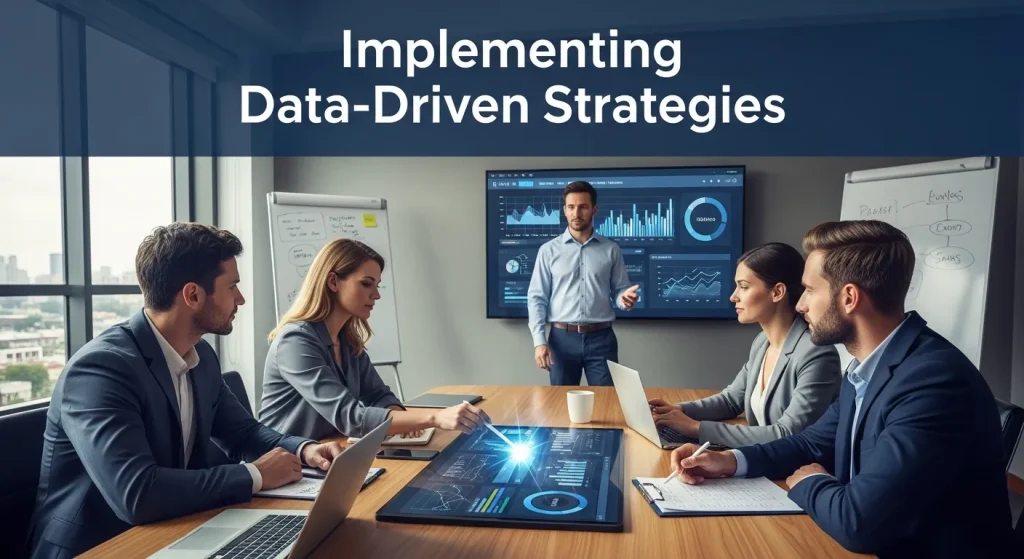
Insights become truly valuable when you apply them to action. Implementing data-backed strategies ensures your marketing campaigns are optimized for success.
Examples of Data-Driven Strategies
- Personalized Email Campaigns:
Use insights like customer preferences, purchasing history, or browsing behavior to send targeted emails. For example, a clothing store could send an email featuring sportswear discounts to users who recently browsed gym-worthy attire.
- Dynamic Advertising:
Retarget users based on their specific interactions with your website, such as showing them an ad for a product they left in their cart. Platforms like Google Ads or Facebook Ads Manager make this process efficient.
- Content Optimization:
Review engagement information that illustrates the types of content that resonate best. And then, make more of what works. (E.g., If how-to blogs are more successful than product ads, try releasing a series of guides.)
Real-Life Case Study
Amazon’s to create its recommendation engine is one of the best examples out there of data personalisation. Using detailed user behavior and past purchases, they make ultra-tailored product recommendations, showing customers what they are highly likely to purchase. This low-tech but efficient use of data is responsible for billions of dollars in revenue per year.
When it comes to applying your insights, test small experiments before you scale them. Testing is key.
Future Trends in Data-Driven Marketing
The landscape of data-driven marketing is constantly evolving, with new technologies and strategies emerging at a rapid pace. As we look to the future, the integration of artificial intelligence (AI) and machine learning will move beyond simple automation to power highly sophisticated predictive analytics and hyper-personalization at scale. The focus will shift from just collecting data to using it proactively to anticipate customer needs and create seamless, context-aware experiences across all touchpoints. Furthermore, an increased emphasis on data privacy and ethical usage will require marketers to build even greater trust with their audiences, making transparency a cornerstone of successful strategies.
Here are some of the key trends shaping the future of data-driven marketing:
- Predictive AI and Machine Learning: Advanced algorithms will analyze vast datasets to forecast future customer behavior, identify potential churn risks, and recommend the next best action for marketers to take, moving from reactive to proactive engagement.
- Hyper-Personalization at Scale: Moving beyond segment-based targeting, future technologies will enable one-to-one personalization in real-time. This means dynamically altering website content, product recommendations, and ad creative for each individual user based on their immediate behavior.
- The Rise of Zero-Party and First-Party Data: With the phasing out of third-party cookies, the importance of data collected directly from customers (first-party) and data that customers intentionally share (zero-party) will skyrocket. This will lead to more authentic and consent-based marketing.
- Voice Search and Conversational Analytics: As more consumers use voice assistants, marketers will need to analyze conversational data to understand intent and optimize content for voice search queries, creating new avenues for engagement.
- Ethical AI and Data Transparency: Building and maintaining customer trust will be paramount. Companies will need to be transparent about how they collect and use data, employing ethical AI practices to ensure fairness and avoid bias in their marketing efforts.
|
Aspect |
Traditional Marketing Approach |
Future Data-Driven Marketing Approach |
|---|---|---|
|
Audience Targeting |
Broad demographic segments (e.g., age, gender). |
AI-driven predictive segments and one-to-one hyper-personalization in real-time. |
|
Decision Making |
Based on intuition, past experience, and market surveys. |
Automated, AI-powered recommendations and forecasts based on live data streams. |
|
Data Source |
Primarily third-party data and general market research. |
Emphasis on first-party and zero-party data gathered directly and consensually from users. |
|
Customer Interaction |
One-way communication through mass media channels. |
Two-way, interactive experiences through conversational AI and personalized digital touchpoints. |
|
Performance Measurement |
Post-campaign analysis with lagging indicators (e.g., quarterly sales). |
Real-time dashboards with predictive metrics, allowing for on-the-fly campaign optimization. |
Measuring and Optimizing Results
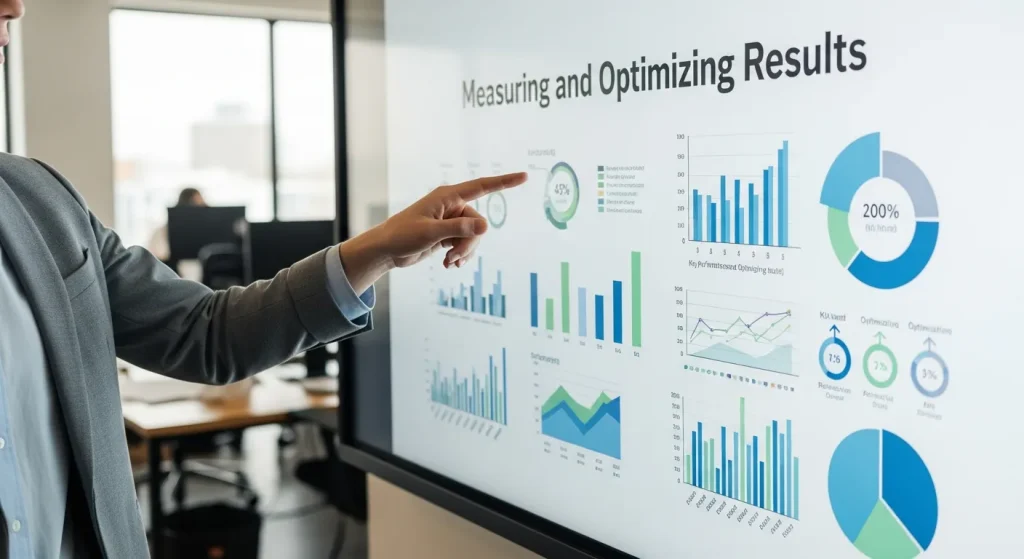
The final move is monitoring results of advice and then look for ways to do better. By measuring results, you can refine your approach and make sure you continue to succeed in the future.
Essential Analytics Tools
- Google Analytics: Monitor traffic, source effectiveness, and goal completions.
- Hotjar: Understand how users interact with your website via heatmaps and session recordings.
- Hootsuite Analytics: Track social media performance and identify top-performing posts.
A/B Testing for Continuous Optimization
A/B testing is a proven method for determining which marketing elements drive better results. For example:
- Test two different email subject lines to see which achieves a higher open rate.
- Compare two versions of an ad to see which generates more clicks.
Regular testing helps you refine each campaign over time, ensuring better future outcomes.
Feedback Loops
Customer feedback is incredibly valuable for optimization as well. Send surveys or monitor reviews to learn what aspects of your strategy resonate most with your audience.
Your ultimate goal is to create a cycle of constant improvement that keeps your strategies fresh and effective.
Data-Driven Marketing Is the Future (Don’t Get Left Behind)
Data will increasingly inform how businesses sell their products. The Art is in becoming proficient at these tools and strategies and making them work for you.
Data-Driven Marketing: It Takes Time and Practice to Get It Right. Start off by taking incremental, quantifiable actions like consolidating data collection or experimenting with personalized email campaigns. With time, you’ll develop ‘gut feelings’ about which insights to use and what to scale.
And don’t forget, the most successful marketers don’t work harder; they work smarter. Start taking advantage of data today! So, won’t you be glad that you’re already ahead of the pack when it comes to the future of marketing?
If you’re hungry for even more ways to fine-tune and improve your game, be sure to check out our newsletter and advanced guides.
Frequently Asked Questions (FAQs)
1. What is data-driven marketing in simple terms?
Data-driven marketing is an approach where you use information gathered from your audience to make smarter decisions. Instead of guessing what customers want, you analyze their behavior, preferences, and interactions to create more effective and personalized campaigns that deliver better results.
2. Why is a data-driven marketing strategy so important for businesses today?
This strategy is crucial because it helps you understand your customers on a deeper level, leading to improved personalization and stronger relationships. It also ensures you invest your marketing budget efficiently on tactics that are proven to work, maximizing your return on investment.
3. What are some examples of companies that use data-driven marketing well?
Major companies like Amazon and Netflix are famous for their data-driven approaches. They use viewing and purchase history to provide highly accurate recommendations. Similarly, Spotify analyzes listening habits to create personalized playlists like “Discover Weekly,” keeping users engaged on their platform.
4. What kind of data should I collect for my marketing efforts?
You should focus on collecting data that directly relates to your business goals. This includes website analytics (traffic sources, user behavior), CRM data (customer purchase history), social media engagement metrics, and direct feedback from customer surveys to build a complete picture.
5. What are the best tools for starting with data-driven marketing?
For beginners, Google Analytics is an essential free tool for understanding website performance. CRM platforms like HubSpot are great for managing customer data, while social media platforms have built-in analytics tools to track audience engagement. These tools provide a solid foundation.
6. How can a small business implement data-driven marketing without a big budget?
Small businesses can start by leveraging free tools like Google Analytics and social media insights. Focus on collecting customer feedback through simple surveys and tracking email campaign performance. The key is to start small, focusing on one or two key metrics to improve.
7. What is a common challenge in data-driven marketing?
One of the biggest challenges is dealing with “data silos,” where information is stored in different systems that don’t communicate with each other. This makes it difficult to get a unified view of your customer. Centralizing your data is a critical first step.
8. How does B2B data-driven marketing differ from B2C?
While the principles are similar, B2B data-driven marketing often involves longer sales cycles and focuses on account-level data. The goal is to identify key decision-makers within a company and nurture leads through targeted content, rather than focusing on individual impulse buys.
9. Can data-driven marketing feel too intrusive to customers?
It can if not handled properly. The key is to use data to provide genuine value, such as relevant recommendations or helpful content, rather than just for invasive advertising. Being transparent and respecting privacy regulations like GDPR is essential to maintaining customer trust.
10. How do I measure the success of my data-driven marketing campaigns?
Success is measured by tracking specific Key Performance Indicators (KPIs) tied to your goals. These can include metrics like customer acquisition cost (CAC), conversion rates on your website, customer lifetime value (LTV), and overall return on investment from your marketing spend.



Leave a Reply