

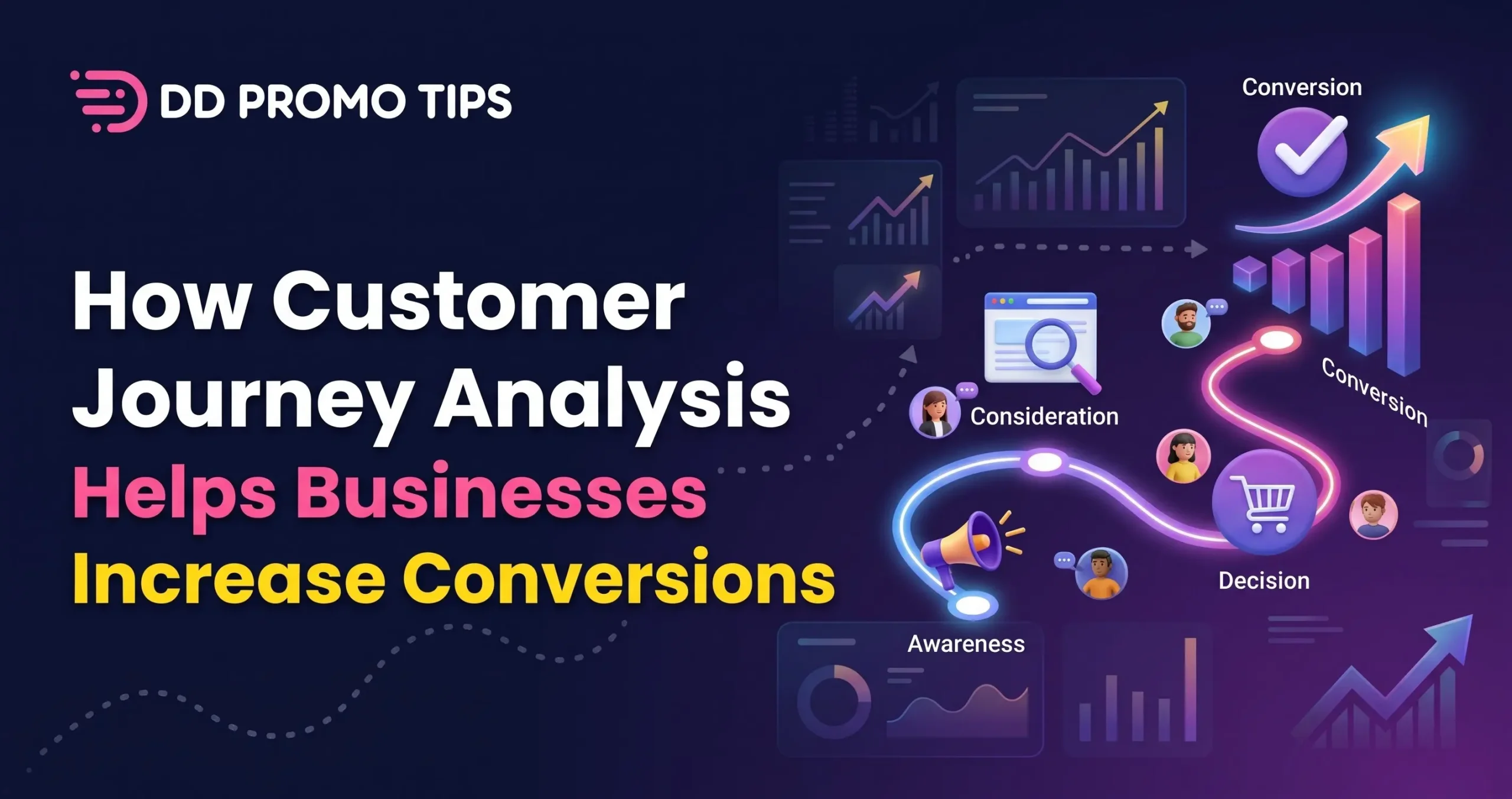
Customer Journey Analysis is an essential strategy for businesses that want to understand how customers interact with their brand before making a purchase. From the first website visit to the final transaction, every interaction influences a customer’s decision. By examining these touchpoints, businesses can identify obstacles, improve communication, and create experiences that encourage customers to take action. Effective analysis also helps marketers understand which channels attract potential buyers and which experiences lead to abandoned purchases.
Modern businesses can use Marketing Intelligence, Digital Marketing Analytics, and Predictive Analytics to gain deeper insights into customer behavior. These approaches help organizations understand customer preferences, identify conversion opportunities, and deliver relevant experiences throughout the buying process. When businesses understand what customers need at each stage, they can make informed decisions that improve engagement, build trust, and increase conversion rates.
What Is Customer Journey Analysis?
Customer Journey Analysis is the process of examining how customers discover, evaluate, interact with, and purchase products or services. It focuses on customer touchpoints across websites, social media, email campaigns, advertisements, and sales conversations. Understanding these interactions allows businesses to identify what motivates customers and what prevents them from completing desired actions.
Understanding Customer Touchpoints
Customer touchpoints represent every interaction between a customer and a business. These interactions may include discovering a brand through search engines, clicking a social media advertisement, reading a product page, or contacting customer support. Analyzing these touchpoints helps businesses understand how each interaction contributes to the customer’s overall experience and influences purchasing decisions.
Identifying Customer Journey Stages
Most customer journeys include awareness, consideration, conversion, retention, and advocacy. During awareness, customers discover a product or service. In consideration, they compare available options and evaluate benefits. Conversion occurs when customers complete an intended action, such as purchasing a product or submitting a lead form. Businesses that understand these stages can create relevant marketing messages and remove unnecessary obstacles.
Why Customer Journey Analysis Matters for Conversions
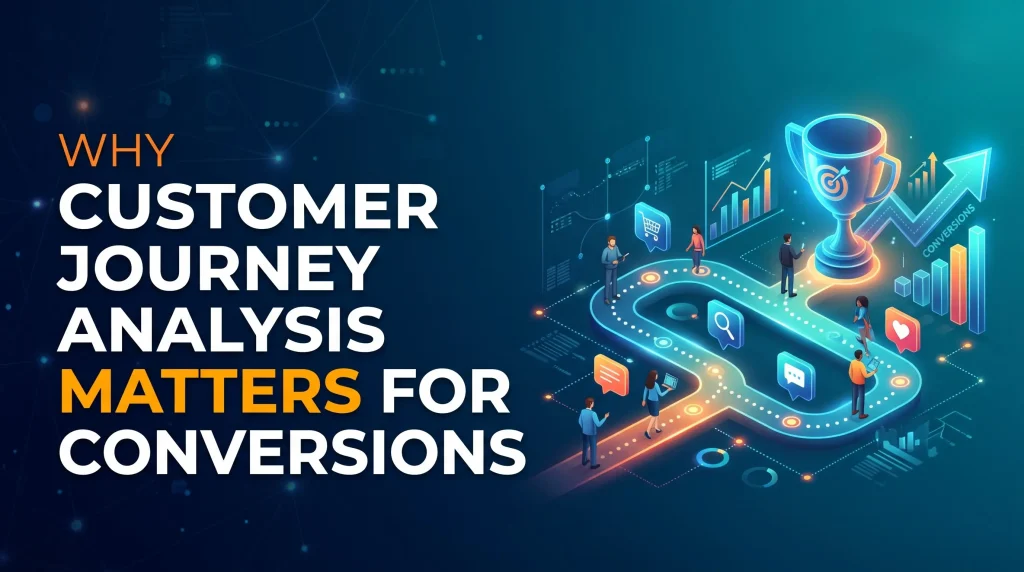 Customer Journey Analysis helps businesses identify the factors that influence purchasing decisions and conversion performance. Instead of relying on assumptions, marketers can examine real customer interactions to understand where potential buyers lose interest. This knowledge makes it easier to improve website usability, refine marketing campaigns, and deliver relevant information that encourages customers to move toward a purchase.
Discovering Conversion Barriers
Conversion barriers are obstacles that prevent customers from completing an intended action. Common examples include complicated checkout processes, slow-loading pages, unclear pricing, weak calls to action, and unexpected fees. By studying customer behavior, businesses can identify where these problems occur and prioritize improvements that make the buying process easier and more convenient.
Understanding Customer Intent
Customer intent reveals what people want to accomplish when interacting with a business. Some visitors want general information, while others are comparing products or preparing to purchase. Businesses can analyze search queries, browsing behavior, product interactions, and form submissions to understand these differences. Matching content and offers to customer intent can increase engagement and improve conversion opportunities.
How Customer Journey Analysis Improves Marketing Intelligence
Marketing Intelligence involves collecting and interpreting information about customers, competitors, market conditions, and campaign performance. Customer Journey Analysis strengthens this process by connecting customer interactions with business outcomes. Rather than evaluating individual marketing channels separately, businesses can understand how different touchpoints work together to influence decisions, improve campaign planning, and allocate marketing resources more effectively.
Connecting Customer Data Across Channels
Customers frequently move between search engines, social platforms, websites, email campaigns, and offline interactions before purchasing. Analyzing these touchpoints provides a more complete understanding of customer behavior. Businesses can use customer relationship management systems and analytics platforms to connect available data, identify meaningful patterns, and understand which combinations of interactions contribute to successful conversions.
Improving Marketing Decisions
Marketing decisions become more effective when they are supported by reliable customer insights. Businesses can use journey analysis to identify high-performing channels, understand audience preferences, and discover content that encourages further engagement. These findings help marketers improve targeting, refine campaign messaging, and allocate budgets toward activities that generate qualified leads and meaningful business results.
Using Digital Marketing Analytics to Increase Conversions
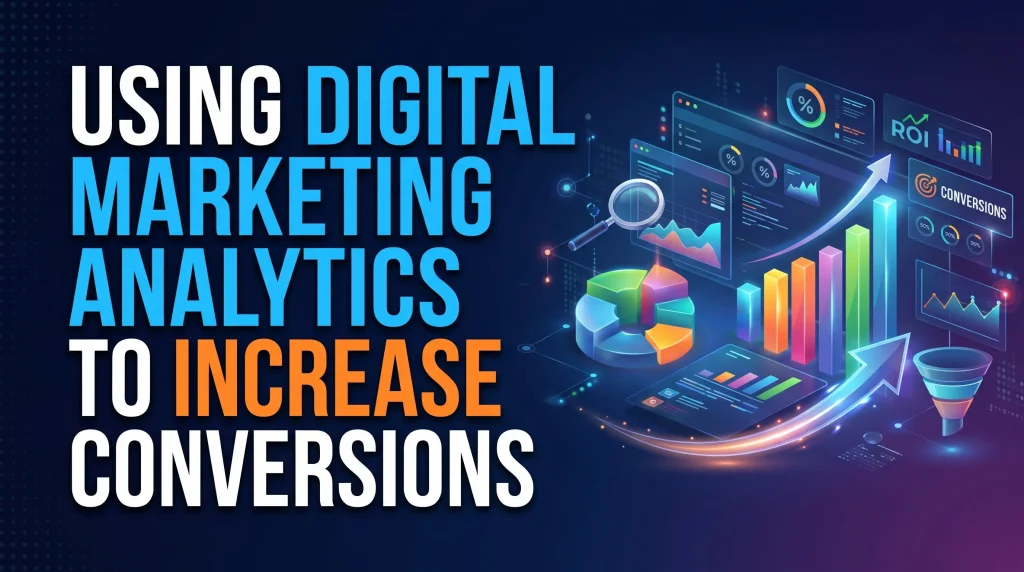 Digital Marketing Analytics helps businesses measure and interpret online marketing performance through metrics such as website traffic, click-through rates, conversion rates, bounce rates, and customer acquisition costs. When these measurements are connected to customer journey stages, marketers can identify performance gaps and determine which improvements are most likely to influence customer decisions and increase completed conversions.
Measuring Important Conversion Metrics
Businesses should monitor metrics that reflect customer progress throughout the buying process. Landing page conversion rates reveal whether visitors complete intended actions, while checkout abandonment rates indicate potential purchasing difficulties. Lead form completion rates help assess the effectiveness of lead generation campaigns. Reviewing these metrics together provides a clearer picture of the customer journey than evaluating individual performance indicators in isolation.
Evaluating Marketing Channel Performance
Different marketing channels serve different purposes throughout the customer journey. Search advertising may attract customers with strong purchase intent, while social media content may introduce a brand to new audiences. Email campaigns can encourage consideration, and remarketing can reconnect with interested visitors. Analytics helps businesses evaluate these contributions and improve the coordination of their marketing activities.
The Role of Predictive Analytics in Customer Journey Optimization
Predictive Analytics uses historical data, statistical techniques, and appropriate machine learning models to estimate potential future outcomes. When applied to Customer Journey Analysis, it helps businesses identify patterns associated with purchases, customer churn, and engagement. These insights support more proactive marketing decisions, allowing organizations to prioritize relevant opportunities and develop experiences that better reflect customer needs.
Predicting Customer Behavior
Predictive models can identify behavioral patterns associated with purchase likelihood. For example, visitors who repeatedly examine product details, compare pricing, and return to a checkout page may demonstrate stronger buying intent than visitors who leave immediately. Businesses can use these signals to prioritize follow-ups, personalize recommendations, or offer additional product information without assuming that every interested visitor will purchase.
Identifying Customers at Risk of Abandonment
Predictive Analytics can also help identify journey patterns associated with abandoned carts or declining engagement. Businesses may discover that unexpected delivery costs, lengthy forms, or delayed responses frequently appear before customers leave. By recognizing these patterns, organizations can test targeted improvements, provide timely assistance, and reduce avoidable friction throughout the purchasing process.
Personalizing Customer Experiences to Drive More Conversions
Personalization involves adapting website content, product recommendations, communication, and offers to customers’ interests and behaviors. Customer Journey Analysis helps businesses understand which experiences are relevant at different stages of the buying process. When personalization reflects genuine customer needs rather than excessive targeting, it can improve engagement, reduce decision-making effort, and encourage visitors to complete meaningful actions.
Delivering Relevant Content
Customers need different information depending on their level of purchase readiness. Someone discovering a brand may benefit from educational articles, while a customer comparing products may need detailed specifications, pricing information, and customer reviews. Businesses can use journey insights to deliver appropriate content at each stage, helping customers find answers and move forward with greater confidence.
Creating Personalized Follow-Up Campaigns
Follow-up campaigns can reconnect businesses with customers who have shown interest but have not completed a purchase. For example, an abandoned-cart email may remind a customer about selected products, while a follow-up message may answer questions raised during a sales conversation. Relevant timing, clear messaging, and appropriate consent help make these communications useful rather than intrusive.
Optimizing Website Experiences Through Customer Journey Analysis
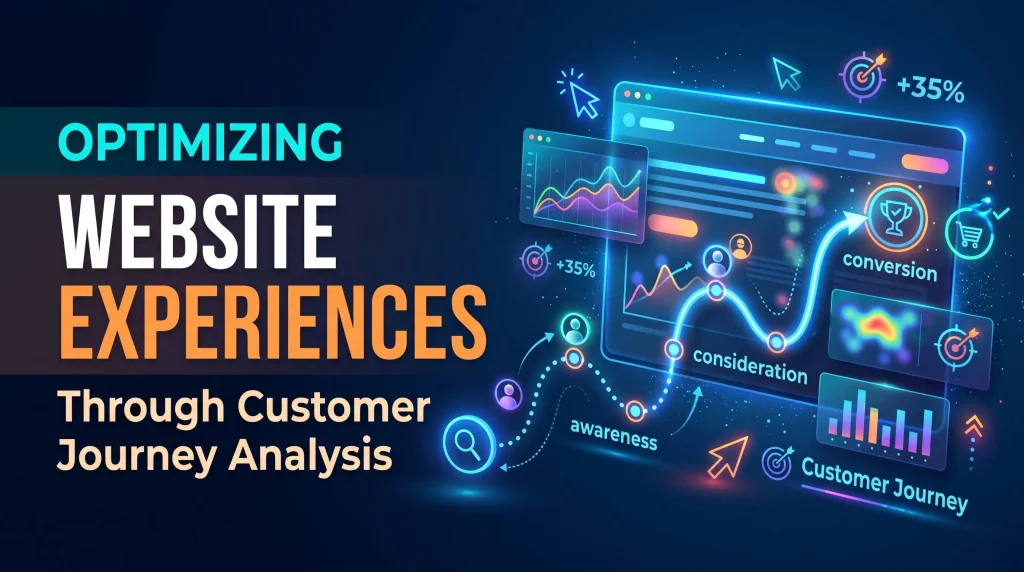 A website often serves as a central point in the customer journey, making its usability an important factor in conversion performance. Customer Journey Analysis helps businesses evaluate navigation, page structure, mobile experiences, forms, and checkout processes. Understanding where visitors hesitate or leave allows organizations to prioritize improvements that reduce friction and make important actions easier to complete.
Improving Landing Page Performance
Landing pages should communicate a clear value proposition, address customer concerns, and provide an obvious next step. Journey analysis can reveal whether visitors engage with important content, scroll to key sections, or abandon the page before reaching the call to action. Businesses can test headlines, layouts, page speed, and messaging to determine which changes improve conversion performance.
Simplifying the Conversion Process
Unnecessary steps can discourage customers from completing purchases or submitting inquiries. Complicated forms, mandatory account creation, unclear payment options, and confusing navigation may create avoidable friction. Businesses should review each step in the conversion process and remove unnecessary requirements wherever possible. A simpler experience can help customers complete their intended actions with less effort.
Common Challenges in Customer Journey Analysis
Although Customer Journey Analysis offers valuable insights, businesses may encounter challenges when collecting, connecting, and interpreting customer information. Data silos, incomplete tracking, privacy concerns, and inaccurate attribution can limit the reliability of findings. Recognizing these limitations helps organizations develop better measurement practices and avoid making important marketing decisions based on incomplete or misleading information.
Managing Fragmented Customer Data
Customer information may be distributed across advertising platforms, website analytics tools, email systems, and customer relationship management software. When these systems do not communicate effectively, businesses may struggle to understand the complete journey. Integrating compatible systems, establishing consistent tracking practices, and maintaining clear data definitions can improve visibility into customer interactions and conversion outcomes.
Maintaining Data Privacy and Accuracy
Businesses must collect and use customer information responsibly. Transparent privacy policies, appropriate consent mechanisms, secure data handling, and compliance with applicable regulations help protect customer trust. Organizations should also verify tracking configurations and regularly review data quality. Reliable information makes journey analysis more useful while reducing the risk of inaccurate conclusions and inappropriate personalization.
Best Practices for Effective Customer Journey Analysis
Successful Customer Journey Analysis requires clear objectives, reliable measurement, and continuous improvement. Businesses should begin by identifying the conversions they want to improve, such as purchases, qualified leads, subscriptions, or appointment bookings. They can then map customer touchpoints, measure performance, identify friction, and test targeted changes. Regular evaluation helps ensure that improvements remain aligned with customer expectations and business goals.
Combining Quantitative and Qualitative Insights
Quantitative data explains what customers do, while qualitative feedback helps reveal why they behave in particular ways. Analytics may show that many visitors abandon a checkout page, but customer interviews, surveys, or usability tests may reveal concerns about delivery fees or payment options. Combining both perspectives helps businesses identify meaningful problems and develop more effective solutions.
Testing and Refining Improvements
Businesses should avoid assuming that every proposed change will improve conversions. A/B testing can compare alternative headlines, calls to action, landing page designs, or checkout experiences. Teams should establish measurable objectives, use suitable testing methods, and evaluate results carefully. Continuous testing enables businesses to refine customer journeys based on observed performance rather than unsupported assumptions.
Conclusion
Customer Journey Analysis helps businesses understand how customers discover brands, evaluate products, and make purchasing decisions. By identifying conversion barriers, improving website experiences, and aligning marketing communication with customer needs, organizations can create more effective paths toward conversion. Integrating Marketing Intelligence, Digital Marketing Analytics, and Predictive Analytics provides additional insights into customer behavior and marketing performance.
Businesses that regularly evaluate customer journeys can make more informed decisions, improve customer satisfaction, and identify opportunities for sustainable growth. The most effective approach combines accurate data, customer feedback, thoughtful personalization, and continuous experimentation. Rather than focusing exclusively on attracting more visitors, businesses should improve the experiences that help existing visitors become customers.
Frequently Asked Questions
1. What is Customer Journey Analysis?
Customer Journey Analysis examines how customers interact with a business across different touchpoints, from initial awareness to purchase and beyond. It helps businesses understand customer behavior, identify obstacles, and improve the experiences that influence conversion decisions.
2. How does Customer Journey Analysis increase conversions?
It identifies problems that prevent customers from completing desired actions. Businesses can use these findings to improve website navigation, simplify checkout, personalize communication, and provide relevant information that encourages customers to purchase or submit inquiries.
3. What are the main stages of a customer journey?
The main stages typically include awareness, consideration, conversion, retention, and advocacy. Customers discover a brand, evaluate its offerings, make a decision, continue their relationship, and potentially recommend the business to others.
4. Which tools support Customer Journey Analysis?
Website analytics platforms, customer relationship management systems, heatmap tools, session recording software, and marketing automation platforms can support journey analysis. The most suitable tools depend on business objectives, available data, privacy requirements, and technical resources.
5. How does Marketing Intelligence support customer journey optimization?
Marketing Intelligence combines customer, market, and campaign information to support better decisions. It helps businesses understand audience preferences, evaluate channel performance, and identify opportunities to improve targeting and conversion strategies.
6. What is the role of Digital Marketing Analytics in conversion optimization?
Digital Marketing Analytics measures how customers interact with digital campaigns, websites, and landing pages. It helps marketers identify underperforming touchpoints, evaluate conversion metrics, and make data-informed improvements to marketing activities.
7. How can Predictive Analytics improve customer conversions?
Predictive Analytics identifies patterns that may indicate purchase intent, abandonment risk, or future engagement. Businesses can use these estimates to prioritize follow-ups, personalize experiences, and address potential problems before they negatively affect conversions.
8. How often should businesses analyze customer journeys?
Businesses should monitor important metrics regularly and conduct deeper journey reviews monthly or quarterly, depending on traffic and business needs. Significant website changes, campaign launches, or unexpected conversion declines may require additional analysis.
9. What metrics are important for Customer Journey Analysis?
Important metrics include conversion rate, bounce rate, click-through rate, checkout abandonment rate, customer acquisition cost, lead form completion rate, and customer retention rate. Businesses should select metrics that directly reflect their goals and customer journey stages.
10. Can small businesses benefit from Customer Journey Analysis?
Yes, small businesses can begin with basic website analytics, customer feedback, and simple journey mapping. Identifying a few major conversion barriers and testing practical improvements can produce useful insights without requiring expensive tools or a large marketing team.



Leave a Reply